

When knee pain strikes, many people turn to knee braces for relief and support. But here’s a question that stumps countless users: does a knee brace go over or under clothes? This seemingly simple decision can make or break the effectiveness of your knee support. Getting it wrong could mean reduced stability, uncomfortable slipping, or even skin irritation that makes wearing the brace unbearable.
The placement of your knee brace isn’t just about comfort—it directly impacts how well the brace can do its job. Whether you’re dealing with arthritis, a sports injury, or general knee instability, understanding proper brace placement is crucial for getting the support you need to stay active and pain-free.
Key Takeaways
• Most knee braces work best when worn directly against the skin for optimal support and stability
• Wearing a brace under clothing prevents slipping and ensures proper compression and alignment
• Some bulky or rigid braces may be worn over loose clothing in specific situations
• Proper placement affects comfort, effectiveness, and prevents skin irritation
• The type of brace and your specific needs determine the best wearing method
Why Proper Knee Brace Placement Matters
The way you wear your knee brace can make the difference between effective support and wasted money. When a brace is positioned correctly, it provides targeted compression to the knee joint, helping to reduce pain and improve stability during movement.
Proper placement ensures several critical benefits:
- Enhanced support and stability for the knee joint during activity
- Prevention of brace slipping or movement that can reduce effectiveness
- Reduced risk of skin irritation and pressure points
- Optimal compression distribution across the knee area
- Better proprioception (awareness of joint position) for improved balance
When a knee brace shifts or moves during activity, it loses its ability to provide consistent support. This is why how to wear knee brace properly becomes such an important consideration for anyone dealing with knee pain.
Does a Knee Brace Go Over or Under Clothes? The General Rule
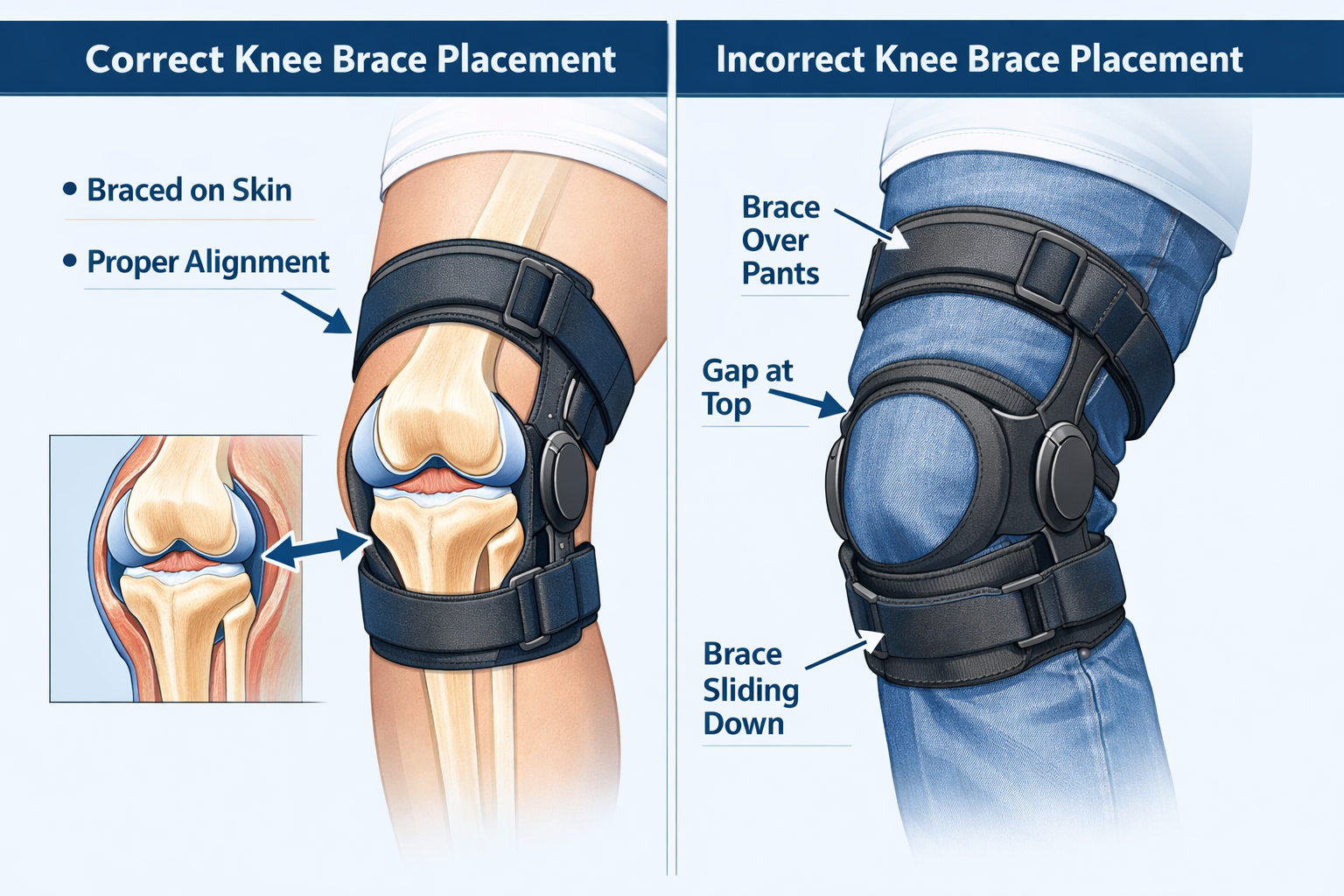
The short answer: most knee braces should be worn directly against the skin, underneath your clothing. This placement allows the brace to maintain direct contact with your knee joint, providing the most effective support and compression.
Here’s why under-clothing placement typically works best:
Direct Skin Contact Benefits 🎯
- Prevents the brace from sliding around during movement
- Allows for accurate compression and joint alignment
- Provides better feedback to your nervous system about knee position
- Reduces bulk under clothing for a more natural appearance
When Under-Clothing Placement is Essential
- During sports or physical activities
- When using compression sleeves or wraps
- For post-injury rehabilitation
- When maximum stability is needed
However, there are exceptions to this rule. Some situations may call for over-clothing placement, which we’ll explore in detail below.
Benefits of Wearing a Knee Brace Under Clothes
Wearing your knee brace directly on the skin offers several advantages that can significantly improve your experience and results.
Superior Joint Contact and Support
When a brace sits directly on your skin, it maintains consistent contact with the knee joint. This direct contact allows the brace to:
- Respond immediately to knee movement
- Provide targeted compression where needed most
- Maintain proper alignment throughout activity
- Deliver consistent support without gaps or shifting
Reduced Movement and Slipping
One of the biggest complaints about knee braces is that they slide down or rotate during use. Direct skin contact, combined with proper sizing, virtually eliminates this problem. The natural grip between the brace material and your skin keeps everything in place.
More Accurate Compression and Alignment
Knee compression braces work by applying specific pressure to different areas of the knee. When worn under clothing, the brace can deliver this compression exactly where it’s designed to work, without interference from fabric layers.
Improved Comfort During Physical Activity
While it might seem counterintuitive, wearing a brace under clothing often proves more comfortable during exercise. The brace stays put, preventing the chafing and irritation that comes with a shifting support device.

|

|

|
|
Description: EXOUS BODYGEAR is a dedicated sports accessory brand. We are primarily focused on the EX-701 knee support, which is our patented, unique, original design knee brace offering generic 2- and 3-strap knee braces. Patented 4 Strap Attachment: 4 anchor points allow you to adjust the fit and compression to your desired comfort. The knee compression will feel like it is around the whole knee joint |
Description: NEENCA KNEE SUPPORT TECHNOLOGY— An anatomically contoured patella gel pad surrounds your kneecap, and removable dual-side copper stabilizers fit tightly with your joint. It helps control your movement, effectively supports knee recovery treatment, and accelerates recovery. BEST CHOICE for sports protection and knee pain relief. |
Description: Our anti-inflammatory treatment knee brace for men & women provides superior support, stability, and relief for people with meniscus tears, ACL injuries, arthritis, and joint aches. Stay Active: Our knee sleeves for women & men are designed to be flexible and fit comfortably on your knee, providing stable pressure, knee support, and stabilizing your knee joint. |
|
Our Rating:
4.8
|
Our Rating:
4.9
|
Our Rating:
4.4
|
|
$34.98
|
$59.89
|
$27.95
|
EXOUS BODYGEAR is a dedicated sports accessory brand. We are primarily focused on the EX-701 knee support, which is our patented, unique, original design knee brace offering generic 2- and 3-strap knee braces.
Patented 4 Strap Attachment: 4 anchor points allow you to adjust the fit and compression to your desired comfort. The knee compression will feel like it is around the whole knee joint
NEENCA KNEE SUPPORT TECHNOLOGY— An anatomically contoured patella gel pad surrounds your kneecap, and removable dual-side copper stabilizers fit tightly with your joint.
It helps control your movement, effectively supports knee recovery treatment, and accelerates recovery. BEST CHOICE for sports protection and knee pain relief.
Our anti-inflammatory treatment knee brace for men & women provides superior support, stability, and relief for people with meniscus tears, ACL injuries, arthritis, and joint aches.
Stay Active: Our knee sleeves for women & men are designed to be flexible and fit comfortably on your knee, providing stable pressure, knee support, and stabilizing your knee joint.
When Wearing a Knee Brace Over Clothes Might Work
Despite the general rule favoring under-clothing placement, certain situations make over-clothing wear acceptable or even preferable.
Using Bulky or Rigid Braces
Large hinged knee braces or post-surgical supports may be designed to fit over clothing. These braces often feature:
- Adjustable straps that can accommodate clothing layers
- Rigid construction that doesn’t rely on skin contact for stability
- Larger contact areas that distribute pressure effectively
Temporary or Light Support Needs
If you only need occasional support for mild discomfort, wearing a brace over pants might be sufficient. This approach works for:
- Brief periods of activity
- Light daily tasks around the house
- Times when you need quick, temporary support
Addressing Skin Sensitivity Issues
Some people experience skin irritation from direct brace contact. In these cases, wearing the brace over thin, moisture-wicking clothing can provide a barrier while still maintaining reasonable support effectiveness.
Pro Tip: If skin irritation is an issue, consider using a thin compression sleeve under your brace rather than wearing it over thick clothing.
Types of Knee Braces and How They Are Typically Worn
Different brace designs have specific wearing requirements based on their construction and intended function.
Compression Knee Sleeves 🔧
These stretchy, sleeve-style braces are almost always worn directly on the skin. They rely on:
- Consistent compression around the entire knee
- Direct contact for proprioceptive feedback
- Moisture-wicking materials that work best against skin
Best Practice: Always wear compression sleeves under clothing for maximum effectiveness.
Hinged Knee Braces
These more substantial braces offer maximum support and may be worn either way, depending on the specific model:
- Under clothing: Provides better stability and prevents shifting
- Over loose clothing: May be acceptable for certain designs with secure strapping systems
Learn more about how hinged knee braces work to understand their specific requirements.
Patellar Straps
These targeted supports for kneecap issues should typically be worn directly on the skin below the kneecap for:
- Precise positioning over the patellar tendon
- Consistent pressure during movement
- Optimal pain relief and support
Wraparound Knee Braces
These adjustable designs offer the most flexibility in wearing options:
- Velcro strapping allows for adjustment over or under clothing
- Multiple sizing options accommodate different wearing preferences
- Moderate support level that can work in either configuration
For detailed guidance on specific wearing techniques, check out our guide on how to wear knee brace with pants.
Tips for Wearing a Knee Brace Comfortably
Getting the most from your knee brace requires attention to fit, positioning, and daily care practices.
Ensure Proper Fit First 📏
Before worrying about over or under clothing placement, make sure your brace fits correctly:
- Measure your knee according to manufacturer guidelines
- Check for proper positioning – the brace should center on your kneecap
- Adjust straps gradually – start loose and tighten as needed
- Test range of motion – you should be able to bend and straighten your knee comfortably
Avoid Circulation Problems
A brace that’s too tight can cause more harm than good:
- Watch for numbness or tingling in your leg
- Check for skin color changes below the brace
- Loosen straps immediately if you experience any circulation issues
- Remember: support doesn’t require excessive tightness
Choose Appropriate Clothing
When wearing a brace under clothing:
- Select moisture-wicking fabrics to prevent skin irritation
- Choose slightly looser pants to accommodate the brace without binding
- Avoid thick seams that might create pressure points over the brace
Monitor and Adjust During Activity
Even properly fitted braces may need adjustment during use:
- Check positioning before and during exercise
- Readjust straps if the brace shifts or loosens
- Take breaks if you experience any discomfort
For comprehensive fitting guidance, see our detailed article on how a knee brace should fit.
Common Mistakes to Avoid
Understanding what not to do can be just as important as knowing proper technique.
Wearing a Brace That’s Too Loose or Too Tight
Finding the right tension takes practice:
- Too loose: The brace won’t provide adequate support and may slip
- Too tight: Risk of circulation problems and increased discomfort
- Just right: Snug support that doesn’t restrict blood flow or movement
Incorrect Knee Positioning
Many people place their brace too high or too low:
- Center the brace on your kneecap for most designs
- Follow manufacturer guidelines for specific positioning
- Check alignment regularly, especially during the first few days of use
Using the Wrong Brace Type
Not all braces work for all conditions:
- Compression sleeves work well for general support and mild arthritis
- Hinged braces are better for ligament injuries or instability
- Patellar straps target specific kneecap problems
If you’re unsure about the right type, read our guide on how to choose the right knee brace for your specific needs.
Ignoring Skin Health
Long-term brace wear requires attention to skin care:
- Clean the brace regularly to prevent bacterial buildup
- Wash and dry your skin thoroughly before putting on the brace
- Use powder or anti-chafing products if needed to prevent irritation
- Give your skin breaks from the brace when possible
When to Ask a Medical Professional
While many knee braces can be used safely without medical supervision, certain situations warrant professional guidance.
Persistent Knee Pain or Instability
If your knee problems don’t improve with bracing and basic care:
- Consult an orthopedic specialist for proper diagnosis
- Consider physical therapy to address underlying issues
- Explore other treatment options beyond bracing alone
Uncertainty About Brace Selection
With so many options available, choosing the right brace can be overwhelming:
- Ask your doctor about specific brace recommendations
- Work with a physical therapist to determine your support needs
- Consider custom bracing for complex or severe conditions
Skin Irritation or Discomfort
Don’t ignore skin problems from brace wear:
- Persistent redness or irritation may indicate an allergic reaction
- Open sores or wounds require immediate attention
- Numbness or tingling could signal circulation problems
For more information about when professional help is needed, check out our article on what are the signs you need a knee brace.
Conclusion
Understanding whether a knee brace should go over or under clothes is essential for getting the support and pain relief you need. The general rule is clear: most knee braces work best when worn directly against the skin, underneath your clothing. This placement provides optimal support, prevents slipping, and ensures the brace can do its job effectively.
However, the specific type of brace, your individual needs, and your comfort level all play important roles in determining the best approach. Whether you’re dealing with arthritis, a sports injury, or general knee instability, proper brace placement combined with correct sizing and positioning will give you the best chance of success.
Take action today:
- Evaluate how you’re currently wearing your knee brace
- Make adjustments based on the guidelines in this article
- Monitor your comfort and support levels over the next few days
- Consult with a healthcare professional if you have persistent pain or concerns
Remember, a knee brace is just one tool in managing knee pain. Combined with proper exercise, rest, and medical care when needed, the right brace worn correctly can help you stay active and comfortable for years to come.