

Every step shouldn’t feel like a battle against your own body. Yet for millions of runners and active individuals, the sharp, nagging pain around the kneecap known as runner’s knee turns every workout into an endurance test of willpower over discomfort. If you’re among those wondering “does knee brace help runner’s knee,” you’re not alone in seeking relief from this frustrating condition that affects up to 25% of recreational runners.
Runner’s knee, medically known as patellofemoral pain syndrome, doesn’t discriminate—it affects weekend warriors and elite athletes alike. The good news? A properly selected knee brace can be a valuable tool in managing this condition, though it’s rarely a standalone solution. Understanding when, why, and how knee braces work for runner’s knee can help you make informed decisions about your knee health and get back to the activities you love.
Key Takeaways
• Knee braces can provide beneficial support for runner’s knee by improving patellar alignment and reducing stress on the kneecap during activity
• Different brace types serve specific purposes – patellar tracking braces for alignment, compression sleeves for support, and patellar straps for tendon relief
• Braces work best as part of comprehensive treatment that includes strengthening exercises, proper running form, and addressing underlying biomechanical issues
• Professional guidance is essential for selecting the right brace type and ensuring it complements rather than replaces proper rehabilitation
• Long-term success requires addressing root causes rather than relying solely on external support devices
What Is Runner’s Knee?
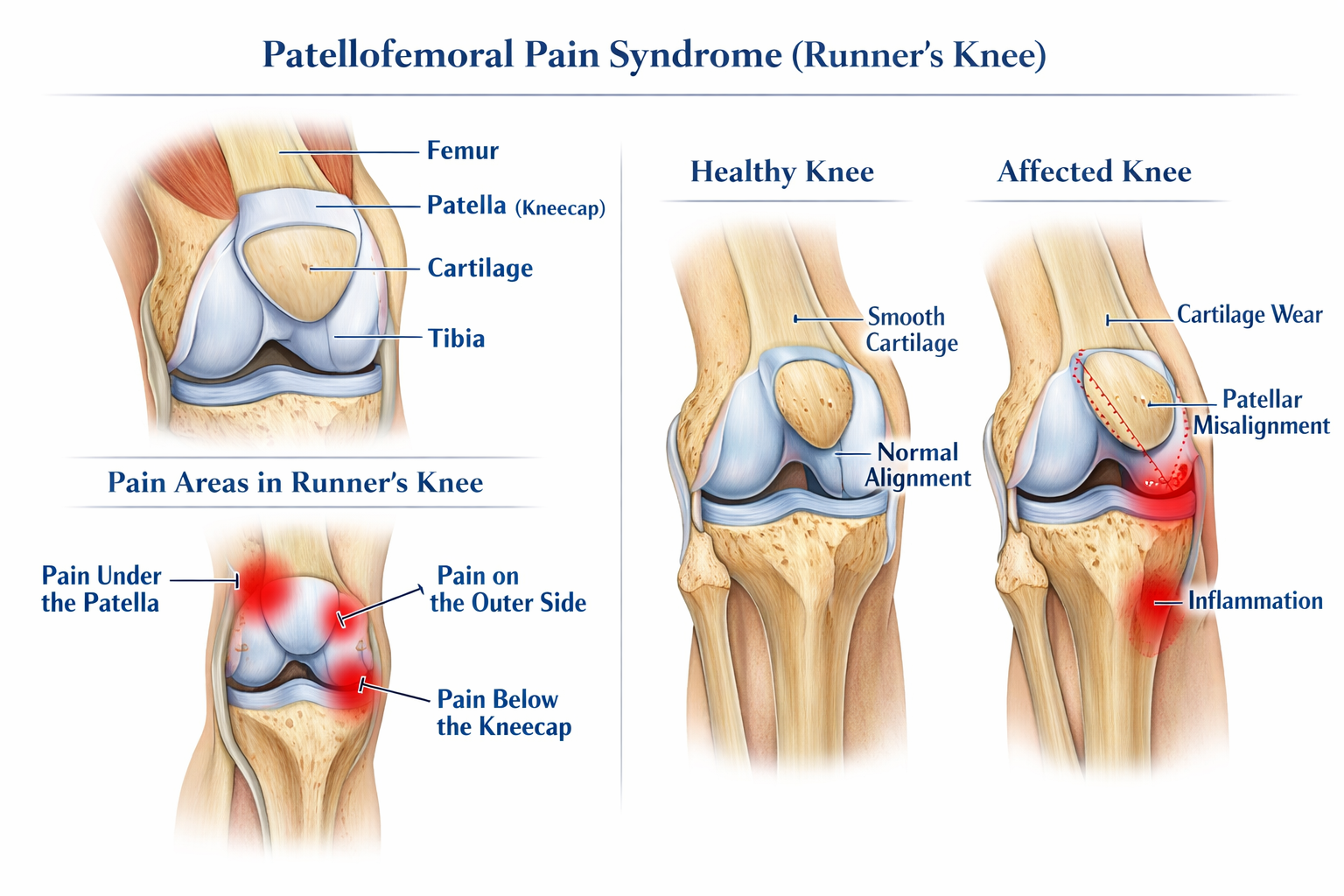
Runner’s knee, or patellofemoral pain syndrome (PFPS), is one of the most common overuse injuries affecting active individuals. This condition occurs when the cartilage under the kneecap (patella) becomes irritated due to improper tracking of the patella over the femur during movement.
Common Symptoms Include:
- Dull, aching pain around or behind the kneecap
- Discomfort during activities like running, squatting, or climbing stairs
- Stiffness after prolonged sitting (often called “movie theater sign”)
- Grinding or clicking sensations when bending the knee
- Pain that worsens with increased activity levels
Primary Causes of Runner’s Knee
The development of runner’s knee typically results from multiple factors working together:
Biomechanical Issues:
- Weak hip muscles leading to poor knee alignment
- Tight IT band or hamstrings affecting leg mechanics
- Overpronation of the foot during running
Training Errors:
- Sudden increases in mileage or intensity
- Running on hard surfaces consistently
- Inadequate warm-up or cool-down routines
Structural Factors:
- High or low kneecaps (patella alta/baja)
- Wide pelvis affecting Q-angle
- Previous knee injuries or surgeries
Understanding these underlying causes is crucial because it helps explain why knee braces alone rarely provide complete relief—they address symptoms but not necessarily the root biomechanical problems.

|

|

|
|
Description: EXOUS BODYGEAR is a dedicated sports accessory brand. We are primarily focused on the EX-701 knee support, which is our patented, unique, original design knee brace offering generic 2- and 3-strap knee braces. Patented 4 Strap Attachment: 4 anchor points allow you to adjust the fit and compression to your desired comfort. The knee compression will feel like it is around the whole knee joint |
Description: NEENCA KNEE SUPPORT TECHNOLOGY— An anatomically contoured patella gel pad surrounds your kneecap, and removable dual-side copper stabilizers fit tightly with your joint. It helps control your movement, effectively supports knee recovery treatment, and accelerates recovery. BEST CHOICE for sports protection and knee pain relief. |
Description: Our anti-inflammatory treatment knee brace for men & women provides superior support, stability, and relief for people with meniscus tears, ACL injuries, arthritis, and joint aches. Stay Active: Our knee sleeves for women & men are designed to be flexible and fit comfortably on your knee, providing stable pressure, knee support, and stabilizing your knee joint. |
|
Our Rating:
4.8
|
Our Rating:
4.9
|
Our Rating:
4.4
|
|
$34.98
|
$59.89
|
$27.95
|
EXOUS BODYGEAR is a dedicated sports accessory brand. We are primarily focused on the EX-701 knee support, which is our patented, unique, original design knee brace offering generic 2- and 3-strap knee braces.
Patented 4 Strap Attachment: 4 anchor points allow you to adjust the fit and compression to your desired comfort. The knee compression will feel like it is around the whole knee joint
NEENCA KNEE SUPPORT TECHNOLOGY— An anatomically contoured patella gel pad surrounds your kneecap, and removable dual-side copper stabilizers fit tightly with your joint.
It helps control your movement, effectively supports knee recovery treatment, and accelerates recovery. BEST CHOICE for sports protection and knee pain relief.
Our anti-inflammatory treatment knee brace for men & women provides superior support, stability, and relief for people with meniscus tears, ACL injuries, arthritis, and joint aches.
Stay Active: Our knee sleeves for women & men are designed to be flexible and fit comfortably on your knee, providing stable pressure, knee support, and stabilizing your knee joint.
Does a Knee Brace Help Runner’s Knee?
The short answer is yes, knee braces can help runner’s knee—but with important caveats. Research shows that certain types of knee braces can provide meaningful benefits for people with patellofemoral pain syndrome, though they’re most effective when used as part of a comprehensive treatment approach.
How Knee Braces Provide Relief
Patellar Alignment Support:
Knee braces designed for runner’s knee work primarily by helping to guide the kneecap into proper alignment during movement. When the patella tracks correctly over the femur, it reduces abnormal pressure on the cartilage that causes pain and inflammation.
Compression Benefits:
Many knee braces provide graduated compression around the joint, which can:
- Improve proprioception (awareness of joint position)
- Reduce swelling and inflammation
- Enhance blood flow to the area
- Provide a sense of stability and confidence
Load Distribution:
Certain brace designs help distribute forces more evenly across the knee joint, reducing concentrated stress on painful areas of the patellofemoral joint.
Scientific Evidence
Multiple studies have demonstrated the effectiveness of knee braces for runner’s knee:
- A 2019 systematic review found that patellar taping and bracing showed moderate evidence for reducing pain in patellofemoral pain syndrome
- Research published in the American Journal of Sports Medicine showed significant pain reduction in runners using patellar tracking braces compared to control groups
- Studies indicate that braces are most effective when combined with exercise therapy rather than used in isolation
Why Braces Aren’t Magic Solutions
While knee braces can help runner’s knee, they have limitations:
Temporary Relief: Braces provide external support but don’t address underlying muscle weaknesses or biomechanical issues that often cause runner’s knee.
Dependency Risk: Over-reliance on braces without addressing root causes can potentially lead to continued weakness in supporting muscles.
Individual Variation: What works for one person may not work for another, depending on the specific causes of their runner’s knee.
For comprehensive guidance on knee pain relief options, it’s important to understand that braces are tools in a larger treatment toolkit rather than standalone cures.
Types of Knee Braces Used for Runner’s Knee
Selecting the right type of knee brace is crucial for addressing runner’s knee effectively. Different brace designs target specific aspects of patellofemoral pain syndrome, and understanding these differences can help you make an informed choice.
Patellar Tracking Braces
These specialized braces are specifically designed to address the alignment issues that often cause runner’s knee.
How They Work:
- Feature a buttress or pad that sits on the outer edge of the kneecap
- Gently guide the patella into proper alignment during movement
- Prevent lateral (outward) drift of the kneecap that commonly occurs in PFPS
Best For:
- Individuals with confirmed patellar maltracking
- Those who experience pain primarily during dynamic activities
- Runners returning to activity after a period of rest
Key Features to Look For:
- Adjustable buttress positioning
- Breathable, moisture-wicking materials
- Low-profile design that fits under athletic wear
Compression Knee Sleeves
Knee sleeves provide circumferential compression around the entire knee joint and are among the most popular options for active individuals.
Benefits Include:
- Improved proprioception and joint awareness
- Enhanced blood flow and reduced swelling
- Warmth retention that can reduce stiffness
- General support without restricting movement
Material Considerations:
- Neoprene: Excellent warmth retention and compression
- Elastic blends: More breathable for extended wear
- Copper-infused fabrics: May provide antimicrobial benefits
For runners specifically interested in compression options, our guide on knee braces for running provides detailed comparisons of different sleeve materials and designs.
Patellar Straps (Chopat Straps)
These small, targeted braces focus specifically on the patellar tendon area below the kneecap.
Mechanism of Action:
- Apply pressure to the patellar tendon
- Help distribute forces away from the painful area
- Particularly effective for patellar tendinitis accompanying runner’s knee
When to Consider:
- Pain located primarily below the kneecap
- Tenderness over the patellar tendon
- Activities involving jumping or explosive movements
Hinged Knee Braces
While less commonly used for runner’s knee, hinged knee braces may be recommended in specific situations.
Appropriate For:
- Runner’s knee combined with ligament concerns
- Post-injury return to activity
- Individuals requiring maximum stability
Considerations:
- More bulky than other options
- May restrict natural movement patterns
- Typically reserved for more severe cases
Benefits of Wearing a Knee Brace While Running
When properly selected and fitted, knee braces can provide several advantages for runners dealing with patellofemoral pain syndrome. Understanding these benefits helps set realistic expectations and maximize the therapeutic value of brace use.
Enhanced Joint Stability and Support 🏃♂️
Improved Confidence:
Many runners report feeling more confident and secure when wearing a knee brace, which can translate into:
- Better running form due to reduced fear of pain
- Ability to maintain training consistency
- Psychological comfort during return to activity
Biomechanical Support:
Braces can help compensate for temporary weaknesses while underlying issues are addressed through:
- Proprioceptive feedback that improves movement patterns
- External support that reduces reliance on fatigued muscles
- Alignment assistance during longer training sessions
Pain Reduction During Activity
Immediate Relief:
Well-fitted braces often provide noticeable pain reduction during running through:
- Pressure redistribution away from sensitive areas
- Improved patellar tracking that reduces cartilage irritation
- Compression effects that may help manage inflammation
Activity Modification:
Braces can allow modified training while recovery occurs:
- Enable shorter, less intense runs during rehabilitation
- Provide support for cross-training activities
- Help maintain fitness levels during treatment
Swelling and Inflammation Management
The compression provided by knee braces can help address the inflammatory component of runner’s knee. For detailed information about how braces specifically help with swelling, see our comprehensive guide on knee braces for swelling relief.
Circulation Benefits:
- Enhanced venous return reduces fluid accumulation
- Improved lymphatic drainage helps clear inflammatory byproducts
- Warmth retention promotes healing blood flow
Training Continuity
Graduated Return to Activity:
Braces can facilitate a structured return to running by:
- Providing support during progressive loading phases
- Allowing assessment of symptoms during controlled activities
- Enabling participation in rehabilitation exercises
Performance Maintenance:
For competitive runners, braces may help maintain some level of training while addressing underlying issues, preventing complete deconditioning.
Limitations of Knee Braces
While knee braces offer valuable benefits for runner’s knee, it’s crucial to understand their limitations to maintain realistic expectations and ensure comprehensive treatment.
Braces Don’t Address Root Causes
Biomechanical Issues Remain:
The most significant limitation is that knee braces cannot correct the underlying biomechanical problems that typically cause runner’s knee:
- Weak hip muscles continue to allow poor knee alignment
- Tight muscle groups still restrict proper movement patterns
- Training errors persist without conscious modification
- Structural issues require different interventions
Symptom Management vs. Cure:
Braces primarily manage symptoms rather than cure the condition. This means:
- Pain may return when the brace is removed
- Long-term improvement requires addressing underlying causes
- Relying solely on braces may delay proper treatment
Risk of Muscle Weakening
Dependency Concerns:
Extended reliance on knee braces without concurrent strengthening can potentially lead to:
- Reduced activation of stabilizing muscles
- Decreased proprioceptive feedback when not wearing the brace
- Weakened natural support systems over time
Research on this topic shows mixed results, but the concern is significant enough that most sports medicine professionals recommend limiting brace use to specific activities and time periods. For more detailed information about this concern, see our analysis of whether knee braces weaken muscles.
Individual Variation in Effectiveness
Not Universal Solutions:
What works for one person may not work for another due to:
- Different underlying causes of runner’s knee
- Varying anatomy and biomechanics
- Individual pain patterns and sensitivities
- Activity-specific demands and goals
Proper Diagnosis Required:
Without understanding the specific factors contributing to an individual’s runner’s knee, brace selection becomes guesswork rather than targeted treatment.
Quality and Fit Considerations
Poor-Fitting Braces Can Cause Problems:
- Inadequate support from loose-fitting braces
- Circulation issues from overly tight braces
- Skin irritation from poor materials or design
- Migration during activity affecting effectiveness
Understanding these limitations emphasizes why professional guidance is valuable when considering knee braces for runner’s knee treatment.
Other Treatments for Runner’s Knee
Effective management of runner’s knee typically requires a multi-faceted approach that addresses both symptoms and underlying causes. While knee braces help runner’s knee symptoms, combining them with other evidence-based treatments provides the best outcomes.
Strengthening Exercises 💪
Hip Muscle Strengthening:
Research consistently shows that weak hip muscles, particularly the glutes, contribute significantly to runner’s knee:
- Clamshells and side-lying hip abduction to strengthen gluteus medius
- Single-leg squats and step-downs to improve functional strength
- Hip bridges and monster walks to activate gluteus maximus
- Wall sits with hip abduction to combine quad and hip strengthening
Quadriceps Strengthening:
Targeted quad exercises help improve patellar stability:
- Straight-leg raises to strengthen without knee stress
- Terminal knee extensions to target the VMO (vastus medialis oblique)
- Isometric quad sets for early-stage strengthening
- Eccentric step-downs to improve control during loading
Flexibility and Mobility Work
Key Areas to Address:
- IT Band stretching to reduce lateral knee tension
- Hip flexor stretches to improve hip extension
- Calf stretching to address foot mechanics
- Quad stretching to balance strengthening work
Foam Rolling and Soft Tissue Work:
- IT band and lateral thigh rolling
- Quad and glute mobilization
- Calf and plantar fascia release
- Professional massage therapy when indicated
Running Form and Training Modifications
Biomechanical Improvements:
- Cadence training to reduce overstriding
- Midfoot striking to improve shock absorption
- Core strengthening to enhance overall stability
- Gradual loading to avoid training errors
Surface and Equipment Considerations:
- Softer running surfaces during recovery
- Proper footwear assessment and replacement
- Orthotic evaluation if foot mechanics contribute
- Cross-training to maintain fitness while reducing impact
Physical Therapy Interventions
Professional Assessment:
A qualified physical therapist can provide:
- Comprehensive movement analysis to identify contributing factors
- Manual therapy techniques to address joint restrictions
- Personalized exercise programs based on individual deficits
- Progressive return-to-activity protocols
Advanced Techniques:
- Dry needling for trigger point release
- Blood flow restriction training for strengthening
- Movement re-education and motor control training
- Sport-specific rehabilitation progressions
For individuals dealing with multiple knee issues, understanding what injuries require knee braces can help determine when bracing should be part of the treatment plan.
When to Consider Using a Knee Brace
Timing and circumstances matter significantly when deciding whether to use a knee brace for runner’s knee. Understanding the appropriate situations for brace use helps maximize benefits while avoiding potential drawbacks.
During Active Symptoms
Acute Pain Management:
Consider a knee brace when experiencing:
- Persistent pain during running that limits training
- Discomfort with daily activities like stair climbing
- Pain that interferes with sleep or prolonged sitting
- Swelling around the kneecap after activity
Activity-Specific Use:
Braces are most appropriate during:
- Return to running after a period of rest
- Longer training sessions where fatigue may worsen symptoms
- Competitive events where additional support is needed
- Cross-training activities that stress the knee differently
Rehabilitation Phase Support
Complementing Physical Therapy:
Knee braces can enhance rehabilitation when:
- Starting strengthening exercises that initially stress the knee
- Progressing activity levels in a structured return program
- Performing functional movements during therapy sessions
- Bridging gaps between therapy appointments
Confidence Building:
Many individuals benefit from brace support when:
- Fear of re-injury limits normal movement patterns
- Psychological barriers prevent return to full activity
- Gradual exposure to previously painful movements is needed
Specific Brace Indications
Patellar Tracking Issues:
Use tracking braces when:
- Confirmed maltracking is identified through assessment
- Lateral knee pain suggests patellar drift
- Grinding sensations occur with knee movement
General Support Needs:
Consider compression sleeves for:
- Mild, generalized knee discomfort during activity
- Swelling management after training sessions
- Warmth and proprioceptive benefits during exercise
For guidance on selecting appropriate support levels, our guide on choosing the right knee brace provides detailed selection criteria.
When NOT to Use a Knee Brace
Avoid Braces If:
- Severe swelling or instability is present (seek medical attention)
- Skin conditions or allergies make wearing problematic
- Circulation problems could be worsened by compression
- Complete rest is recommended by healthcare providers
How to Choose the Right Knee Brace
Selecting an appropriate knee brace for runner’s knee requires careful consideration of multiple factors. The wrong choice can be ineffective or even counterproductive, while the right brace can significantly enhance your recovery and return to activity.
Assess Your Specific Needs
Pain Pattern Analysis:
- Location of pain: Front, side, or behind the kneecap
- Timing of symptoms: During activity, after exercise, or at rest
- Aggravating activities: Running, stairs, squatting, or sitting
- Severity level: Mild discomfort to significant limitation
Activity Requirements:
Consider your intended use:
- Running intensity and duration you plan to maintain
- Environmental conditions (heat, humidity, indoor/outdoor)
- Frequency of use (daily, occasional, specific activities only)
- Compatibility with other gear (clothing, shoes, equipment)
Brace Selection Criteria
Support Level Matching:
| Condition Severity | Recommended Brace Type | Key Features |
|---|---|---|
| Mild discomfort | Compression sleeve | Light support, breathability |
| Moderate pain with tracking issues | Patellar tracking brace | Buttress pad, adjustable fit |
| Severe symptoms | Hinged or rigid brace | Maximum stability, medical supervision |
| Tendon-focused pain | Patellar strap | Targeted pressure, minimal bulk |
Material Considerations:
- Neoprene: Excellent compression and warmth retention, less breathable
- Elastic blends: Good balance of support and ventilation
- Moisture-wicking fabrics: Essential for extended wear during exercise
- Hypoallergenic options: Important for sensitive skin
Fit and Sizing Guidelines
Proper Measurement:
- Circumference measurements at multiple points around the knee
- Length considerations for full coverage without bunching
- Range of motion testing to ensure adequate flexibility
- Comfort assessment during various positions and movements
Professional Fitting Benefits:
Consider professional fitting when:
- Multiple brace types seem appropriate
- Previous braces have been unsuccessful
- Custom modifications may be needed
- Insurance coverage requires professional oversight
For detailed fitting instructions, see our comprehensive guide on how a knee brace should fit.
Quality and Durability Factors
Construction Quality:
- Reinforced stitching at stress points
- Durable fastening systems (Velcro, buckles, straps)
- Replaceable components for long-term use
- Warranty coverage and manufacturer support
Brand Reputation:
Research manufacturers known for:
- Medical-grade quality standards
- Positive user reviews and outcomes
- Professional endorsements from healthcare providers
- Responsive customer service and support
When to Seek Medical Advice
While knee braces can be valuable tools for managing runner’s knee, certain situations require professional medical evaluation. Recognizing when to seek help ensures appropriate treatment and prevents potential complications.
Red Flag Symptoms 🚨
Immediate Medical Attention Required:
- Severe, sudden onset pain that prevents weight-bearing
- Significant swelling that develops rapidly after injury
- Visible deformity or obvious joint instability
- Numbness or tingling in the leg or foot
- Signs of infection (fever, warmth, redness, streaking)
Persistent Symptoms Requiring Evaluation:
- Pain lasting more than 2-3 weeks despite rest and conservative treatment
- Worsening symptoms even with activity modification
- Mechanical symptoms like locking, catching, or giving way
- Night pain that interferes with sleep quality
Professional Assessment Benefits
Comprehensive Diagnosis:
Healthcare providers can offer:
- Detailed biomechanical analysis to identify contributing factors
- Imaging studies (X-rays, MRI) when indicated
- Differential diagnosis to rule out other conditions
- Objective measurements of strength, flexibility, and function
Treatment Planning:
Professional guidance provides:
- Evidence-based treatment protocols tailored to your condition
- Progression guidelines for safe return to activity
- Coordination of care between different healthcare providers
- Monitoring of treatment response and outcome measures
Brace Prescription and Fitting
Medical Supervision Advantages:
- Appropriate brace selection based on specific diagnosis
- Professional fitting to ensure optimal function
- Integration with overall treatment plan
- Insurance coverage possibilities for prescribed devices
When Professional Fitting Is Essential:
- History of multiple failed brace attempts
- Complex knee conditions requiring specialized devices
- Need for custom modifications or fabrication
- Workers’ compensation or insurance requirements
For comprehensive information about recognizing when you need professional help, see our guide on signs you need a knee brace.
Healthcare Provider Options
Primary Care Physicians:
- Initial evaluation and basic treatment
- Referrals to specialists when needed
- Coordination of overall health care
Sports Medicine Specialists:
- Expertise in athletic injuries and return to sport
- Advanced treatment options and techniques
- Performance optimization strategies
Physical Therapists:
- Movement analysis and exercise prescription
- Manual therapy and rehabilitation techniques
- Functional training and prevention strategies
Orthopedic Specialists:
- Surgical consultation when conservative treatment fails
- Complex injury management
- Advanced imaging interpretation and treatment planning
Conclusion
Does knee brace help runner’s knee? The evidence clearly shows that yes, properly selected and fitted knee braces can provide meaningful benefits for individuals dealing with patellofemoral pain syndrome. However, the key to success lies in understanding that braces are most effective when used as part of a comprehensive treatment approach rather than as standalone solutions.
The most important takeaway is that knee braces work best when combined with addressing underlying causes. While a patellar tracking brace may provide immediate pain relief and improved alignment, lasting recovery typically requires strengthening weak hip muscles, improving flexibility, correcting training errors, and addressing biomechanical issues that contributed to the problem initially.
Your next steps should include:
- Assess your symptoms honestly – If pain persists beyond 2-3 weeks or significantly limits your activities, seek professional evaluation
- Consider your goals – Determine whether you need temporary symptom relief, support during rehabilitation, or long-term management
- Choose the right brace type – Match your specific needs with appropriate brace features, prioritizing proper fit and quality construction
- Implement comprehensive treatment – Combine brace use with strengthening exercises, flexibility work, and training modifications
- Monitor your progress – Track symptoms and function to ensure your treatment approach is working effectively
Remember that successful management of runner’s knee often requires patience and consistency. While a knee brace can provide valuable support during your recovery journey, the ultimate goal should be developing the strength, flexibility, and movement patterns necessary to prevent future episodes.
If you’re unsure about which approach is right for your situation, don’t hesitate to consult with a healthcare provider who can assess your specific condition and guide you toward the most appropriate treatment strategy. Your knees—and your running—will thank you for taking a thoughtful, comprehensive approach to recovery.