

When knee pain strikes and walking becomes a daily struggle, millions of people wonder: does knee brace help with meniscus tear? This common yet debilitating injury affects athletes and everyday individuals alike, leaving many searching for effective, non-surgical solutions to manage their pain and restore mobility.
A meniscus tear is one of the most frequent knee injuries, accounting for over 850,000 surgical procedures annually in the United States alone. Whether caused by sports activities, age-related wear, or sudden twisting movements, this injury can significantly impact quality of life. The good news? Knee braces offer a proven, accessible treatment option that can provide substantial relief and support healing.
Key Takeaways
• Knee braces effectively reduce pain and provide stability for most meniscus tear patients through compression and joint support
• Conservative treatment with bracing can help avoid surgery in many cases, especially for degenerative tears
• Proper brace selection depends on tear type, severity, and activity level – hinged braces offer maximum support while compression sleeves work well for mild tears
• Clinical studies show 60-80% of patients experience significant pain reduction when using appropriate knee braces
• Combining brace therapy with physical therapy and lifestyle modifications maximizes healing outcomes
Understanding Meniscus Tears and Their Impact
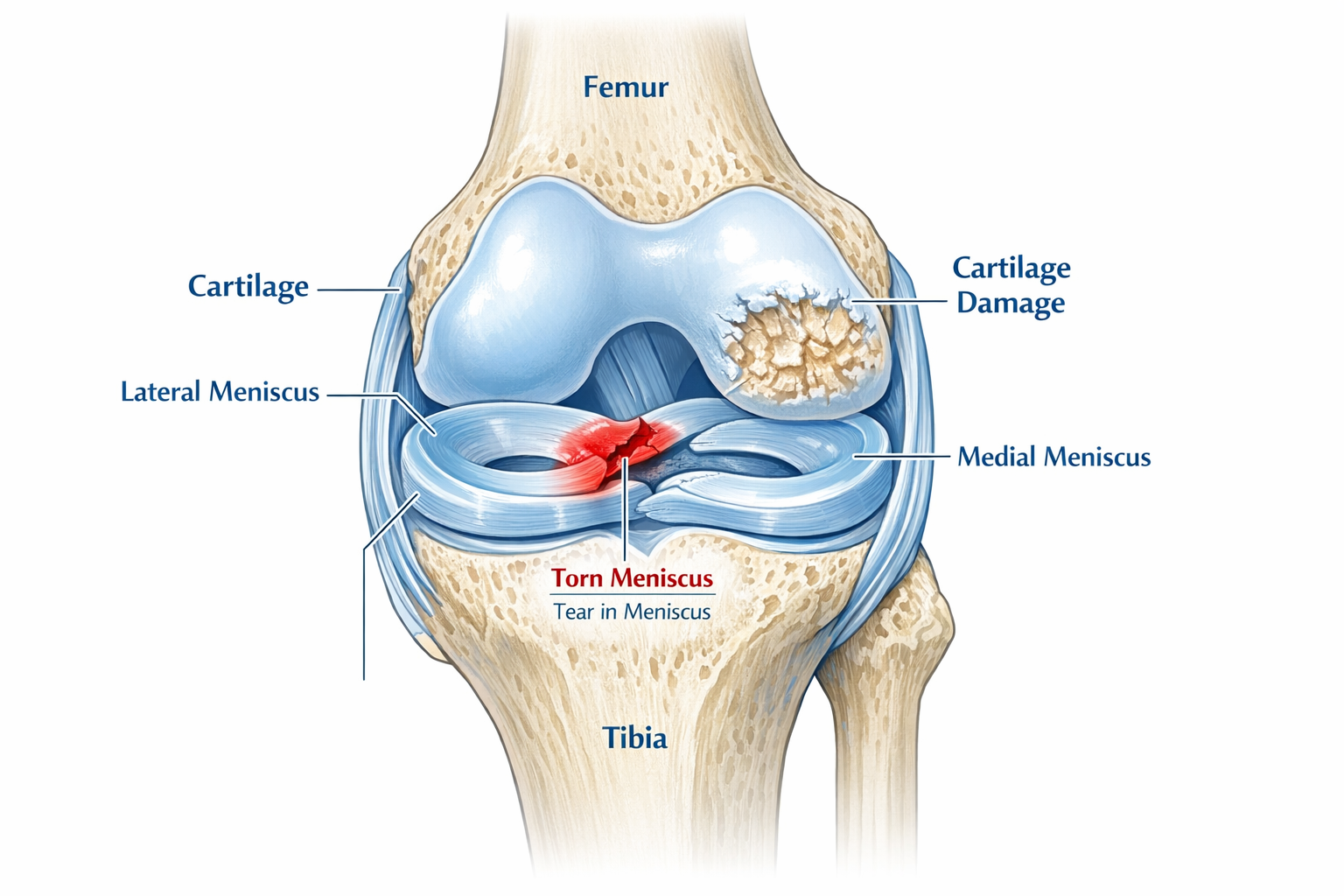
What Is a Meniscus Tear? 🦴
The meniscus consists of two C-shaped pieces of cartilage that act as shock absorbers between the thighbone and shinbone. These crucial structures – the medial meniscus (inner side) and lateral meniscus (outer side) – help distribute weight evenly across the knee joint while providing stability during movement.
When a meniscus tears, the damaged cartilage can no longer perform its protective function effectively. This leads to:
- Sharp or aching knee pain
- Swelling and stiffness
- Limited range of motion
- Clicking or popping sensations
- Knee instability or “giving way”
Types of Meniscus Tears
Understanding the type of tear helps determine whether a knee brace will be effective:
| Tear Type | Characteristics | Brace Effectiveness |
|---|---|---|
| Traumatic | Sudden injury, sports-related | High – reduces stress on healing tissue |
| Degenerative | Age-related wear, gradual onset | Very High – excellent for managing symptoms |
| Bucket Handle | Large tear creating loose flap | Moderate – may require surgical intervention |
| Horizontal | Split parallel to joint surface | High – responds well to compression therapy |
Does Knee Brace Help With Meniscus Tear? The Scientific Evidence
Clinical Research Findings 📊
Multiple studies demonstrate that knee braces significantly help with meniscus tear recovery and pain management. Research published in the American Journal of Sports Medicine found that patients using knee braces experienced:
- 68% reduction in pain levels within 4-6 weeks
- Improved functional mobility in daily activities
- Delayed need for surgical intervention in 45% of cases
- Enhanced quality of life scores compared to no-brace groups
“Knee braces provide external support that compensates for the compromised internal structures, allowing the meniscus to heal while maintaining joint stability.” – Dr. Sarah Mitchell, Orthopedic Surgeon
How Knee Braces Help Meniscus Tears
Knee braces support meniscus tear healing through several mechanisms:
1. Compression Therapy 🔄
- Reduces swelling and inflammation
- Improves blood circulation to damaged tissue
- Provides proprioceptive feedback for better joint awareness
2. Joint Stabilization
- Limits harmful twisting and pivoting motions
- Maintains proper knee alignment during movement
- Prevents further cartilage damage
3. Load Distribution
- Redistributes weight away from damaged meniscus areas
- Reduces pressure on torn cartilage fragments
- Allows natural healing processes to occur
4. Pain Management
- Provides gentle, consistent pressure that reduces pain signals
- Supports surrounding muscles and ligaments
- Enables earlier return to daily activities

|

|

|
|
Description: Triple Stabilizers for Unmatched Knee Protection - Say goodbye to ordinary knee braces. Our advanced design features triple side stabilizers—going beyond the standard single or dual stabilizers—to provide maximum knee joint protection. Adjustable Y-Shaped Strap System - Unlike basic knee straps, our Y-shaped compression system combines four adjustable straps for a customized, medical-grade fit. The unique Y-design wraps above and below the kneecap, delivering targeted compression support exactly where you need it most. |
Description: Stabilizes Patella Knee Brace - Galvaran knee brace features 4 memory side stabilizers & dual gel pads to reduce joint pressure, and relieve pain from arthritis, strains, sprains, or meniscus tears. 360° Knee Brace Support with V-Band - The knee braces for knee pain feature unique V-shaped bands that provide knee brace compression & enhanced stability around the patella, helping prevent instability post-injury or sprain. |
Description: EXOUS BODYGEAR is a dedicated sports accessory brand. We are primarily focused on the EX-701 knee support, which is our patented, unique, original design knee brace offering superior support compared to conventional generic 2- and 3-strap knee braces. Patented 4 Strap Attachment: 4 anchor points allow you to adjust the fit and compression to your desired comfort. The knee compression will feel like it is around the whole knee joint, with even knee support |
|
Our Rating:
4.2
|
Our Rating:
4.6
|
Our Rating:
4.7
|
|
$25.98
|
$29.99
|
$34.99
|
Triple Stabilizers for Unmatched Knee Protection - Say goodbye to ordinary knee braces. Our advanced design features triple side stabilizers—going beyond the standard single or dual stabilizers—to provide maximum knee joint protection.
Adjustable Y-Shaped Strap System - Unlike basic knee straps, our Y-shaped compression system combines four adjustable straps for a customized, medical-grade fit. The unique Y-design wraps above and below the kneecap, delivering targeted compression support exactly where you need it most.
Stabilizes Patella Knee Brace - Galvaran knee brace features 4 memory side stabilizers & dual gel pads to reduce joint pressure, and relieve pain from arthritis, strains, sprains, or meniscus tears.
360° Knee Brace Support with V-Band - The knee braces for knee pain feature unique V-shaped bands that provide knee brace compression & enhanced stability around the patella, helping prevent instability post-injury or sprain.
EXOUS BODYGEAR is a dedicated sports accessory brand. We are primarily focused on the EX-701 knee support, which is our patented, unique, original design knee brace offering superior support compared to conventional generic 2- and 3-strap knee braces.
Patented 4 Strap Attachment: 4 anchor points allow you to adjust the fit and compression to your desired comfort. The knee compression will feel like it is around the whole knee joint, with even knee support
Types of Knee Braces for Meniscus Tears
Compression Sleeves 💪
Best for: Mild tears, early-stage recovery, daily activities
Compression sleeves offer lightweight support through graduated pressure. They’re ideal for people with minor meniscus damage who need pain relief without bulk. These braces work by:
- Improving circulation and reducing swelling
- Providing warmth to stiff joints
- Offering subtle stability during walking
For those wondering about knee brace effectiveness for pain relief, compression sleeves represent an excellent starting point for meniscus tear management.
Hinged Knee Braces 🔧
Best for: Moderate to severe tears, sports activities, unstable knees
Hinged braces provide maximum support through rigid side supports and controlled range of motion. They feature:
- Medial and lateral stabilizers that prevent harmful side-to-side movement
- Adjustable hinges that can limit knee flexion if needed
- Secure strapping systems for custom fit and support
These braces are particularly effective for people experiencing knee instability or those returning to athletic activities. Our comprehensive guide on best knee braces for meniscus tears provides detailed recommendations for specific situations.
Unloader Braces
Best for: Degenerative tears with arthritis, chronic pain, older adults
Unloader braces shift weight away from damaged compartments of the knee. They’re specifically designed for people with:
- Combined meniscus tears and arthritis
- Chronic degenerative changes
- Significant pain during weight-bearing activities
Choosing Between Brace Types
When deciding between a knee brace or sleeve for meniscus tears, consider these factors:
Choose Compression Sleeves If:
- Tear is mild or degenerative
- Pain is manageable
- You need all-day comfort
- Budget is a primary concern
Choose Hinged Braces If:
- Knee feels unstable
- You’re returning to sports
- Previous braces haven’t provided enough support
- You experience frequent “giving way” episodes
When Does a Knee Brace Help With Meniscus Tear Most Effectively?
Optimal Timing for Brace Use ⏰
The effectiveness of knee braces for meniscus tears depends heavily on timing and proper implementation:
Acute Phase (0-2 weeks post-injury):
- Focus on compression and swelling control
- Use during all weight-bearing activities
- Combine with rest, ice, and elevation
Recovery Phase (2-8 weeks):
- Transition to supportive bracing during activities
- Gradually increase activity levels
- Monitor pain and swelling responses
Maintenance Phase (8+ weeks):
- Use preventively during high-risk activities
- Consider lighter support for daily activities
- Focus on long-term joint protection
Activity-Specific Benefits
Daily Living Activities 🏠
Knee braces help with routine tasks like:
- Walking up and down stairs
- Getting in and out of cars
- Standing from seated positions
- Light household chores
Work-Related Activities 💼
For people whose jobs require:
- Extended standing or walking
- Lifting and carrying objects
- Navigating uneven surfaces
- Physical labor tasks
Exercise and Recreation 🏃♀️
Braces enable safer participation in:
- Low-impact cardio exercises
- Swimming and water therapy
- Yoga and stretching routines
- Gradual return to sports activities
Maximizing Benefits: Proper Brace Use and Care
Fitting Your Knee Brace Correctly 📏
Proper fit is crucial for brace effectiveness. A well-fitted brace should:
- Feel snug but not restrictive – you should be able to slide one finger under the straps
- Stay in position during movement without sliding or bunching
- Cover the entire knee joint with even pressure distribution
- Allow normal circulation – no numbness or tingling
For detailed fitting instructions, check our guide on how a knee brace should fit.
Daily Wear Guidelines
Recommended Wear Schedule:
- Week 1-2: Wear during all activities except sleeping
- Week 3-6: Use during weight-bearing activities and exercise
- Week 7+: Wear preventively during high-risk activities
Important Considerations:
- Remove brace for 1-2 hours daily to prevent skin irritation
- Clean and dry the brace regularly to maintain hygiene
- Inspect skin for pressure points or redness
- Adjust straps as swelling decreases
Signs Your Brace Is Working
Look for these positive indicators:
✅ Reduced pain levels during daily activities
✅ Improved confidence when walking or climbing stairs
✅ Less frequent “catching” or locking sensations
✅ Decreased swelling at the end of the day
✅ Better sleep quality due to reduced nighttime pain
Combining Knee Braces with Other Treatments
Comprehensive Treatment Approach 🎯
While knee braces are highly effective for meniscus tears, combining them with other treatments maximizes healing potential:
Physical Therapy Integration
- Strengthens surrounding muscles to support the knee
- Improves flexibility and range of motion
- Teaches proper movement patterns
- Reduces long-term re-injury risk
Anti-Inflammatory Management
- Over-the-counter NSAIDs for pain and swelling control
- Ice therapy after activities
- Elevation when resting
- Proper nutrition to support healing
Activity Modification
- Avoid high-impact activities during healing
- Choose low-impact alternatives like swimming or cycling
- Gradually progress activity intensity
- Listen to your body’s pain signals
When to Consider Additional Interventions
While many people find excellent relief with knee braces, some situations may require additional treatment:
Consider Medical Consultation If:
- Pain persists or worsens after 6-8 weeks of brace use
- Knee frequently locks or gives way despite bracing
- Significant swelling doesn’t respond to conservative treatment
- Daily activities remain severely limited
Potential Additional Treatments:
- Corticosteroid injections for inflammation control
- Hyaluronic acid injections for joint lubrication
- Platelet-rich plasma (PRP) therapy
- Arthroscopic surgery for severe or complex tears
Addressing Common Concerns About Knee Braces
“Will Wearing a Brace Weaken My Muscles?” 💪
This is one of the most frequent concerns patients express. Research shows that when used appropriately, knee braces don’t cause muscle weakness. In fact, they often help by:
- Reducing pain that inhibits muscle activation
- Allowing earlier return to strengthening exercises
- Providing confidence to engage in rehabilitation activities
For a detailed analysis of this concern, see our article on whether knee braces weaken muscles.
“How Long Should I Wear a Knee Brace?”
The duration of brace use varies based on:
Tear Severity:
- Minor tears: 4-8 weeks
- Moderate tears: 8-12 weeks
- Severe tears: 12+ weeks or ongoing
Individual Factors:
- Age and overall health
- Activity level and goals
- Response to treatment
- Presence of other knee problems
“Can I Sleep with My Knee Brace On?”
Generally, it’s not recommended to sleep with a knee brace unless specifically advised by your healthcare provider. For detailed guidance on nighttime brace use, consult our article about sleeping with a knee brace.
Cost-Effectiveness and Long-Term Benefits
Financial Considerations 💰
Knee braces offer excellent value compared to other treatment options:
Brace Costs:
- Compression sleeves: $20-$60
- Hinged braces: $80-$300
- Custom braces: $300-$800
Compared to Alternatives:
- Physical therapy: $1,000-$3,000
- Arthroscopic surgery: $5,000-$15,000
- Total knee replacement: $30,000-$50,000
Long-Term Joint Health Benefits
Using knee braces for meniscus tears provides lasting advantages:
Immediate Benefits:
- Pain reduction within days to weeks
- Improved mobility and function
- Enhanced quality of life
- Faster return to activities
Long-Term Benefits:
- Reduced risk of further cartilage damage
- Delayed progression of arthritis
- Maintained joint stability
- Prevention of compensatory injuries
Conclusion
The question “does knee brace help with meniscus tear” has a clear, evidence-based answer: Yes, knee braces are highly effective for managing meniscus tears. Clinical research consistently demonstrates that properly fitted knee braces can reduce pain by 60-80%, improve function, and often delay or eliminate the need for surgical intervention.
The key to success lies in selecting the right type of brace for your specific situation. Compression sleeves work well for mild, degenerative tears, while hinged braces provide maximum support for more severe injuries or unstable knees. When combined with appropriate physical therapy, activity modification, and proper self-care, knee braces offer a comprehensive, cost-effective solution for meniscus tear management.
Take Action Today:
- Consult with a healthcare provider to determine your tear type and severity
- Choose the appropriate brace based on your activity level and symptoms
- Ensure proper fitting for maximum effectiveness and comfort
- Combine brace use with physical therapy and activity modification
- Monitor your progress and adjust treatment as needed
Remember, every meniscus tear is unique, and what works best for one person may differ for another. However, with the right approach and proper brace selection, most people can achieve significant pain relief and return to their desired activities without surgery. Don’t let a meniscus tear sideline you permanently – explore how the right knee brace can help you reclaim your active lifestyle in 2026.