

When knee pain strikes, one of the first questions that comes to mind is how long should I wear a knee brace to get the relief and support needed. Whether dealing with a sports injury, arthritis, or post-surgical recovery, understanding the proper duration for knee brace use can make the difference between effective healing and potential complications. The answer isn’t one-size-fits-all – it depends on your specific condition, injury severity, and recovery goals.
Key Takeaways
• Acute injuries typically require 2-6 weeks of knee brace wear, while chronic conditions may need longer-term use
• Daily wearing time should generally be limited to 8-12 hours to prevent muscle weakness and skin irritation
• Gradual weaning from the brace is essential as healing progresses to maintain muscle strength
• Medical supervision is crucial for determining the optimal duration based on your specific condition
• Individual factors like age, activity level, and healing response significantly impact wearing duration
Understanding Knee Brace Duration by Condition Type
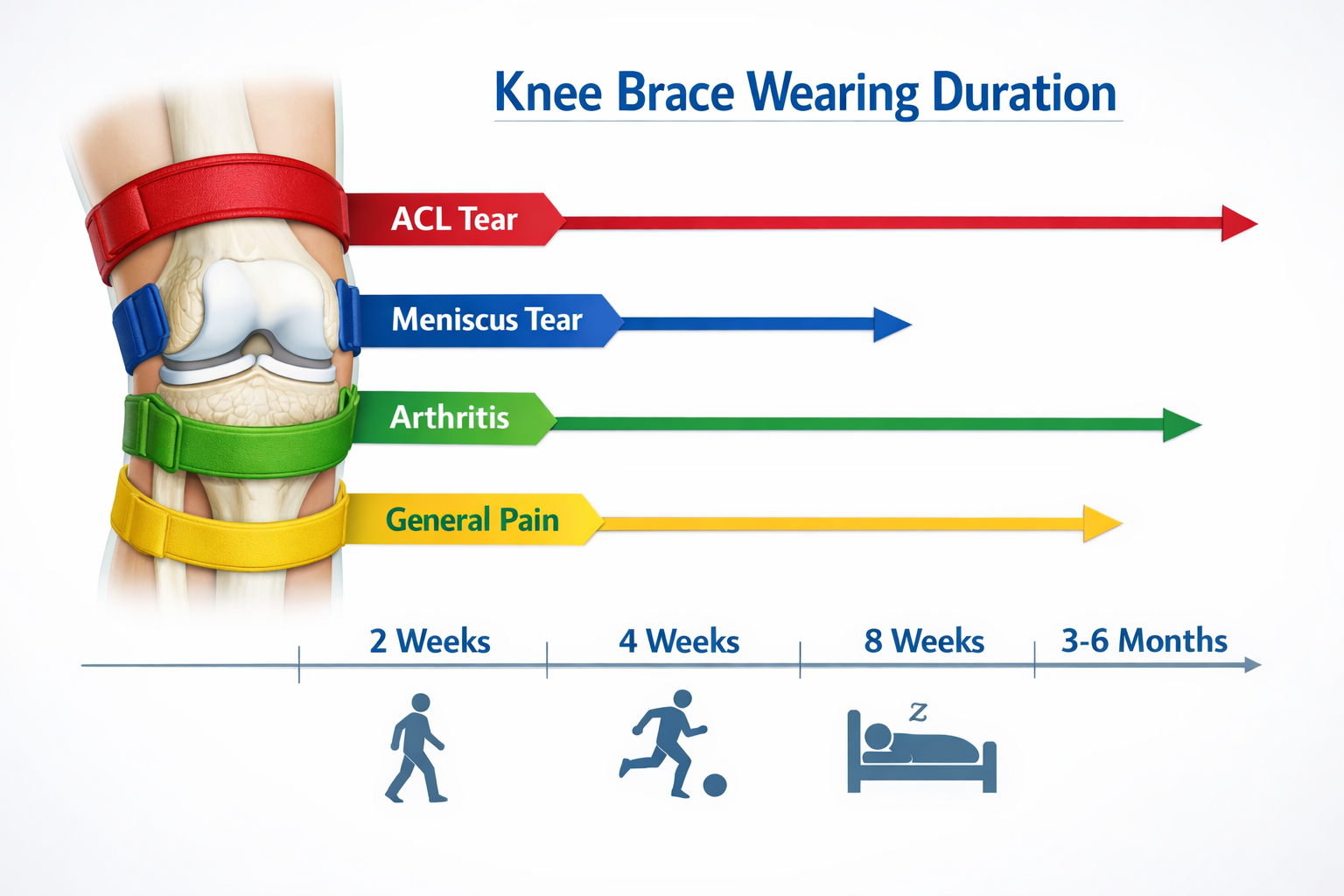
Acute Injury Recovery Timeline
For acute knee injuries such as sprains, strains, or minor tears, the duration of knee brace wear typically follows a structured timeline. Most acute injuries require 2-6 weeks of consistent brace use during the initial healing phase.
Week 1-2: Maximum Support Phase
- Wear the brace during all weight-bearing activities
- Remove only for bathing and sleeping (unless otherwise directed)
- Focus on pain reduction and initial healing
Week 3-4: Gradual Activity Phase
- Continue wearing during activities that stress the knee
- Begin gentle range-of-motion exercises
- Monitor pain levels and swelling
Week 5-6: Transition Phase
- Reduce wearing time as comfort allows
- Increase activity levels gradually
- Consider wearing a knee brace only during specific activities rather than all day
Chronic Condition Management
Chronic conditions like arthritis or ongoing knee instability require a different approach to brace duration. These conditions often benefit from long-term, intermittent use rather than continuous wearing.
Daily Management Strategy:
- Wear during high-impact activities
- Use during flare-ups or increased pain periods
- Remove during rest periods to allow muscle engagement
For those wondering about how many hours a day to wear a knee brace, chronic conditions typically benefit from 4-8 hours of targeted use rather than all-day wearing.
Post-Surgical Recovery Periods
Post-surgical knee brace duration varies significantly based on the type of procedure performed:
| Surgery Type | Typical Duration | Special Considerations |
|---|---|---|
| ACL Reconstruction | 6-12 weeks | Gradual ROM progression |
| Meniscus Repair | 4-8 weeks | Weight-bearing restrictions |
| Total Knee Replacement | 2-6 weeks | Focus on mobility |
| Arthroscopic Surgery | 1-4 weeks | Activity-dependent |
How Long Should I Wear a Knee Brace Daily?
The question of daily duration is just as important as overall treatment length. Most healthcare professionals recommend limiting continuous wear to 8-12 hours to prevent potential complications.
Optimal Daily Wearing Schedule
Morning to Evening Approach:
- Put on the brace when starting daily activities
- Wear during work, exercise, or high-activity periods
- Remove during rest periods and sleep
- Allow skin to breathe for at least 6-8 hours daily
Activity-Based Wearing:
- Use during sports or exercise
- Wear when walking long distances
- Apply during work if job requires standing or physical activity
- Remove during sedentary activities like watching TV
Many people ask whether they should wear a knee brace to bed. Generally, sleeping with a knee brace is only recommended in specific post-surgical situations or severe instability cases.
Signs It’s Time to Reduce Wearing Time
Positive Indicators for Reduction:
- ✅ Decreased pain levels during activities
- ✅ Improved stability without the brace
- ✅ Reduced swelling and inflammation
- ✅ Increased confidence in knee function
Warning Signs to Continue Use:
- ⚠️ Pain returns when brace is removed
- ⚠️ Feeling of instability or “giving way”
- ⚠️ Swelling increases without support
- ⚠️ Healthcare provider recommends continued use
Factors That Influence How Long Should I Wear a Knee Brace
Individual Healing Factors
Age and Recovery Speed:
- Younger individuals (under 30) typically heal faster, requiring 2-4 weeks
- Middle-aged adults (30-50) may need 4-6 weeks
- Older adults (50+) often require 6-8 weeks or longer
Activity Level and Lifestyle:
- Athletes may need extended protection during return to sport
- Sedentary individuals might require shorter durations
- Physical job demands can extend necessary wearing time
Injury Severity and Type
Minor Injuries (Grade 1 sprains):
- 1-3 weeks of supportive wearing
- Focus on preventing re-injury
- Gradual return to normal activities
Moderate Injuries (Grade 2 sprains/strains):
- 3-6 weeks of structured wearing
- Physical therapy integration important
- Careful monitoring of progress
Severe Injuries (Grade 3 tears, fractures):
- 6-12 weeks or longer
- Medical supervision essential
- Potential for long-term intermittent use
Understanding what injuries require a knee brace can help determine appropriate duration expectations.
Medical Professional Guidance
Healthcare providers consider multiple factors when determining brace duration:
Assessment Criteria:
- Range of motion improvement
- Strength testing results
- Pain level reduction
- Functional movement quality
- Imaging study results (if applicable)
Follow-up Schedule:
- Initial assessment: 1-2 weeks
- Progress check: 3-4 weeks
- Transition planning: 6-8 weeks
- Final evaluation: 10-12 weeks

|

|

|
|
Description: EXOUS BODYGEAR is a dedicated sports accessory brand. We are primarily focused on the EX-701 knee support, which is our patented, unique, original design knee brace offering generic 2- and 3-strap knee braces. Patented 4 Strap Attachment: 4 anchor points allow you to adjust the fit and compression to your desired comfort. The knee compression will feel like it is around the whole knee joint |
Description: NEENCA KNEE SUPPORT TECHNOLOGY— An anatomically contoured patella gel pad surrounds your kneecap, and removable dual-side copper stabilizers fit tightly with your joint. It helps control your movement, effectively supports knee recovery treatment, and accelerates recovery. BEST CHOICE for sports protection and knee pain relief. |
Description: Our anti-inflammatory treatment knee brace for men & women provides superior support, stability, and relief for people with meniscus tears, ACL injuries, arthritis, and joint aches. Stay Active: Our knee sleeves for women & men are designed to be flexible and fit comfortably on your knee, providing stable pressure, knee support, and stabilizing your knee joint. |
|
Our Rating:
4.8
|
Our Rating:
4.9
|
Our Rating:
4.4
|
|
$34.99
|
$59.89
|
$15.93
|
EXOUS BODYGEAR is a dedicated sports accessory brand. We are primarily focused on the EX-701 knee support, which is our patented, unique, original design knee brace offering generic 2- and 3-strap knee braces.
Patented 4 Strap Attachment: 4 anchor points allow you to adjust the fit and compression to your desired comfort. The knee compression will feel like it is around the whole knee joint
NEENCA KNEE SUPPORT TECHNOLOGY— An anatomically contoured patella gel pad surrounds your kneecap, and removable dual-side copper stabilizers fit tightly with your joint.
It helps control your movement, effectively supports knee recovery treatment, and accelerates recovery. BEST CHOICE for sports protection and knee pain relief.
Our anti-inflammatory treatment knee brace for men & women provides superior support, stability, and relief for people with meniscus tears, ACL injuries, arthritis, and joint aches.
Stay Active: Our knee sleeves for women & men are designed to be flexible and fit comfortably on your knee, providing stable pressure, knee support, and stabilizing your knee joint.
Potential Risks of Extended Knee Brace Wear
Muscle Weakness Concerns
One of the most significant concerns about prolonged knee brace use is muscle atrophy. Research shows that wearing a knee brace can potentially weaken muscles if used inappropriately for extended periods.
Prevention Strategies:
- Incorporate strengthening exercises during recovery
- Gradually reduce wearing time as healing progresses
- Engage in physical therapy when appropriate
- Perform isometric exercises while wearing the brace
Skin and Circulation Issues
Extended wear can lead to several skin-related problems:
Common Issues:
- Skin irritation and chafing
- Reduced circulation if too tight
- Moisture buildup and potential infections
- Pressure sores from prolonged contact
Prevention Tips:
- Ensure proper fit and sizing
- Use moisture-wicking materials underneath
- Take regular breaks from wearing
- Keep the brace clean and dry
For those concerned about circulation, learn about whether a knee brace can cut off circulation and warning signs to watch for.
Psychological Dependence
Some individuals develop an over-reliance on their knee brace, continuing to wear it long after the medical need has passed.
Signs of Over-Dependence:
- Anxiety about removing the brace
- Wearing longer than medically recommended
- Avoiding activities without the brace despite clearance
- Ignoring healthcare provider’s weaning recommendations
Gradual Weaning Process: How to Stop Wearing Your Knee Brace
Step-by-Step Reduction Strategy
Week 1-2 of Weaning:
- Reduce wearing time by 2-3 hours daily
- Remove during low-impact activities first
- Monitor comfort and stability levels
- Continue wearing during high-demand activities
Week 3-4 of Weaning:
- Further reduce to activity-specific use only
- Focus on strengthening exercises
- Test knee stability during various movements
- Use only when absolutely necessary
Week 5+ of Weaning:
- Transition to occasional use for high-risk activities
- Build confidence in knee function
- Maintain fitness and flexibility routine
- Keep brace available for flare-ups
Strengthening During Transition
Essential Exercises:
- Quadriceps strengthening (straight leg raises, wall sits)
- Hamstring curls and stretches
- Calf raises and ankle mobility
- Balance and proprioception training
Progressive Loading:
- Start with bodyweight exercises
- Add resistance bands or light weights
- Progress to functional movements
- Include sport-specific activities if applicable
When to Seek Professional Guidance
Red Flags Requiring Immediate Attention
Serious Warning Signs:
- 🚨 Severe pain that worsens with brace use
- 🚨 Signs of infection (redness, warmth, discharge)
- 🚨 Numbness or tingling in the leg or foot
- 🚨 Significant swelling that doesn’t improve
- 🚨 Complete inability to bear weight
Regular Check-in Schedule
Recommended Follow-up Timeline:
- Week 2: Initial progress assessment
- Week 4: Mid-treatment evaluation
- Week 6: Transition planning discussion
- Week 8+: Long-term management strategy
Healthcare providers can help determine if you need to continue wearing your brace or if it’s time to transition to other treatment methods.
Special Considerations for Different Activities
Return to Sports and Exercise
Athletes and active individuals often wonder about brace duration when returning to their sport. The timeline varies significantly based on:
Sport-Specific Factors:
- Contact vs. non-contact sports
- Cutting and pivoting demands
- Previous injury history
- Competition level and intensity
Gradual Return Protocol:
- Phase 1: Basic movement with brace (1-2 weeks)
- Phase 2: Sport-specific drills with brace (2-3 weeks)
- Phase 3: Practice participation with brace (1-2 weeks)
- Phase 4: Gradual brace weaning during competition
For runners specifically, understanding whether knee braces are good for running can help determine appropriate usage duration.
Workplace Considerations
Job-Related Factors:
- Physical demands of work
- Safety requirements
- Ability to take breaks
- Access to proper fitting and adjustment
Professional Recommendations:
- Desk workers: 4-6 hours during commute and breaks
- Physical laborers: Full shift protection during recovery
- Healthcare workers: Activity-dependent wearing
- Athletes/trainers: Sport-specific duration
Sleep and Rest Periods
Most healthcare providers recommend removing knee braces during sleep unless specifically prescribed otherwise. Sleeping with a knee brace is typically only necessary in specific post-surgical situations or severe instability cases.
Night-time Guidelines:
- Remove brace 1-2 hours before bed
- Allow skin to air dry
- Perform gentle stretching
- Use pillows for comfortable positioning
Conclusion
Determining how long should I wear a knee brace requires careful consideration of your specific condition, injury severity, and individual healing factors. While acute injuries typically require 2-6 weeks of structured use, chronic conditions may benefit from long-term intermittent wearing. The key is balancing adequate support with preventing muscle weakness and maintaining natural knee function.
Essential Action Steps:
- Consult with a healthcare provider to establish a personalized wearing schedule based on your specific condition
- Monitor your progress regularly and adjust wearing time as healing progresses
- Incorporate strengthening exercises to prevent muscle weakness during brace use
- Follow a gradual weaning process rather than stopping abruptly
- Listen to your body and don’t hesitate to seek professional guidance if symptoms worsen
Remember that knee braces are tools to support healing and function, not permanent solutions. The goal is always to restore natural knee stability and strength while using the brace as temporary support during recovery. By following proper duration guidelines and working with healthcare professionals, you can maximize the benefits of knee brace use while minimizing potential complications.
For those dealing with ongoing knee pain, consider exploring the various reasons to wear a knee brace and work with your healthcare provider to develop a comprehensive treatment plan that includes appropriate brace duration as part of your overall recovery strategy.