

Finding the right knee brace can be the difference between effective pain relief and wasted money. Over 25% of adults experience knee pain, yet many struggle with ill-fitting braces that slide down, cut off circulation, or provide inadequate support. Understanding how to know what size knee brace you need is crucial for getting the therapeutic benefits you’re seeking.
Key Takeaways
• Accurate measurements are essential – measure your knee circumference, thigh, and calf at specific anatomical points
• Different brace types require different sizing approaches – sleeve braces vs. hinged braces have unique fitting requirements
• Proper fit indicators include snug but not tight compression, no sliding or bunching, and maintained circulation
• Common sizing mistakes include measuring over clothing, using old measurements, and ignoring manufacturer-specific sizing charts
• Professional consultation may be necessary for complex knee conditions or custom-fitted braces
Understanding Knee Brace Sizing Fundamentals
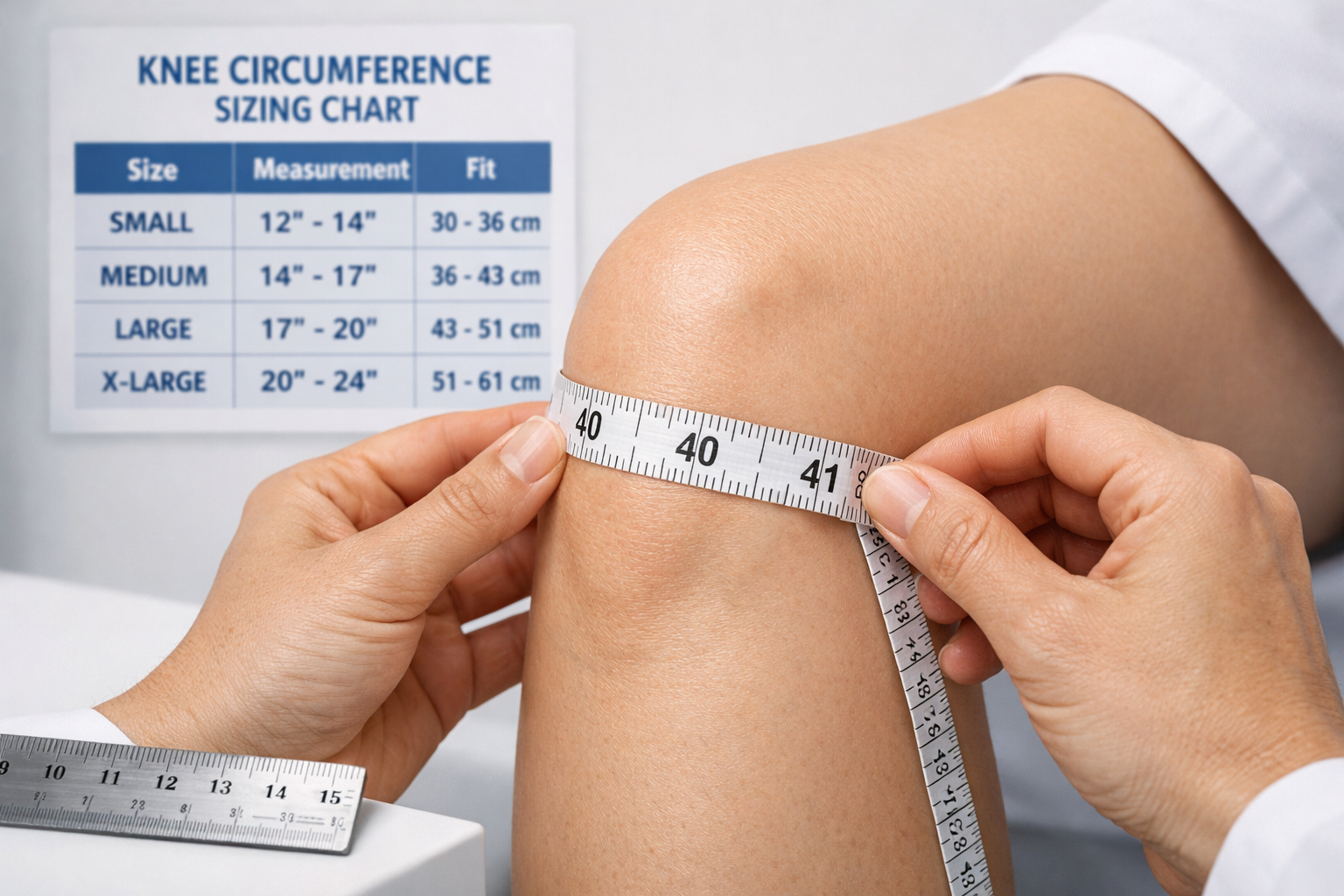
Knee brace sizing differs significantly from clothing sizes. While your shirt might be a medium, your knee brace could require a large or small depending on your specific measurements and the manufacturer’s sizing chart. This discrepancy occurs because knee braces must accommodate the unique anatomy of your leg, including muscle mass, bone structure, and the specific area requiring support.
The anatomy of proper knee brace sizing involves three critical measurement points:
- Knee circumference (around the kneecap)
- Thigh circumference (6 inches above the kneecap)
- Calf circumference (6 inches below the kneecap)
These measurements work together to ensure your brace stays in position during movement while providing appropriate compression and support. Choosing the right knee brace involves understanding both your condition and proper sizing techniques.
Essential Tools and Preparation for Measuring
Before learning how to know what size knee brace you need, gather the proper measuring tools. A flexible measuring tape is essential – the type used by tailors or available at craft stores works perfectly. Avoid using a rigid ruler or metal tape measure, as these won’t conform to your leg’s contours.
Preparation steps for accurate measurement:
- Remove clothing from your leg or wear thin, form-fitting clothing
- Stand upright with your weight evenly distributed
- Keep your leg straight but not locked or tense
- Have someone assist if possible for more accurate readings
- Measure both legs if you’re unsure which knee needs support
Timing matters when measuring. Your legs can swell throughout the day, so measure at a consistent time – preferably mid-morning when swelling is minimal but you’re fully awake and mobile.
Step-by-Step Guide: How to Know What Size Knee Brace You Need
Measuring Your Knee Circumference
The knee circumference is your primary measurement. Locate your kneecap (patella) and wrap the measuring tape around the widest part of your knee. The tape should sit directly over the center of your kneecap, creating a horizontal line around your leg.
Keep the measuring tape snug but not tight – you should be able to slide one finger underneath. Record this measurement in inches or centimeters, depending on the manufacturer’s sizing chart requirements.
Measuring Your Thigh
Measure your thigh circumference exactly 6 inches above your kneecap. Use a ruler to mark this point, then wrap the measuring tape around your thigh at this location. This measurement ensures the top portion of your knee brace won’t be too tight or loose.
For individuals with muscular thighs, this measurement becomes particularly important. A brace that fits your knee perfectly might be too restrictive around a larger thigh, leading to circulation issues.
Measuring Your Calf
The calf measurement is taken 6 inches below your kneecap. This ensures the bottom portion of your brace fits properly and won’t slide down during activity. Calf measurements are especially critical for longer braces that extend well below the knee.
Different Types of Knee Braces and Their Sizing Requirements
Understanding how to know what size knee brace you need depends heavily on the type of brace you’re considering. Each style has unique sizing considerations and fit requirements.
Compression Sleeves
Compression sleeves rely primarily on knee circumference for sizing. These pull-on braces should feel snug around your entire knee area. Look for graduated compression that’s tighter around the knee and slightly looser at the top and bottom edges.
Popular options like copper-infused knee braces often use this sleeve design and require precise sizing for optimal compression benefits.
Hinged Knee Braces
Hinged braces require all three measurements (knee, thigh, and calf) because they typically extend further up and down your leg. The hinges must align with your knee’s natural pivot point, making proper sizing critical for both comfort and function.
These braces often help with ligament damage and require professional fitting for optimal results.
Wraparound Braces
Wraparound designs offer more adjustability but still require accurate base measurements. The adjustable straps allow for fine-tuning, but starting with the correct size range is essential.
Patellar Stabilizing Braces
Patellar braces focus on kneecap positioning and typically use knee circumference as the primary sizing metric. However, the positioning of stabilizing elements requires precise fit to be effective.

|

|

|
|
Description: EXOUS BODYGEAR is a dedicated sports accessory brand. We are primarily focused on the EX-701 knee support, which is our patented, unique, original design knee brace offering generic 2- and 3-strap knee braces. Patented 4 Strap Attachment: 4 anchor points allow you to adjust the fit and compression to your desired comfort. The knee compression will feel like it is around the whole knee joint |
Description: NEENCA KNEE SUPPORT TECHNOLOGY— An anatomically contoured patella gel pad surrounds your kneecap, and removable dual-side copper stabilizers fit tightly with your joint. It helps control your movement, effectively supports knee recovery treatment, and accelerates recovery. BEST CHOICE for sports protection and knee pain relief. |
Description: Our anti-inflammatory treatment knee brace for men & women provides superior support, stability, and relief for people with meniscus tears, ACL injuries, arthritis, and joint aches. Stay Active: Our knee sleeves for women & men are designed to be flexible and fit comfortably on your knee, providing stable pressure, knee support, and stabilizing your knee joint. |
|
Our Rating:
4.8
|
Our Rating:
4.9
|
Our Rating:
4.4
|
|
$34.98
|
$59.89
|
$27.95
|
EXOUS BODYGEAR is a dedicated sports accessory brand. We are primarily focused on the EX-701 knee support, which is our patented, unique, original design knee brace offering generic 2- and 3-strap knee braces.
Patented 4 Strap Attachment: 4 anchor points allow you to adjust the fit and compression to your desired comfort. The knee compression will feel like it is around the whole knee joint
NEENCA KNEE SUPPORT TECHNOLOGY— An anatomically contoured patella gel pad surrounds your kneecap, and removable dual-side copper stabilizers fit tightly with your joint.
It helps control your movement, effectively supports knee recovery treatment, and accelerates recovery. BEST CHOICE for sports protection and knee pain relief.
Our anti-inflammatory treatment knee brace for men & women provides superior support, stability, and relief for people with meniscus tears, ACL injuries, arthritis, and joint aches.
Stay Active: Our knee sleeves for women & men are designed to be flexible and fit comfortably on your knee, providing stable pressure, knee support, and stabilizing your knee joint.
Reading and Interpreting Sizing Charts
Manufacturer sizing charts vary significantly, making it crucial to check each brand’s specific requirements. Never assume your size will be consistent across different manufacturers – a medium in one brand might be a large in another.
Common sizing chart elements include:
| Size | Knee Circumference | Thigh Circumference | Calf Circumference |
|---|---|---|---|
| Small | 12-14 inches | 16-18 inches | 11-13 inches |
| Medium | 14-16 inches | 18-20 inches | 13-15 inches |
| Large | 16-18 inches | 20-22 inches | 15-17 inches |
| X-Large | 18-20 inches | 22-24 inches | 17-19 inches |
Note: This is a sample chart – always refer to the specific manufacturer’s sizing guide.
Some manufacturers provide size ranges that overlap. If your measurements fall between sizes, consider these factors:
- Your activity level (more active users may prefer slightly looser fit)
- Swelling tendencies (choose larger size if you experience regular swelling)
- Intended use duration (longer wear periods may require more comfortable sizing)
Common Sizing Mistakes and How to Avoid Them
Learning how to know what size knee brace you need involves avoiding frequent pitfalls that lead to poor fit and reduced effectiveness.
Measuring Over Thick Clothing
The most common mistake is measuring over jeans or thick pants. This adds several inches to your actual measurements, resulting in a brace that’s too large. Always measure against bare skin or thin clothing.
Using Old Measurements
Body measurements change due to weight fluctuations, muscle development, or medical conditions. Measurements older than six months may no longer be accurate, especially if you’ve experienced weight changes or increased activity levels.
Ignoring Swelling Patterns
If you experience regular knee swelling, measure at different times of day to understand the variation. Choose sizing that accommodates moderate swelling to ensure your brace remains effective when you need it most.
Understanding if knee braces help with swelling can guide your sizing decisions for inflammatory conditions.
Assuming Universal Sizing
Each manufacturer uses different sizing standards. A size medium from one company might fit like a large from another. Always consult the specific sizing chart for the exact brace you’re purchasing.
Signs of Proper vs. Improper Fit
Recognizing proper fit helps ensure you’ve correctly determined how to know what size knee brace you need. A properly fitted knee brace should:
✅ Stay in position during normal movement without sliding up or down
✅ Provide firm support without cutting off circulation
✅ Allow full range of motion within your knee’s current capabilities
✅ Feel snug but comfortable for extended wear periods
✅ Maintain consistent compression around the entire knee area
Warning signs of improper fit include:
❌ Sliding or bunching during movement
❌ Numbness or tingling in your leg or foot
❌ Skin discoloration from excessive pressure
❌ Pain or discomfort that worsens with the brace on
❌ Inability to fasten straps or closures properly
Understanding how a knee brace should fit provides additional guidance for evaluating your brace’s effectiveness.
Special Considerations for Different Conditions
Arthritis and Joint Degeneration
Arthritic knees often experience variable swelling, requiring careful sizing consideration. Knee braces for arthritis should accommodate daily fluctuations while providing consistent support.
Consider sizing that allows for moderate swelling while maintaining therapeutic compression during normal periods.
Post-Injury Recovery
Recent injuries may involve significant swelling that changes over time. Initially, you might need a larger size that can be adjusted as swelling decreases. Some individuals require multiple braces in different sizes during the recovery process.
Active Lifestyle Needs
Athletes and active individuals have unique sizing requirements. The brace must stay secure during vigorous movement while allowing full range of motion. Knee braces for running require particularly precise sizing to prevent sliding during repetitive motion.
When to Consult Healthcare Professionals
While understanding how to know what size knee brace you need empowers you to make informed decisions, certain situations require professional guidance.
Seek professional fitting for:
- Complex knee injuries requiring specific brace types
- Post-surgical recovery braces
- Custom or semi-custom brace options
- Persistent sizing difficulties or comfort issues
- Multiple failed attempts with over-the-counter options
Healthcare professionals can provide gait analysis, assess your specific condition, and recommend appropriate brace types and sizing. They may also identify underlying issues affecting your brace fit or effectiveness.
Physical therapists and orthotists specialize in brace fitting and can ensure optimal positioning for your specific anatomy and condition. Determining the best knee brace for pain relief often benefits from professional input.
Adjusting and Fine-Tuning Your Brace Fit
Even with perfect initial sizing, most knee braces require adjustment for optimal comfort and effectiveness. Modern braces include multiple adjustment mechanisms:
- Velcro straps for circumferential adjustment
- Hinged components that can be repositioned
- Compression zones with variable tightness
- Padding elements that can be added or removed
Break-in period expectations: Most knee braces require 3-7 days of gradual use to achieve optimal comfort. Start with shorter wear periods and gradually increase duration as your leg adapts to the brace.
Monitor your skin for pressure points or irritation during the break-in period. Minor adjustments to strap positioning or tightness often resolve initial discomfort issues.
Maintenance and When to Replace Your Knee Brace
Proper sizing knowledge extends to understanding when your current brace no longer fits appropriately. Replace your knee brace when:
- Elastic components lose their compression strength
- Velcro closures no longer hold securely
- Structural elements show wear or damage
- Your measurements change significantly due to weight loss/gain or muscle development
- Skin irritation develops despite proper fit initially
Regular cleaning maintains the brace’s elasticity and hygiene. Follow manufacturer instructions for washing, as improper care can alter sizing and fit characteristics.
Expected lifespan varies by brace type:
- Compression sleeves: 6-12 months with regular use
- Hinged braces: 1-2 years with proper maintenance
- Custom braces: 2-3 years or as recommended by your healthcare provider
Conclusion
Understanding how to know what size knee brace you need is fundamental to achieving effective pain relief and joint support. Accurate measurement techniques, proper interpretation of sizing charts, and recognition of fit indicators ensure you select a brace that provides therapeutic benefits rather than frustration.
Take action today by:
- Gathering proper measuring tools and taking accurate measurements of your knee, thigh, and calf
- Researching specific sizing charts for the brace types you’re considering
- Consulting healthcare professionals if you have complex needs or sizing concerns
- Starting with shorter wear periods to evaluate fit and comfort
- Monitoring your brace’s condition and replacing it when effectiveness diminishes
Remember that proper sizing is just one component of effective knee pain management. Choosing the right type of knee brace for your specific condition is equally important for achieving optimal results.
The investment in proper sizing pays dividends through improved pain relief, better mobility, and enhanced quality of life. Take the time to measure accurately, research thoroughly, and don’t hesitate to seek professional guidance when needed. Your knees will thank you for the attention to detail in finding the perfect fit.