

When knee pain strikes, finding relief becomes a top priority. Whether you’re recovering from an injury, managing arthritis, or seeking support during physical activities, learning how to properly wear a knee brace can make the difference between effective pain relief and continued discomfort. A properly fitted and positioned knee brace provides crucial support, stability, and protection for your joint—but only when worn correctly.
Many people struggle with knee brace application, leading to reduced effectiveness, skin irritation, or even increased discomfort. The good news? With the right knowledge and technique, anyone can master the art of proper knee brace placement. This comprehensive guide will walk you through everything you need to know about wearing your knee brace safely and effectively.
Key Takeaways
• Proper positioning is critical: The brace must align correctly with your kneecap and surrounding structures for maximum support
• Size and fit matter: A correctly sized brace prevents slipping while avoiding circulation problems
• Skin preparation is essential: Clean, dry skin ensures better grip and reduces irritation
• Regular adjustments improve comfort: Monitor fit throughout the day and adjust straps as needed
• Know when to seek help: Persistent pain or discomfort while wearing a brace requires professional evaluation
What Is a Knee Brace? 🦵
A knee brace is a supportive device designed to stabilize, protect, and provide compression to the knee joint and surrounding tissues. These medical devices work by redistributing forces around the knee, limiting harmful movements, and providing proprioceptive feedback that helps your body maintain better joint awareness.
Knee braces support the complex anatomy of your knee, including:
- Ligaments (ACL, PCL, MCL, LCL)
- Cartilage (meniscus)
- Bones (femur, tibia, patella)
- Surrounding muscles and tendons
Common Situations Where Knee Braces Provide Relief
Injury Recovery 🏥
- Post-surgical rehabilitation
- Ligament sprains or tears
- Meniscus injuries
- Fracture healing support
Arthritis Management
- Osteoarthritis pain relief
- Joint decompression
- Improved mobility during flare-ups
Athletic Support
- Prevention during high-risk sports
- Return-to-play protection
- Performance enhancement
Daily Activity Assistance
- Workplace injury prevention
- Stability during walking
- Confidence building for active lifestyles
Understanding what injuries require a knee brace can help you determine if this supportive device is right for your specific condition.
Types of Knee Braces and Their Unique Positioning Requirements
Different knee brace designs require specific positioning techniques for optimal effectiveness. Understanding your brace type is crucial for proper application.
Compression Sleeves
- Design: Elastic, tube-like construction
- Positioning: Must sit evenly around the entire knee
- Key feature: Provides uniform compression and warmth
Hinged Knee Braces
- Design: Metal or plastic hinges on both sides
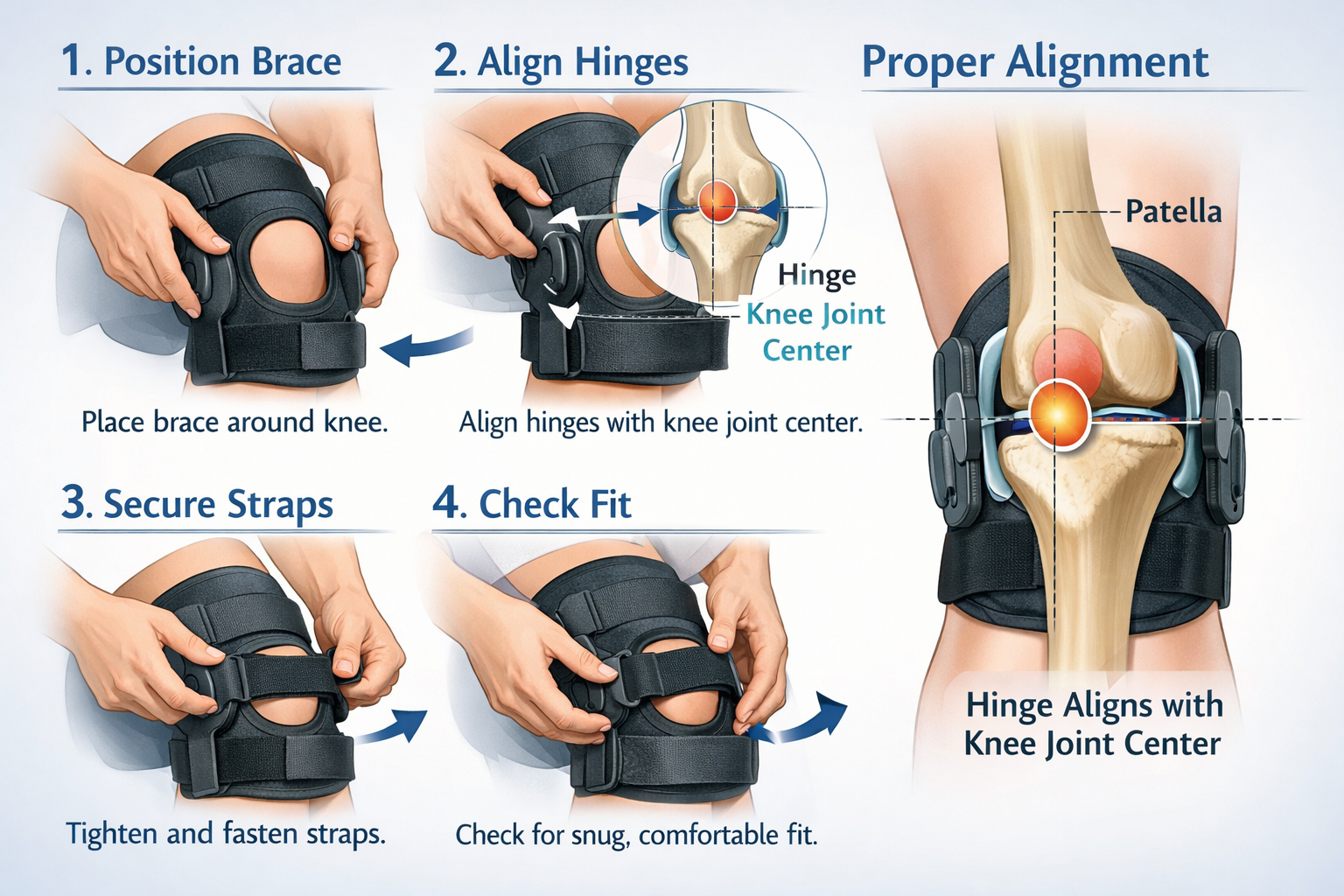
- Positioning: Hinges must align with your knee’s natural pivot point
- Key feature: Controls range of motion while allowing safe movement
Wraparound Knee Braces
- Design: Multiple straps and adjustable panels
- Positioning: Requires careful strap tensioning for even support
- Key feature: Highly customizable fit and compression levels
Patellar Straps
- Design: Single strap below the kneecap
- Positioning: Must sit directly on the patellar tendon
- Key feature: Targets specific pressure points for tendon support
Each type may require slightly different positioning techniques, but the fundamental principles of proper alignment remain consistent across all designs.

|

|

|
|
Description: EXOUS BODYGEAR is a dedicated sports accessory brand. We are primarily focused on the EX-701 knee support, which is our patented, unique, original design knee brace offering generic 2- and 3-strap knee braces. Patented 4 Strap Attachment: 4 anchor points allow you to adjust the fit and compression to your desired comfort. The knee compression will feel like it is around the whole knee joint |
Description: NEENCA KNEE SUPPORT TECHNOLOGY— An anatomically contoured patella gel pad surrounds your kneecap, and removable dual-side copper stabilizers fit tightly with your joint. It helps control your movement, effectively supports knee recovery treatment, and accelerates recovery. BEST CHOICE for sports protection and knee pain relief. |
Description: Our anti-inflammatory treatment knee brace for men & women provides superior support, stability, and relief for people with meniscus tears, ACL injuries, arthritis, and joint aches. Stay Active: Our knee sleeves for women & men are designed to be flexible and fit comfortably on your knee, providing stable pressure, knee support, and stabilizing your knee joint. |
|
Our Rating:
4.8
|
Our Rating:
4.9
|
Our Rating:
4.4
|
|
$34.98
|
$59.89
|
$27.95
|
EXOUS BODYGEAR is a dedicated sports accessory brand. We are primarily focused on the EX-701 knee support, which is our patented, unique, original design knee brace offering generic 2- and 3-strap knee braces.
Patented 4 Strap Attachment: 4 anchor points allow you to adjust the fit and compression to your desired comfort. The knee compression will feel like it is around the whole knee joint
NEENCA KNEE SUPPORT TECHNOLOGY— An anatomically contoured patella gel pad surrounds your kneecap, and removable dual-side copper stabilizers fit tightly with your joint.
It helps control your movement, effectively supports knee recovery treatment, and accelerates recovery. BEST CHOICE for sports protection and knee pain relief.
Our anti-inflammatory treatment knee brace for men & women provides superior support, stability, and relief for people with meniscus tears, ACL injuries, arthritis, and joint aches.
Stay Active: Our knee sleeves for women & men are designed to be flexible and fit comfortably on your knee, providing stable pressure, knee support, and stabilizing your knee joint.
Preparing to Wear Your Knee Brace
Proper preparation sets the foundation for successful knee brace application. Taking time for these preliminary steps ensures better comfort and effectiveness.
✅ Choose the Correct Brace Size
Measure accurately: Use a soft measuring tape around your knee at the center of the kneecap. Most manufacturers provide detailed sizing charts that correspond to these measurements.
Consider swelling: If your knee tends to swell throughout the day, measure when it’s at its largest to ensure the brace won’t become too tight.
Check fit indicators: A properly sized brace should feel snug but not restrictive. You should be able to slide one finger under the straps comfortably.
✅ Ensure Clean, Dry Skin
Remove lotions or oils: These can cause the brace to slip during wear
Dry thoroughly: Moisture reduces grip and can lead to skin irritation
Check for cuts or irritation: Address any skin issues before applying the brace
✅ Clothing Considerations
Direct skin contact: Most braces work best when applied directly to clean skin
Thin layers: If you prefer wearing something underneath, choose thin, moisture-wicking fabric
Loose-fitting pants: Ensure your clothing won’t bunch up or create pressure points
For detailed guidance on clothing choices, see our guide on how to wear a knee brace with pants.
Step-by-Step Guide: How to Properly Wear a Knee Brace
Follow these detailed steps to ensure your knee brace provides maximum support and comfort.
Step 1: Position the Brace Correctly 🎯
Locate your kneecap: Place your hand on your knee and feel for the round, moveable bone (patella) at the front of your joint.
Align the brace opening: If your brace has a central opening or special padding, position it directly over your kneecap. The opening should frame your patella without putting pressure on the bone itself.
Check side alignment: For hinged braces, ensure the metal or plastic hinges sit on the sides of your knee, not on the front or back. The hinges should align with your knee’s natural bending axis.
Verify top and bottom placement: The brace should extend approximately 3-4 inches above and below your kneecap for optimal support distribution.
Step 2: Secure the Brace Properly 🔒
Start with the middle strap: If your brace has multiple straps, begin with the one closest to your kneecap and work outward.
Apply even tension: Pull straps snugly but avoid over-tightening. The goal is firm support, not restriction.
Use the “two-finger rule”: You should be able to slide two fingers under any strap comfortably.
Secure all attachment points: Ensure velcro, buckles, or other fasteners are completely engaged to prevent loosening during activity.
Step 3: Adjust for Comfort and Mobility 🏃♂️
Perform range-of-motion tests:
- Bend your knee slowly to 90 degrees
- Straighten your leg completely
- Take several steps if possible
Check for pressure points: Feel around the edges of the brace for any areas that dig into your skin or create uncomfortable pressure.
Adjust strap tension: Loosen straps that feel too tight or tighten areas where the brace feels loose or unstable.
Verify stability: The brace should move with your leg as one unit, without shifting or sliding during movement.
Step 4: Monitor Circulation and Comfort ⚠️
Watch for warning signs:
- Numbness or tingling
- Skin color changes (blue, white, or red)
- Increased swelling
- Sharp pain or discomfort
Perform circulation checks: Press on your skin below the brace and watch for quick color return when you release pressure.
Adjust immediately: If you notice any circulation problems, loosen the brace right away and readjust.
For more detailed fitting guidance, check our comprehensive resource on how a knee brace should fit.
Should a Knee Brace Be Worn Over or Under Clothing?
The placement of your knee brace relative to clothing significantly impacts its effectiveness and your comfort level.
Direct Skin Contact (Recommended) ✅
Benefits:
- Maximum grip and stability
- Better compression effectiveness
- Reduced slipping during activity
- More accurate proprioceptive feedback
Best for:
- Athletic activities
- Rehabilitation exercises
- Maximum support needs
Over Thin Clothing
When appropriate:
- Workplace wear requirements
- Sensitive skin conditions
- Cold weather protection
- Personal comfort preferences
Fabric recommendations:
- Moisture-wicking materials
- Compression garments
- Thin, smooth textures
Avoid:
- Thick fabrics
- Loose, bunching materials
- Seams under brace contact points
Learn more about clothing options in our guide covering whether knee braces go over or under pants.
Tips for Wearing a Knee Brace Comfortably Throughout the Day
Maintaining comfort during extended wear requires attention to detail and periodic adjustments.
Regular Monitoring 🕐
Check every 2-3 hours: Assess fit, comfort, and circulation regularly
Adjust as needed: Loosen or tighten straps based on activity level and swelling changes
Take breaks: Remove the brace periodically to allow skin to breathe and recover
Activity-Specific Adjustments
For exercise: Ensure secure fit to prevent slipping during movement
For sitting: Slightly loosen straps to accommodate bent-knee positioning
For sleeping: Follow manufacturer guidelines about overnight wear
Skin Care Strategies
Use barrier products: Thin moisture-wicking sleeves can prevent chafing
Rotate application sites: Slightly vary brace position to prevent pressure sores
Maintain hygiene: Clean both skin and brace regularly to prevent irritation
For guidance on extended wear, see our article about how many hours a day you should wear a knee brace.
Common Mistakes When Wearing a Knee Brace (And How to Avoid Them)
Avoiding these frequent errors will improve your brace’s effectiveness and your overall comfort.
❌ Wrong Size Selection
The mistake: Choosing a brace that’s too large or too small
The fix: Always measure your knee and consult sizing charts before purchasing
Why it matters: Incorrect sizing reduces support and increases injury risk
❌ Improper Positioning
The mistake: Placing the brace too high, too low, or rotated incorrectly
The fix: Take time to properly align the brace with your knee anatomy
Why it matters: Misalignment can worsen pain and reduce protective benefits
❌ Incorrect Tension
The mistake: Over-tightening straps or leaving them too loose
The fix: Use the two-finger rule and monitor circulation regularly
Why it matters: Poor tension affects both comfort and therapeutic effectiveness
❌ Ignoring Skin Health
The mistake: Wearing a dirty brace on unwashed skin
The fix: Maintain good hygiene for both your skin and the brace
Why it matters: Poor hygiene leads to skin problems and reduces brace lifespan
For additional troubleshooting, read about how to keep your knee brace from falling down.
When to Wear a Knee Brace: Timing and Duration Guidelines
Understanding when and how long to wear your knee brace optimizes its therapeutic benefits while preventing dependency.
Activity-Based Timing 🏃♀️
During exercise: Wear throughout your workout and cool-down period
For daily activities: Use during times when you experience the most knee stress
Post-injury: Follow your healthcare provider’s specific timeline recommendations
Recovery Phases
Acute injury (0-72 hours): Continuous wear as directed by medical professionals
Subacute phase (3 days-6 weeks): Gradual reduction in wearing time
Chronic management: Intermittent use based on activity and symptom levels
Professional Guidance Indicators
Always consult a healthcare provider when:
- Starting a new brace regimen
- Experiencing increased pain while wearing the brace
- Noticing skin problems or circulation issues
- Unsure about appropriate wearing duration
Explore our detailed guide on whether you should wear a knee brace all day for comprehensive timing recommendations.
When to Consult a Medical Professional
Certain situations require professional evaluation to ensure safe and effective knee brace use.
Immediate Medical Attention 🚨
Seek help if you experience:
- Severe pain that worsens with brace use
- Signs of circulation problems (numbness, color changes)
- Skin breakdown or persistent irritation
- Increased swelling or instability
Routine Professional Consultation
Schedule appointments for:
- Initial brace fitting and education
- Progress monitoring during recovery
- Adjustments to wearing schedule
- Evaluation of treatment effectiveness
Red Flag Symptoms
Contact your healthcare provider immediately if:
- Your knee gives out despite wearing the brace
- You develop fever along with knee symptoms
- Pain significantly increases rather than improves
- You experience persistent numbness or tingling
Understanding the signs you need a knee brace can help you make informed decisions about when to seek professional guidance.
Conclusion
Learning how to properly wear a knee brace is an essential skill that can significantly impact your recovery, comfort, and quality of life. By following the step-by-step guidance outlined in this comprehensive guide, you’ll be able to maximize your brace’s therapeutic benefits while avoiding common pitfalls that reduce effectiveness.
Remember these key principles: proper sizing and positioning are non-negotiable, regular monitoring prevents problems before they start, and professional guidance ensures you’re using the right approach for your specific condition. Whether you’re managing arthritis, recovering from an injury, or seeking preventive support during activities, a correctly worn knee brace can be a powerful tool in your pain management arsenal.
Take action today by reviewing your current brace-wearing technique against the guidelines provided here. If you’re experiencing discomfort or questioning your approach, don’t hesitate to consult with a healthcare professional who can provide personalized recommendations for your unique situation. Your knees—and your overall well-being—will thank you for taking the time to get it right.