

When knee pain strikes, the question “is a knee brace or compression sleeve better” becomes critical for anyone seeking relief. With over 25% of adults experiencing knee pain that limits their daily activities, choosing the right support can mean the difference between continued discomfort and getting back to the activities you love. 🦵
The choice between a knee brace and compression sleeve isn’t just about preference—it’s about matching the right solution to your specific condition, activity level, and recovery goals. Understanding the fundamental differences between these two support options will help you make an informed decision that leads to better outcomes and faster relief.
Key Takeaways
• Knee braces provide structural support and are better for injuries requiring stability, while compression sleeves offer gentle compression ideal for mild pain and swelling
• Activity level matters: Braces work best for high-impact activities and sports, while sleeves excel during daily activities and light exercise
• Injury type determines choice: Ligament tears and instability need braces, while arthritis and minor strains benefit from compression sleeves
• Comfort vs. support trade-off: Sleeves are more comfortable for all-day wear, but braces offer superior protection for serious conditions
• Professional guidance is essential for severe injuries, chronic conditions, or when conservative treatment isn’t working
Understanding Knee Braces: Maximum Support and Stability
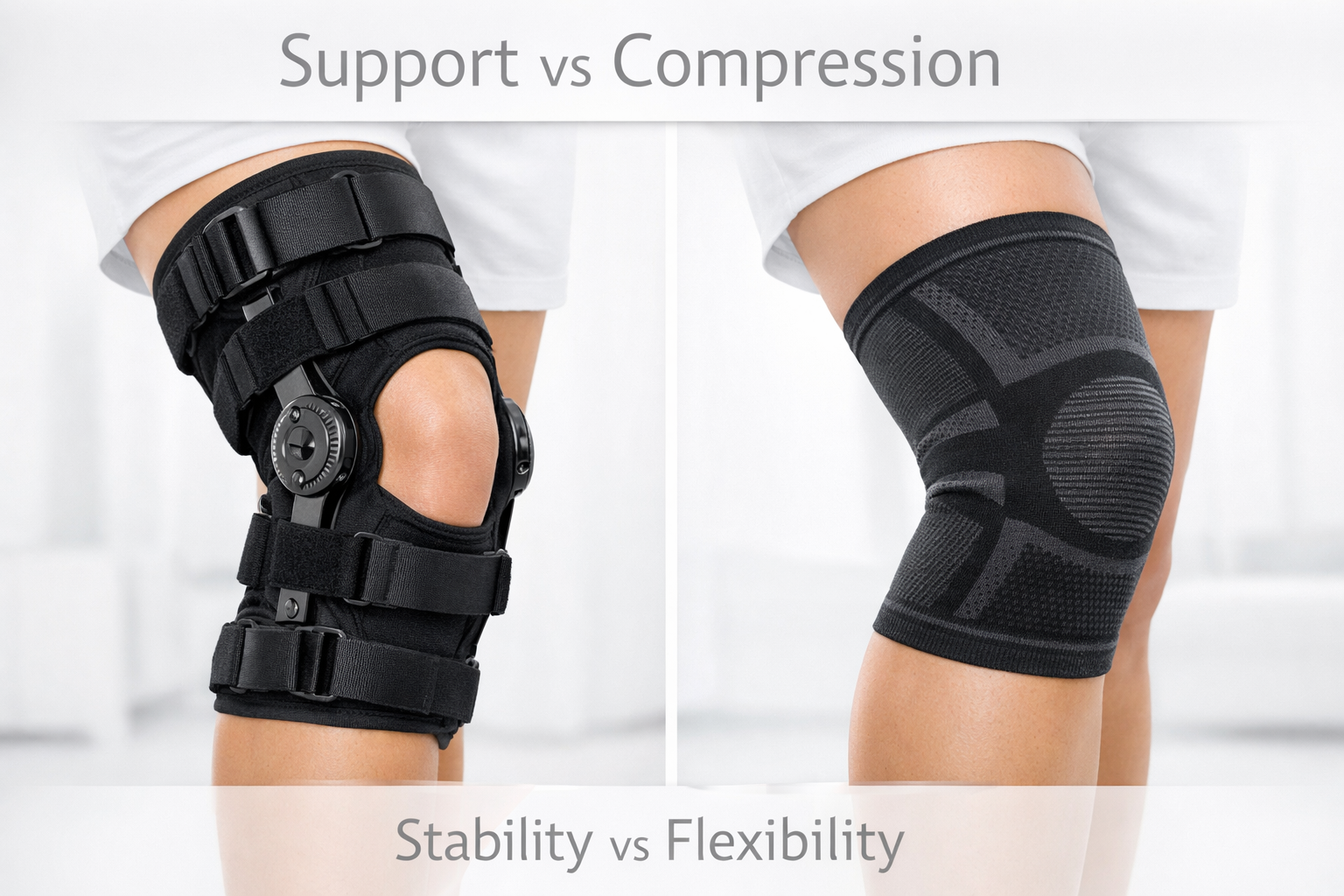
Knee braces are medical devices designed to provide structural support and limit harmful movements that could worsen an injury. These devices typically feature rigid or semi-rigid materials, adjustable straps, and sometimes metal hinges to control knee motion.
Types of Knee Braces
Prophylactic Braces 🛡️
- Designed to prevent injuries during sports
- Popular among football and basketball players
- Provide lateral support to prevent knee hyperextension
Functional Braces
- Support knees with existing injuries
- Help compensate for damaged ligaments
- Allow controlled movement while preventing re-injury
Rehabilitative Braces
- Used during recovery from surgery or severe injury
- Limit range of motion to protect healing tissues
- Gradually adjusted as recovery progresses
Unloader/Offloader Braces
- Specifically designed for arthritis pain
- Shift weight away from damaged cartilage
- Particularly effective for bone-on-bone conditions
When Knee Braces Excel
Knee braces are the superior choice when dealing with:
- Ligament injuries (ACL, MCL, LCL tears)
- Meniscus tears requiring stability
- Knee instability or buckling episodes
- Post-surgical recovery periods
- High-impact sports participation
- Severe arthritis with structural damage
The effectiveness of knee braces for pain relief has been well-documented in clinical studies, particularly for conditions involving structural instability.
Compression Sleeves: Gentle Support for Active Recovery
Compression sleeves take a different approach to knee support, using graduated compression to improve blood flow, reduce swelling, and provide proprioceptive feedback. Made from elastic materials like neoprene or breathable fabrics, these sleeves wrap snugly around the knee without restricting movement.
How Compression Sleeves Work
Improved Circulation 💓
- Graduated pressure promotes blood flow
- Reduces swelling and inflammation
- Speeds up recovery by delivering nutrients to tissues
Proprioceptive Enhancement
- Increases awareness of knee position
- Improves balance and coordination
- Helps prevent awkward movements that cause injury
Warmth and Comfort
- Maintains joint temperature
- Reduces stiffness, especially in cold weather
- Provides psychological comfort and confidence
Ideal Conditions for Compression Sleeves
Compression sleeves work best for:
- Mild to moderate arthritis
- General knee pain without instability
- Swelling and inflammation
- Prevention during exercise
- Recovery from minor strains
- Daily activity support
Research shows that compression sleeves can be highly effective for these conditions, offering benefits without the bulk of traditional braces.

|

|

|
|
Description: EXOUS BODYGEAR is a dedicated sports accessory brand. We are primarily focused on the EX-701 knee support, which is our patented, unique, original design knee brace offering generic 2- and 3-strap knee braces. Patented 4 Strap Attachment: 4 anchor points allow you to adjust the fit and compression to your desired comfort. The knee compression will feel like it is around the whole knee joint |
Description: NEENCA KNEE SUPPORT TECHNOLOGY— An anatomically contoured patella gel pad surrounds your kneecap, and removable dual-side copper stabilizers fit tightly with your joint. It helps control your movement, effectively supports knee recovery treatment, and accelerates recovery. BEST CHOICE for sports protection and knee pain relief. |
Description: Our anti-inflammatory treatment knee brace for men & women provides superior support, stability, and relief for people with meniscus tears, ACL injuries, arthritis, and joint aches. Stay Active: Our knee sleeves for women & men are designed to be flexible and fit comfortably on your knee, providing stable pressure, knee support, and stabilizing your knee joint. |
|
Our Rating:
4.8
|
Our Rating:
4.9
|
Our Rating:
4.4
|
|
$34.99
|
$59.89
|
$15.93
|
EXOUS BODYGEAR is a dedicated sports accessory brand. We are primarily focused on the EX-701 knee support, which is our patented, unique, original design knee brace offering generic 2- and 3-strap knee braces.
Patented 4 Strap Attachment: 4 anchor points allow you to adjust the fit and compression to your desired comfort. The knee compression will feel like it is around the whole knee joint
NEENCA KNEE SUPPORT TECHNOLOGY— An anatomically contoured patella gel pad surrounds your kneecap, and removable dual-side copper stabilizers fit tightly with your joint.
It helps control your movement, effectively supports knee recovery treatment, and accelerates recovery. BEST CHOICE for sports protection and knee pain relief.
Our anti-inflammatory treatment knee brace for men & women provides superior support, stability, and relief for people with meniscus tears, ACL injuries, arthritis, and joint aches.
Stay Active: Our knee sleeves for women & men are designed to be flexible and fit comfortably on your knee, providing stable pressure, knee support, and stabilizing your knee joint.
Is a Knee Brace or Compression Sleeve Better for Specific Conditions?
The answer depends entirely on your specific condition and needs. Here’s a detailed breakdown:
For Meniscus Tears
Knee Brace Winner 🏆
- Provides essential stability during healing
- Prevents movements that worsen tears
- Supports return to activities safely
- Specific guidance for meniscus injuries shows braces are typically preferred
For Arthritis Pain
Depends on Severity
- Mild arthritis: Compression sleeves often sufficient
- Moderate to severe: Knee braces for arthritis provide better pain relief
- Bone-on-bone: Unloader braces specifically designed for this condition
For Running and Sports
Activity-Dependent Choice
- High-impact sports: Braces for injury prevention
- Recreational running: Compression sleeves often preferred for comfort
- Return from injury: Braces during initial phases, sleeves for maintenance
For Daily Activities
Compression Sleeve Advantage
- More comfortable for extended wear
- Less noticeable under clothing
- Easier to put on and remove
- Better for work and daily tasks
Comparing Comfort, Convenience, and Cost
| Factor | Knee Brace | Compression Sleeve |
|---|---|---|
| Comfort | Moderate (bulky) | High (lightweight) |
| Ease of Use | Complex fitting | Simple slip-on |
| Under Clothes | Difficult | Easy |
| All-Day Wear | Challenging | Comfortable |
| Cost | $50-$500+ | $15-$100 |
| Durability | High | Moderate |
Practical Considerations
Lifestyle Factors 🏃♀️
- Active professionals: Sleeves for discretion
- Athletes: Braces for maximum protection
- Elderly users: Sleeves for ease of application
- Post-surgery patients: Braces as prescribed
Long-term Use
- Braces may cause muscle weakness if overused
- Sleeves can be worn more frequently without concern
- Understanding potential downsides helps inform decisions
Making the Right Choice: Is a Knee Brace or Compression Sleeve Better for You?
Step 1: Assess Your Condition Severity
Mild Symptoms (occasional pain, minor stiffness)
- ✅ Compression sleeve recommended
- Focus on prevention and comfort
- Monitor for improvement over 2-4 weeks
Moderate Symptoms (regular pain, some instability)
- 🤔 Consider both options
- Consult healthcare provider
- May benefit from professional device selection guidance
Severe Symptoms (constant pain, significant instability, injury)
- ✅ Knee brace likely necessary
- Medical evaluation essential
- May require prescription-grade devices
Step 2: Consider Your Activity Goals
Return to Sports
- Braces for contact sports
- Sleeves for low-impact activities
- Gradual transition from brace to sleeve possible
Daily Function
- Sleeves for work and routine activities
- Braces for specific high-risk situations
- Proper fitting is crucial for either choice
Step 3: Evaluate Practical Factors
Budget Considerations
- Sleeves are more affordable initially
- Braces may prevent costly re-injuries
- Insurance coverage varies by device type
Convenience Needs
- Sleeves win for simplicity
- Braces require more commitment
- Consider how to properly apply either option
Professional Guidance: When to Consult a Healthcare Provider
Red Flags Requiring Medical Attention
- Severe pain that doesn’t improve with rest
- Visible deformity or swelling
- Inability to bear weight
- Locking or catching sensations
- Numbness or tingling
Getting the Right Prescription
Healthcare providers can:
- Diagnose underlying conditions accurately
- Prescribe specific brace types
- Provide proper fitting instructions
- Monitor progress and adjust treatment
- Determine if professional-grade devices are necessary
Maximizing Benefits: Proper Use and Care
Fitting and Application Tips
For Knee Braces 🔧
- Ensure proper size measurement
- Follow manufacturer’s instructions precisely
- Learn correct application techniques
- Check for pressure points regularly
For Compression Sleeves
- Choose appropriate compression level
- Ensure snug but not restrictive fit
- Replace when elasticity decreases
- Wash regularly to maintain hygiene
Usage Guidelines
Frequency and Duration
- Start with shorter periods
- Gradually increase wear time
- Understand daily wear limits
- Remove if circulation issues occur
Activity Modifications
- Both devices work best with appropriate activity modification
- Avoid high-risk movements initially
- Progress activities gradually
- Listen to your body’s feedback
Conclusion
Determining whether a knee brace or compression sleeve is better depends on your specific condition, activity level, and personal needs. Knee braces excel when structural support and stability are paramount—particularly for ligament injuries, severe arthritis, and high-impact activities. Compression sleeves shine for mild to moderate pain, daily comfort, and active recovery from minor injuries.
The key is matching the device to your condition severity and lifestyle requirements. For mild knee pain and general support, start with a quality compression sleeve. If you experience instability, significant pain, or have been diagnosed with a structural injury, a knee brace is likely the better choice.
Take action today by honestly assessing your symptoms and consulting with a healthcare provider if you experience severe or persistent knee pain. Remember, the right support device is an investment in your long-term mobility and quality of life. Whether you choose a brace or sleeve, proper fitting and consistent use according to professional guidance will maximize your chances of successful pain relief and recovery.
Don’t let knee pain limit your life—make an informed choice and take the first step toward getting back to the activities you love. 🎯