

When a serious knee injury strikes, finding the right support becomes crucial for proper healing and recovery. A knee immobilizer brace serves as a medical-grade solution that provides maximum stability during the most critical phases of knee rehabilitation, offering hope and structure when mobility feels uncertain.
Whether recovering from surgery, managing a severe injury, or following medical recommendations, understanding how knee immobilizer braces work can make the difference between successful recovery and prolonged complications. These specialized orthotic devices go beyond basic support to provide complete knee stabilization when healing demands absolute rest.
Key Takeaways
• Knee immobilizer braces provide complete knee stabilization by preventing all bending and movement during critical recovery periods
• These braces are primarily prescribed for post-surgical recovery, severe ligament injuries, and fractures requiring strict immobilization
• Proper fitting and gradual weaning are essential for successful recovery and preventing muscle weakness
• Most patients wear immobilizer braces for 2-6 weeks depending on their specific condition and healing progress
• Professional medical guidance is crucial for determining the appropriate type, duration, and transition plan for immobilizer brace use
What Is a Knee Immobilizer Brace? 🔒
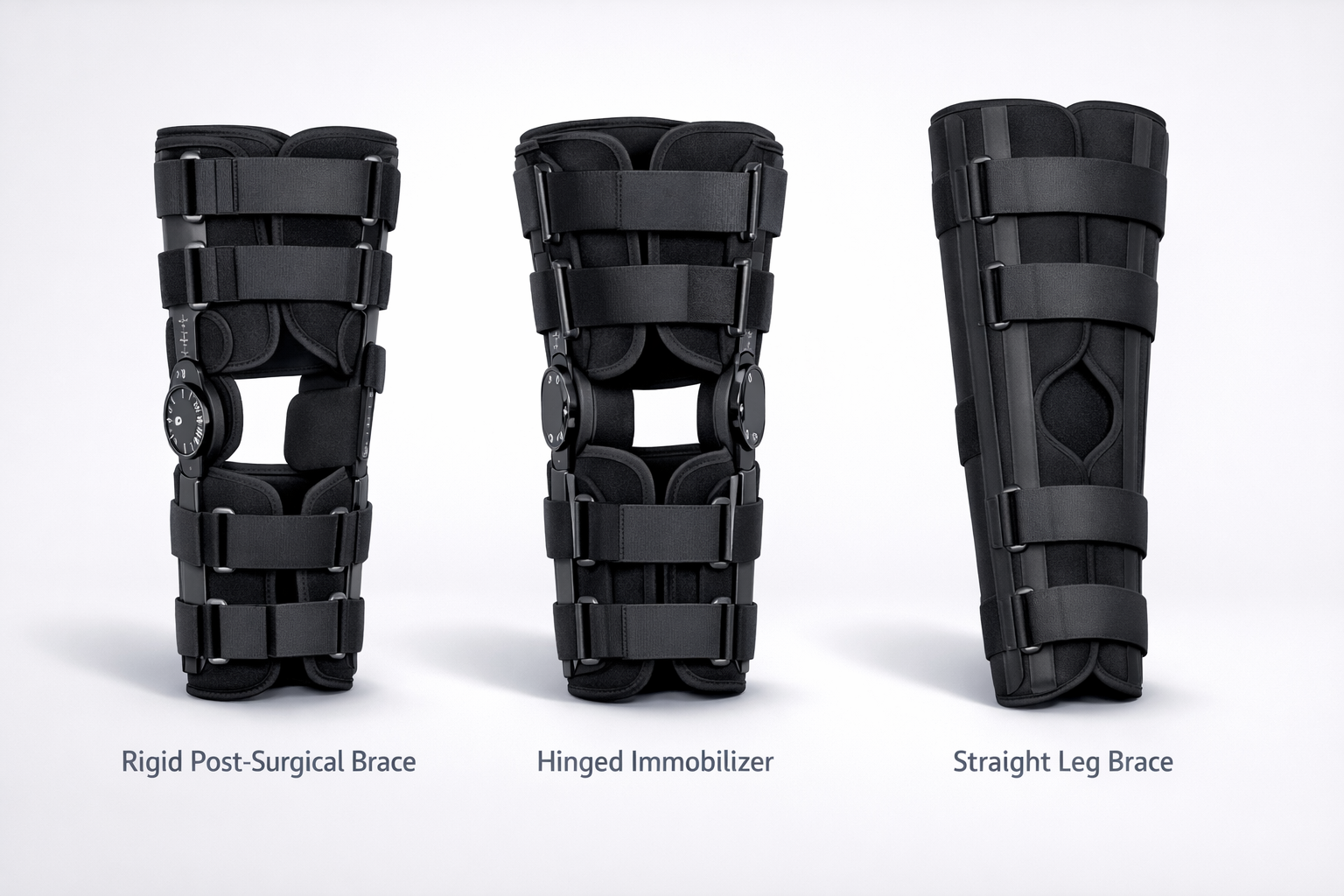
A knee immobilizer brace is a rigid orthotic device designed to completely restrict knee movement and maintain the leg in a straight, extended position. Unlike flexible knee supports or hinged knee braces that allow controlled movement, immobilizer braces eliminate all bending to protect healing tissues.
Key Components and Design
Rigid Framework: The core structure typically consists of lightweight aluminum or plastic stays that run along the sides of the leg, creating an inflexible support system.
Adjustable Strapping: Multiple Velcro straps secure the brace at various points along the thigh and calf, distributing pressure evenly while maintaining proper positioning.
Padding System: Foam or gel padding provides comfort against the skin and helps prevent pressure sores during extended wear periods.
Length Variations: Most immobilizer braces extend from mid-thigh to mid-calf, though some models offer different lengths based on specific medical requirements.
Medical Conditions Requiring Knee Immobilizer Braces 🏥
Healthcare providers prescribe knee immobilizer braces for specific conditions where complete knee stabilization is medically necessary. Understanding these conditions helps patients recognize when immobilization becomes the appropriate treatment approach.
Post-Surgical Recovery
Following major knee surgeries, immobilizer braces protect surgical sites and ensure proper healing alignment. Common surgical procedures requiring immobilization include:
- ACL reconstruction surgery
- Meniscus repair procedures
- Patellar realignment surgery
- Fracture repair operations
- Total knee replacement (initial recovery phase)
For patients dealing with torn meniscus injuries, surgical repair often requires strict immobilization to allow the delicate tissue to heal properly without disruption.
Severe Ligament Injuries
Complete ligament tears may require immobilization to prevent further damage and allow natural healing processes to begin. This includes:
- Grade 3 ACL tears
- Complete MCL ruptures
- Multi-ligament injuries
- PCL tears with instability
Fracture Management
Certain knee fractures benefit from immobilization as part of conservative treatment or post-surgical stabilization:
- Patellar fractures
- Tibial plateau fractures
- Femoral condyle fractures
- Stress fractures requiring complete rest
Other Medical Indications
Additional conditions may warrant knee immobilizer brace use:
- Severe knee dislocations
- Post-infection recovery
- Inflammatory conditions requiring rest
- Pain management during acute flare-ups
Types of Knee Immobilizer Braces 📋
Different knee immobilizer brace designs serve specific medical needs and patient requirements. Understanding these variations helps ensure the most appropriate device selection for individual circumstances.
Straight Leg Immobilizers
The most common type maintains the knee in complete extension (0 degrees) throughout the recovery period. These braces feature:
- Full rigidity with no hinge mechanisms
- Maximum stability for severe injuries
- Simple design for easy application
- Cost-effective compared to complex alternatives
Hinged Immobilizers
These advanced models include locking hinge mechanisms that can be adjusted as healing progresses:
- Lockable hinges that can be set at specific angles
- Progressive mobility options for gradual recovery
- Adjustable range of motion settings
- Transition capability from immobilization to controlled movement
Post-Operative Immobilizers
Specifically designed for surgical recovery, these braces often include:
- Sterile application capabilities
- Easy access for wound care and dressing changes
- Hospital-grade materials for extended wear
- Quick-release mechanisms for medical examinations

|

|

|
|
Our Rating:
4.2
|
Our Rating:
4.1
|
Our Rating:
4.6
|
|
$39.99
|
$39.54
|
$39.99
|
Benefits of Using a Knee Immobilizer Brace ✅
Knee immobilizer braces provide numerous therapeutic advantages that support healing and recovery when properly prescribed and used. These benefits extend beyond simple support to create optimal conditions for tissue repair.
Complete Stabilization
The primary benefit involves eliminating all knee movement that could disrupt healing tissues. This complete stabilization:
- Protects surgical sites from accidental movement
- Prevents re-injury during vulnerable healing phases
- Maintains proper alignment of bones and soft tissues
- Reduces pain by eliminating movement-related discomfort
Pain Management
Immobilization significantly reduces pain through several mechanisms:
- Movement restriction eliminates motion-induced pain
- Compression effects may reduce swelling and inflammation
- Psychological comfort from knowing the knee is protected
- Sleep improvement due to reduced nighttime pain episodes
For patients wondering about sleeping with knee braces, immobilizer braces often provide the most comfortable overnight support during acute recovery phases.
Accelerated Healing
Proper immobilization creates ideal conditions for tissue repair:
- Reduced inflammation from eliminated movement stress
- Improved blood flow to healing tissues
- Optimal tissue alignment during the repair process
- Prevention of scar tissue formation in inappropriate locations
Confidence and Mobility
While restricting knee movement, immobilizer braces often improve overall mobility by:
- Enabling safe walking with crutches or assistive devices
- Providing psychological confidence in daily activities
- Reducing fear of re-injury during recovery
- Supporting return to basic functions like transfers and positioning
Proper Fitting and Application 📏
Correct knee immobilizer brace fitting is crucial for therapeutic effectiveness and patient comfort. Poor fitting can lead to complications, reduced healing, and patient non-compliance with treatment protocols.
Professional Fitting Process
Healthcare providers or certified orthotists should oversee the initial fitting process:
Measurement Phase:
- Thigh circumference at multiple points
- Calf circumference measurements
- Leg length from mid-thigh to mid-calf
- Knee circumference when extended
Size Selection:
- Compare measurements to manufacturer sizing charts
- Consider swelling fluctuations during recovery
- Account for clothing worn underneath the brace
- Evaluate patient’s activity level and mobility needs
Application Technique
Proper application ensures maximum benefit and comfort:
- Positioning: Place the leg in complete extension on a flat surface
- Alignment: Center the brace so knee joint aligns with brace design
- Securing: Begin with middle straps and work outward to distribute pressure
- Tightness: Achieve firm support without cutting off circulation
- Verification: Check for proper alignment and comfort before standing
For detailed guidance on proper knee brace fitting, patients should work closely with healthcare providers to ensure optimal results.
Common Fitting Problems
Several issues can compromise brace effectiveness:
Sliding and Migration: If the brace consistently slides down during use, it may indicate incorrect sizing or inadequate strap tension.
Pressure Points: Red marks or pain at specific locations suggest improper padding or alignment issues.
Circulation Problems: Numbness, tingling, or color changes indicate the brace may be too tight and could cut off circulation.
Duration of Use and Recovery Timeline ⏰
The length of time patients wear a knee immobilizer brace varies significantly based on the underlying condition, healing progress, and individual factors. Understanding typical timelines helps set realistic expectations for recovery.
Typical Wearing Schedules
Post-Surgical Recovery:
- ACL reconstruction: 1-2 weeks immediately post-surgery
- Meniscus repair: 2-4 weeks depending on tear location and size
- Fracture repair: 4-8 weeks based on bone healing progress
- Knee replacement: 1-3 weeks during initial recovery phase
Conservative Treatment:
- Severe ligament sprains: 2-6 weeks depending on grade and healing
- Fracture management: 6-12 weeks for non-surgical treatment
- Inflammatory conditions: Variable based on symptom resolution
Daily Wearing Guidelines
Most healthcare providers recommend specific schedules for immobilizer brace use:
24-Hour Wear: During the initial acute phase, continuous wear may be necessary except during bathing and wound care.
Daytime Only: As healing progresses, some patients transition to daytime wear with nighttime removal.
Activity-Specific Use: Later stages may involve wearing the brace only during higher-risk activities or exercise.
For patients concerned about wearing knee braces all day, healthcare providers can provide specific guidance based on individual healing progress.
Weaning Process
Gradual transition away from immobilization is crucial for successful recovery:
Week 1-2: Complete immobilization with focus on pain control and initial healing
Week 3-4: Begin gentle range of motion exercises while continuing brace use
Week 5-6: Transition to hinged knee braces allowing controlled movement
Week 7+: Progress to flexible supports or activity-specific bracing as appropriate
Potential Complications and Considerations ⚠️
While knee immobilizer braces provide essential therapeutic benefits, prolonged use can lead to complications that require careful monitoring and management. Understanding these risks helps patients and healthcare providers make informed decisions about treatment duration and protocols.
Muscle Weakness and Atrophy
Extended immobilization inevitably leads to muscle weakness:
Quadriceps Atrophy: The thigh muscles lose strength and size rapidly during immobilization, with significant loss occurring within the first week.
Calf Muscle Weakness: Lower leg muscles also weaken, affecting balance and walking ability once the brace is removed.
Hip Muscle Compensation: Other muscle groups may develop imbalances as they compensate for knee immobilization.
Research on whether knee braces weaken muscles shows that while temporary weakness is expected, proper rehabilitation can restore function effectively.
Skin and Circulation Issues
Prolonged brace wear can cause various skin problems:
- Pressure sores at contact points
- Skin irritation from materials or moisture
- Circulation problems if the brace is too tight
- Hygiene challenges during extended wear periods
Joint Stiffness
Immobilization can lead to joint complications:
- Adhesion formation in joint capsules
- Cartilage deconditioning from lack of movement
- Range of motion loss that may become permanent without proper rehabilitation
- Pain with initial movement when immobilization ends
Psychological Effects
Extended immobilization can impact mental health:
- Frustration with mobility limitations
- Anxiety about re-injury when transitioning away from the brace
- Depression related to activity restrictions
- Sleep disturbances from discomfort or position limitations
Transitioning Away from Immobilization 🔄
Successfully moving beyond knee immobilizer brace use requires careful planning and gradual progression. This transition phase is often the most critical period for long-term recovery success.
Medical Clearance
Healthcare providers determine readiness for transition based on:
Healing Progress: X-rays, MRIs, or other imaging may confirm adequate tissue healing before allowing movement.
Pain Levels: Significant pain reduction indicates readiness for gentle movement introduction.
Swelling Control: Stable swelling levels suggest the knee can handle increased activity.
Patient Compliance: Demonstrated adherence to previous treatment phases indicates readiness for increased responsibility.
Progressive Mobility Protocol
The transition typically follows a structured progression:
Phase 1: Gentle Range of Motion
- Passive movement exercises with physical therapy guidance
- Gradual introduction of bending within pain-free ranges
- Continued brace use during walking and daily activities
Phase 2: Active Movement
- Patient-controlled knee bending and straightening
- Introduction of hinged knee braces with adjustable range limits
- Basic strengthening exercises for surrounding muscles
Phase 3: Functional Activities
- Walking without assistive devices while wearing supportive bracing
- Stair climbing and other daily activities
- Sport-specific or occupation-specific movement patterns
Alternative Brace Options
As patients progress, different types of knee support may be appropriate:
Hinged Braces: Provide controlled movement while maintaining stability for activities.
Patella Stabilizing Braces: For patients with kneecap positioning issues that developed during immobilization.
Unloader Braces: For patients with arthritis concerns that may have worsened during the immobilization period.
Flexible Supports: Basic compression and mild support for return to normal activities.
Conclusion
A knee immobilizer brace serves as a critical tool in the recovery process for serious knee injuries and post-surgical rehabilitation. While these devices provide essential stabilization and protection during vulnerable healing phases, their use requires careful medical supervision and proper fitting to maximize benefits while minimizing complications.
The success of immobilizer brace treatment depends heavily on patient compliance, appropriate duration of use, and structured transition planning. Understanding the temporary nature of muscle weakness and joint stiffness helps patients maintain realistic expectations while working toward full recovery.
Take Action for Your Recovery:
- Consult with healthcare providers to determine if a knee immobilizer brace is appropriate for your condition
- Ensure proper professional fitting and regular follow-up appointments
- Develop a comprehensive rehabilitation plan that includes the transition away from immobilization
- Maintain open communication with your medical team about comfort, concerns, and progress throughout the recovery process
Remember that while knee immobilizer braces provide crucial support during healing, they represent just one component of comprehensive knee injury treatment. Working closely with healthcare providers ensures the best possible outcome for your specific situation and long-term knee health.