

Every Sunday, millions of football fans watch their favorite players sprint, tackle, and make explosive cuts across the field. What many don’t notice are the protective knee braces that help these athletes perform at their peak while reducing their risk of career-ending injuries. What knee braces do football players wear? The answer varies by position, injury history, and personal preference, but understanding these choices can help anyone dealing with knee pain make better decisions about their own joint protection.
Football places enormous stress on the knee joint through sudden direction changes, high-impact collisions, and the constant demand for explosive movements. From NFL superstars to weekend warriors, players at every level rely on knee braces to maintain their performance and protect their long-term joint health.
Key Takeaways
• Prophylactic knee braces are most common among linemen for preventing lateral impact injuries
• Functional knee braces help players return safely after ACL, MCL, or other ligament injuries
• Compression sleeves provide lightweight support preferred by skill position players
• Hinged knee braces offer maximum protection for high-risk positions and injury recovery
• Professional players choose braces based on position demands, injury history, and comfort needs
Why Football Players Wear Knee Braces
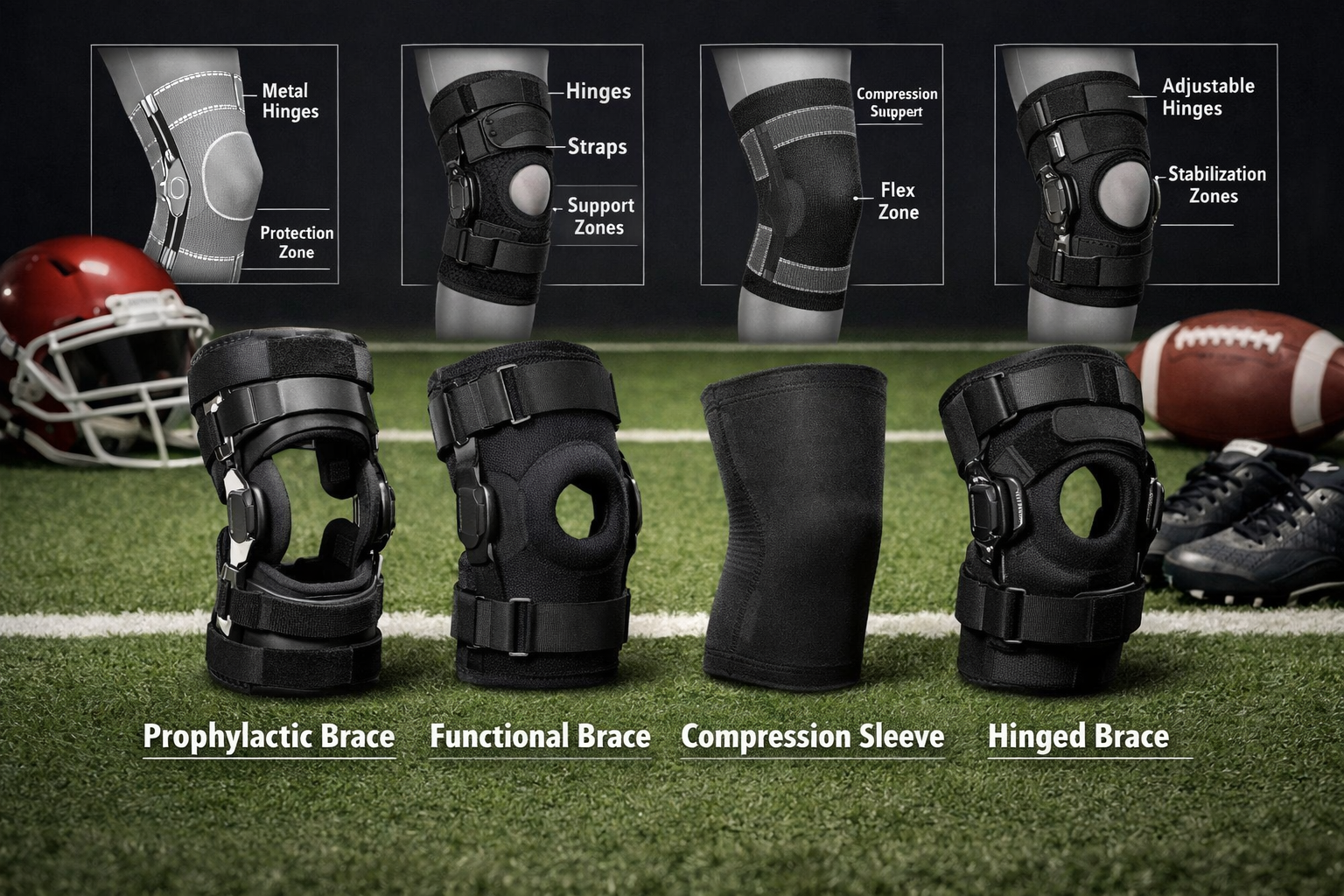
Football’s physical demands make knee injuries one of the most common concerns for players at every level. The sport requires rapid acceleration, sudden stops, cutting movements, and direct contact that can stress the knee joint beyond its natural limits.
Protection from ligament injuries remains the primary reason players choose to wear knee braces. The anterior cruciate ligament (ACL), medial collateral ligament (MCL), and posterior cruciate ligament (PCL) are all vulnerable during football activities. A single awkward landing or direct hit can tear these crucial structures, potentially ending a season or career.
Many players also wear knee braces for support after previous injuries. Once a player has experienced a knee injury, the joint often remains vulnerable to re-injury. Knee braces provide external stability that helps compensate for weakened or stretched ligaments, allowing players to return to the field with confidence.
The psychological benefits shouldn’t be overlooked either. Players who have suffered knee injuries often experience anxiety about re-injury. A well-fitted knee brace can provide the mental confidence needed to play aggressively and without hesitation. Understanding why football players wear knee braces helps explain this crucial aspect of player safety and performance.
The Main Types of Knee Braces Used in Football
Prophylactic Knee Braces
Prophylactic knee braces are specifically designed to prevent knee injuries before they occur. These braces are most commonly seen on offensive and defensive linemen, who face frequent lateral impacts during blocking and pass rushing.
These braces typically feature:
- Rigid side supports that resist inward and outward knee bending
- Dual-hinge construction for natural knee movement
- Durable materials that can withstand repeated impacts
- Secure strapping systems that stay in place during intense play
Prophylactic braces work by distributing impact forces across a wider area and limiting dangerous knee movements that could tear ligaments. While they add some bulk, many linemen consider this a worthwhile trade-off for injury prevention.
Functional Knee Braces
Functional knee braces serve a different purpose – they’re designed for players who have already experienced a knee injury and need ongoing support. These braces are often prescribed by team physicians or orthopedic specialists as part of a return-to-play protocol.
Key features include:
- Custom or semi-custom fitting for optimal support
- Advanced hinge systems that control knee motion
- Lightweight materials that don’t restrict performance
- Adjustable support levels based on healing progress
Functional braces are particularly valuable for players recovering from ACL reconstruction, MCL tears, or other significant knee injuries. They provide external stability while the body’s natural healing process strengthens the injured structures.
Compression Knee Sleeves
Compression knee sleeves represent the lightest option for knee support in football. These elastic sleeves provide gentle compression and warmth to the knee joint without the bulk of traditional braces.
Benefits include:
- Improved blood circulation around the knee
- Enhanced proprioception (joint position awareness)
- Reduced swelling and inflammation
- Minimal impact on speed and agility
Skill position players like wide receivers, running backs, and defensive backs often prefer compression sleeves because they provide support without significantly affecting their mobility or speed.
Hinged Knee Braces
Hinged knee braces offer the highest level of protection and support available. These braces combine the injury prevention benefits of prophylactic braces with the rehabilitative support of functional braces.
Advanced features include:
- Polycentric hinges that match natural knee movement
- Adjustable extension stops to prevent hyperextension
- Medial and lateral support for comprehensive protection
- Breathable padding for extended wear comfort
Players at high risk for knee injury or those with significant injury history often choose hinged braces for maximum protection. Learning about what knee braces NFL players wear reveals that hinged options are increasingly popular at the professional level.

|
Popular Choice

|

|
|
Our Rating:
4.8
|
Our Rating:
4.3
|
Our Rating:
4.6
|
|
$62.99
|
$19.97
|
$59.89
|
What Knee Braces NFL and College Players Often Use
Professional and college football players have access to the highest quality knee braces available, often custom-fitted by team medical staff. What knee braces do football players wear at these elite levels typically depends on their position and injury history.
Offensive and defensive linemen frequently wear prophylactic or hinged knee braces due to the constant lateral forces they encounter. Popular choices include:
- DonJoy Armor series for maximum protection
- Shock Doctor Ultra braces for durability
- McDavid Knee Guards for reliable support
- Custom-fitted options from team suppliers
Skill position players often prefer lighter options that don’t compromise their speed:
- Bauerfeind GenuTrain sleeves for compression support
- DonJoy Performance braces for moderate protection
- McDavid Hex sleeves for impact protection
- Nike Pro Combat sleeves for basic support
Many teams work with brace manufacturers to develop custom solutions for their players. These may include team colors, personalized fitting, and position-specific modifications. The specific braces NFL linemen wear often differ significantly from those chosen by quarterbacks or wide receivers.
Features Football Players Look for in a Knee Brace
When selecting knee protection, football players prioritize several key features that directly impact both safety and performance.
Strong lateral support tops the list for most players. Football involves frequent side-to-side movements and lateral impacts that can stress the MCL and other knee structures. Quality braces provide rigid support against these forces while allowing natural forward and backward knee motion.
Durable hinges are essential for players who rely on their braces game after game. Professional-grade hinges use aircraft-grade aluminum or carbon fiber materials that can withstand repeated stress without failing. These hinges must also allow full range of motion for running, jumping, and kicking.
Lightweight construction becomes crucial for skill position players who depend on speed and agility. Modern materials like carbon fiber and advanced polymers provide excellent protection while minimizing weight. Every ounce matters when players need to maintain their competitive edge.
Breathable materials help players stay comfortable during long practices and games. Moisture-wicking fabrics and ventilated designs prevent excessive heat buildup and reduce the risk of skin irritation.
Secure strapping systems ensure the brace stays properly positioned throughout intense activity. High-quality straps resist stretching and slipping, maintaining optimal protection even during the most demanding plays.
Benefits of Wearing Knee Braces in Football
The advantages of knee brace use in football extend beyond simple injury prevention, offering multiple benefits that enhance both safety and performance.
Reduced injury risk represents the most significant benefit. Studies have shown that properly fitted prophylactic knee braces can reduce the incidence of MCL injuries by up to 30% in high-risk positions. This protection becomes especially valuable for players with previous knee injuries who face elevated re-injury risk.
Enhanced joint stability helps players maintain proper knee alignment during cutting movements and direction changes. This stability can improve performance by allowing more confident and aggressive play. Players often report feeling more secure when making sharp cuts or absorbing contact.
Faster recovery support benefits players returning from knee injuries. Functional braces provide external support that allows earlier return to activity while protecting healing tissues. This can significantly reduce time away from the sport.
Improved confidence shouldn’t be underestimated. Players who have experienced knee injuries often develop anxiety about re-injury that can affect their performance. A quality knee brace can restore the mental confidence needed for peak athletic performance.
Understanding the reasons to wear a knee brace helps players make informed decisions about their joint protection needs.
Potential Drawbacks
While knee braces offer significant benefits, players should also consider potential limitations when making their decision.
Restricted mobility can affect some players, particularly those wearing bulkier prophylactic or hinged braces. The additional weight and bulk may slightly reduce top-end speed or agility, though most players adapt quickly to properly fitted braces.
Performance concerns vary by position and playing style. Skill position players who depend heavily on speed may find that even lightweight braces affect their performance. However, many professional players successfully compete at the highest levels while wearing knee braces.
Fit and comfort issues can arise with improperly sized or adjusted braces. Poor fit can cause chafing, pressure points, or inadequate protection. Professional fitting and regular adjustments help minimize these problems.
Cost considerations may limit access to high-quality braces for some players. Professional-grade knee braces can cost several hundred dollars, though many consider this a worthwhile investment in long-term joint health.
How to Choose the Right Knee Brace for Football
Selecting the appropriate knee brace requires careful consideration of multiple factors specific to each player’s situation.
Position played significantly influences brace selection. Linemen typically need maximum protection from lateral impacts and may benefit from prophylactic or hinged braces. Skill position players often prioritize mobility and may prefer compression sleeves or lightweight functional braces.
Injury history plays a crucial role in determining support needs. Players with previous ACL, MCL, or meniscus injuries may require functional braces with specific support features. Those without injury history might choose prophylactic options for prevention.
Level of play affects both brace requirements and budget considerations. Professional and college players have access to custom-fitted, high-end options, while youth players may need more affordable alternatives that still provide adequate protection.
Personal comfort preferences influence long-term compliance with brace use. Players are more likely to consistently wear braces that feel comfortable and don’t significantly impact their playing style.
For comprehensive guidance on brace selection, consider consulting resources about how to choose the right knee brace for your specific needs.
When Players Should Consider Wearing a Knee Brace
Several situations warrant serious consideration of knee brace use for football players at any level.
Returning from knee surgery represents the most clear-cut indication for brace use. Players recovering from ACL reconstruction, meniscus repair, or other knee procedures typically require functional braces as part of their return-to-play protocol. These braces provide essential support during the vulnerable healing period.
Experiencing knee instability suggests potential ligament damage that could benefit from external support. Players who notice their knee “giving way” during cutting movements or feel uncertain about their knee stability should consider brace evaluation.
Playing high-contact positions exposes players to elevated injury risk that may justify prophylactic brace use. Offensive and defensive linemen, linebackers, and other positions with frequent contact may benefit from preventive protection.
Family history of knee problems or previous minor knee injuries may indicate increased vulnerability that warrants preventive measures. Early intervention with appropriate bracing can potentially prevent more serious injuries.
Understanding what injuries require a knee brace helps players and coaches make informed decisions about when protection becomes necessary.
Conclusion
Understanding what knee braces do football players wear provides valuable insights for anyone dealing with knee pain or seeking to prevent knee injuries. From prophylactic braces that protect linemen against lateral impacts to compression sleeves that support skill players’ mobility, the right knee brace can make a significant difference in both safety and performance.
The key lies in matching the brace type to individual needs, considering factors like position played, injury history, and personal preferences. Professional players demonstrate that high-level performance and knee protection aren’t mutually exclusive – with proper selection and fitting, knee braces can enhance rather than hinder athletic ability.
Take action today by consulting with a healthcare provider or certified athletic trainer about your knee protection needs. Whether you’re returning from an injury, experiencing knee instability, or simply want to prevent future problems, the right knee brace can help you stay active and confident on the field. Remember that investing in quality knee protection now can prevent much more serious and costly injuries down the road.