

Imagine relying on a crutch when you can walk perfectly fine – that’s exactly what happens when knee braces are used incorrectly. While millions of people turn to knee braces for support and pain relief, many don’t realize that wearing one at the wrong time or for the wrong reasons can actually harm their knee health. Understanding when should I not wear a knee brace is just as important as knowing when to use one.
Knee braces serve important medical purposes, from supporting injured ligaments to providing stability during recovery. However, the growing trend of “preventive” brace wearing and the misconception that “more support is always better” has led many people down a path that could weaken their knees over time. This comprehensive guide will help you understand exactly when to avoid wearing a knee brace and why sometimes less support leads to stronger, healthier knees.
Key Takeaways
• Unnecessary brace use can weaken the natural muscles that support your knee joint
• Poor-fitting braces may cause circulation problems, skin irritation, and increased pain
• Overuse of knee braces can create dependency and reduce your knee’s natural stability
• Certain rehabilitation phases require unrestricted movement for proper healing
• Professional guidance is essential to determine appropriate brace use and timing
What Knee Braces Are Designed to Do
Knee braces serve several important medical functions when used appropriately. They provide external stability to the knee joint, particularly useful when ligaments like the ACL or MCL are injured or weakened. The primary purpose is to limit harmful movements while allowing beneficial ones, essentially acting as a protective barrier during the healing process.
These devices also reduce strain on damaged ligaments and tendons by redistributing forces across the joint. For people recovering from surgery or managing chronic conditions like arthritis, braces can offer significant pain relief by limiting movements that cause discomfort.
Additionally, knee braces support the rehabilitation process by providing confidence during movement and preventing re-injury during the critical healing phases. Understanding the specific benefits of knee braces helps determine when they’re truly necessary versus when they might be counterproductive.
However, it’s crucial to understand that knee braces are medical tools designed for specific conditions and timeframes – not permanent solutions or general wellness accessories.
When Should I Not Wear a Knee Brace? Critical Situations to Avoid
When There Is No Knee Injury or Instability
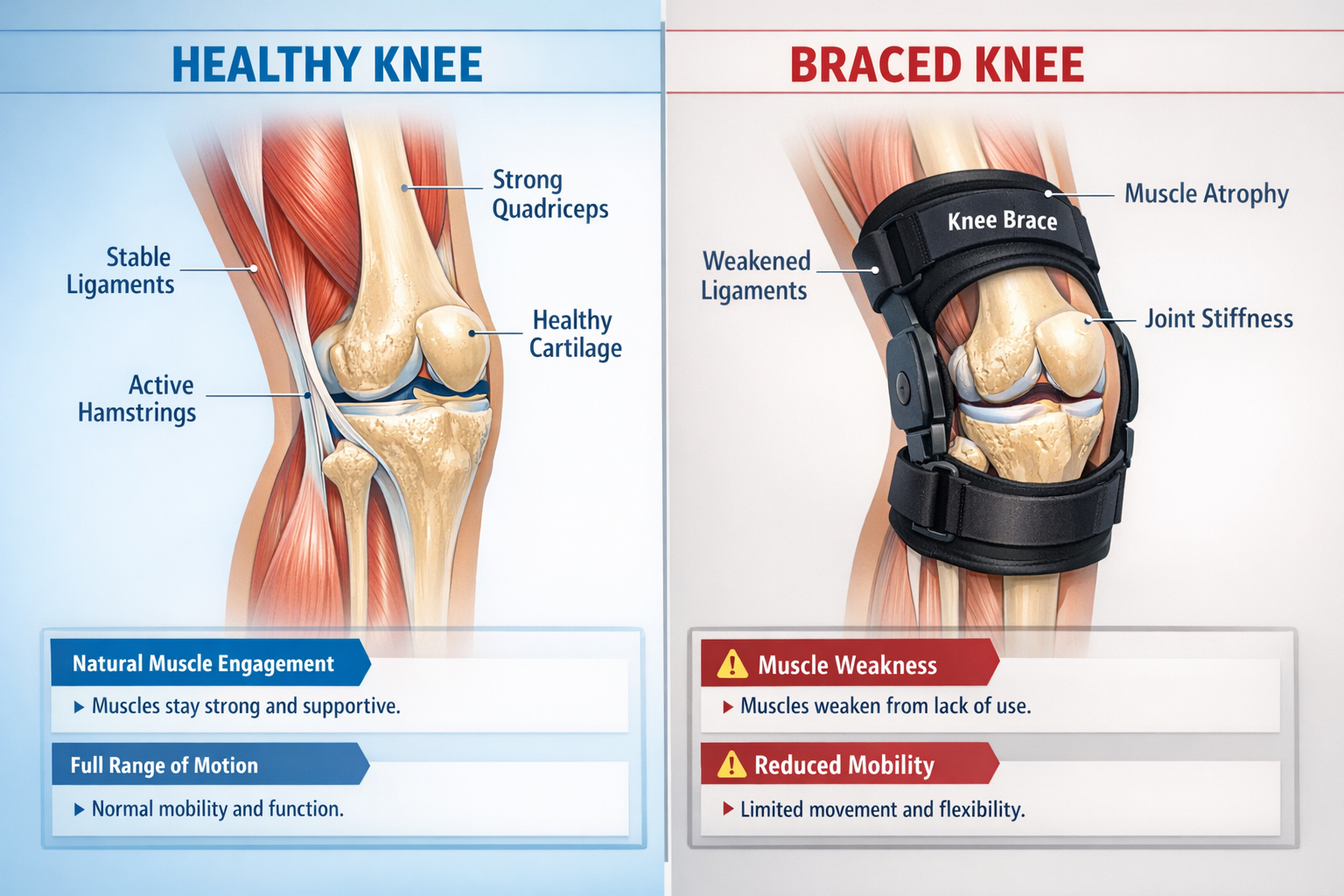
One of the most common mistakes is wearing a knee brace when there’s no underlying medical need. If your knee is healthy and stable, adding external support can actually interfere with your body’s natural movement patterns and muscle development.
Healthy knees rely on the surrounding muscles – particularly the quadriceps, hamstrings, and calf muscles – to provide stability and support. When you introduce an unnecessary brace, these muscles may become less active because they’re not required to work as hard. This phenomenon, known as muscle inhibition, can lead to weakness over time.
Many athletes wear braces “just in case,” but research shows that prophylactic bracing in healthy individuals doesn’t significantly prevent injuries and may actually alter biomechanics in ways that could increase injury risk in other areas.
During Certain Rehabilitation Exercises
Physical therapy and rehabilitation often require unrestricted movement to rebuild strength and restore proper function. Many strengthening exercises specifically target the small stabilizing muscles around the knee, which can’t be effectively trained when a brace is limiting natural movement patterns.
For example, balance and proprioception exercises – crucial for knee rehabilitation – require your body to make small, constant adjustments to maintain stability. A brace can interfere with this natural feedback system, potentially slowing recovery progress.
Your physical therapist will typically specify when to wear and when to remove your brace during different phases of rehabilitation. Proper rehabilitation timing is essential for building long-term knee strength and stability.

|

|

|
|
Description: EXOUS BODYGEAR is a dedicated sports accessory brand. We are primarily focused on the EX-701 knee support, which is our patented, unique, original design knee brace offering generic 2- and 3-strap knee braces. Patented 4 Strap Attachment: 4 anchor points allow you to adjust the fit and compression to your desired comfort. The knee compression will feel like it is around the whole knee joint |
Description: NEENCA KNEE SUPPORT TECHNOLOGY— An anatomically contoured patella gel pad surrounds your kneecap, and removable dual-side copper stabilizers fit tightly with your joint. It helps control your movement, effectively supports knee recovery treatment, and accelerates recovery. BEST CHOICE for sports protection and knee pain relief. |
Description: Our anti-inflammatory treatment knee brace for men & women provides superior support, stability, and relief for people with meniscus tears, ACL injuries, arthritis, and joint aches. Stay Active: Our knee sleeves for women & men are designed to be flexible and fit comfortably on your knee, providing stable pressure, knee support, and stabilizing your knee joint. |
|
Our Rating:
4.8
|
Our Rating:
4.9
|
Our Rating:
4.4
|
|
$34.99
|
$59.89
|
$15.93
|
EXOUS BODYGEAR is a dedicated sports accessory brand. We are primarily focused on the EX-701 knee support, which is our patented, unique, original design knee brace offering generic 2- and 3-strap knee braces.
Patented 4 Strap Attachment: 4 anchor points allow you to adjust the fit and compression to your desired comfort. The knee compression will feel like it is around the whole knee joint
NEENCA KNEE SUPPORT TECHNOLOGY— An anatomically contoured patella gel pad surrounds your kneecap, and removable dual-side copper stabilizers fit tightly with your joint.
It helps control your movement, effectively supports knee recovery treatment, and accelerates recovery. BEST CHOICE for sports protection and knee pain relief.
Our anti-inflammatory treatment knee brace for men & women provides superior support, stability, and relief for people with meniscus tears, ACL injuries, arthritis, and joint aches.
Stay Active: Our knee sleeves for women & men are designed to be flexible and fit comfortably on your knee, providing stable pressure, knee support, and stabilizing your knee joint.
When the Brace Causes Pain or Discomfort
A properly fitted knee brace should never cause increased pain or significant discomfort. If you experience new or worsening pain while wearing a brace, it’s a clear sign that something is wrong – either with the fit, the type of brace, or the timing of its use.
Common signs that indicate you should stop wearing your knee brace include:
- Sharp or shooting pain when the brace is on
- Increased swelling around the knee area
- Pressure sores or red marks that don’t fade quickly after removal
- Numbness or tingling in the leg or foot
- Muscle cramps or spasms while wearing the brace
If your knee brace is causing more harm than good, discontinue use immediately and consult with a healthcare professional to reassess your needs.
If the Brace Restricts Circulation
Circulation problems are a serious concern with knee braces, particularly if they’re too tight or worn for extended periods. Signs of restricted blood flow include numbness, tingling, changes in skin color (bluish or very pale), or swelling below the brace.
Proper circulation is essential for healing and maintaining healthy tissue. A brace that’s too tight can actually slow recovery by reducing blood flow to the injured area. Additionally, prolonged circulation restriction can lead to more serious complications like blood clots.
Understanding the risks of wearing knee braces too frequently helps prevent these dangerous complications. Always ensure you can fit a finger comfortably under the brace straps, and remove it immediately if you notice any circulation-related symptoms.
Risks of Wearing a Knee Brace Too Often
Extended or unnecessary knee brace use carries several significant risks that can impact your long-term knee health. The most concerning is muscle atrophy – the weakening and shrinking of muscles that occurs when they’re not regularly challenged.
When external support does the work that your muscles should be doing, those muscles begin to weaken. The quadriceps, in particular, can lose strength quickly when a brace provides too much support for too long. This creates a dangerous cycle where the knee becomes increasingly dependent on the brace for stability.
Reduced joint mobility is another serious concern. Joints need regular movement through their full range of motion to maintain flexibility and health. Prolonged brace use can lead to stiffness and decreased mobility, making it harder to return to normal activities.
Perhaps most problematically, psychological dependence can develop. Many people become afraid to remove their brace, even when it’s no longer medically necessary. This fear can significantly impact quality of life and delay the return to normal activities.
Situations Where a Knee Brace Is Helpful
Understanding when knee braces are beneficial helps put the contraindications in perspective. Braces are most effective during acute injury recovery, particularly for ligament injuries like ACL or MCL tears where the joint needs protection while healing.
People with chronic knee instability often benefit from braces during specific activities. For instance, someone with a history of knee dislocations might wear a brace during sports but remove it for daily activities to maintain muscle strength.
Arthritis management is another area where braces can provide significant relief. Unloader braces can help redistribute weight away from damaged cartilage, reducing pain during movement.
Post-surgical support is often necessary during the initial healing phases, but the duration and type of brace use should always follow your surgeon’s specific guidelines.
How to Know When Should I Not Wear a Knee Brace
Several clear indicators suggest it’s time to stop wearing your knee brace or avoid using one altogether. Increasing pain while wearing the brace is the most obvious red flag – your body is telling you something isn’t right.
Skin problems like persistent redness, rashes, or pressure sores indicate that the brace is causing more harm than good. These issues often develop gradually, so regular skin checks are important.
If you notice decreased strength or increased difficulty performing activities without the brace, you may be developing dependence. This is particularly concerning if you’ve been wearing the brace for several weeks or months.
Changes in walking pattern or movement quality while wearing the brace suggest it may be interfering with natural biomechanics. Proper brace fitting is crucial for avoiding these issues.
Tips for Using a Knee Brace Safely
When a knee brace is medically necessary, following safety guidelines ensures you get the benefits without the risks. Choose the right type of brace for your specific condition – a compression sleeve for mild support is very different from a hinged brace for ligament protection.
Proper fitting cannot be overstated in importance. A brace that’s too tight restricts circulation, while one that’s too loose provides inadequate support and may slip during movement. Professional fitting guidance can prevent many common problems.
Time limitations are crucial. Understanding how many hours per day to wear a knee brace helps prevent overuse complications. Most braces shouldn’t be worn 24/7 unless specifically prescribed for post-surgical protection.
Combine with strengthening exercises as recommended by your healthcare provider. The goal should always be to eventually reduce dependence on the brace by building natural knee strength and stability.
When to Consult a Healthcare Professional
Professional guidance is essential when determining when should I not wear a knee brace. If you’re experiencing persistent knee pain, a healthcare provider can determine whether a brace is appropriate or if other treatments would be more effective.
Uncertainty about brace necessity is a valid reason for consultation. Many people self-prescribe knee braces without understanding whether they’re addressing the right problem or potentially creating new ones.
If symptoms worsen with brace use, immediate professional evaluation is necessary. This could indicate an underlying condition that requires different treatment or suggest that the brace type or fit needs adjustment.
Signs that you may need professional evaluation include persistent instability, recurring pain, or difficulty performing daily activities. Early intervention often prevents more serious problems from developing.
Conclusion
Understanding when should I not wear a knee brace is crucial for maintaining long-term knee health and avoiding unnecessary complications. While knee braces serve important medical purposes, they’re not universal solutions and can cause harm when used inappropriately.
The key takeaway is that knee braces should be medical tools used strategically, not permanent accessories or preventive measures for healthy knees. Unnecessary use can lead to muscle weakness, reduced mobility, and psychological dependence that ultimately makes your knees less stable and functional.
Take action today by honestly evaluating your current brace use. If you’re wearing a knee brace without a specific medical recommendation, consider consulting with a healthcare professional to determine if it’s truly necessary. If you do need a brace, ensure it fits properly and follow guidelines for safe, time-limited use.
Remember that the strongest, most stable knee is one that relies on its own muscles and natural mechanics. Building knee strength naturally through appropriate exercise and movement is almost always preferable to long-term brace dependence. Your knees will thank you for making informed decisions about when to use – and when not to use – external support.