

The Complete Guide to Choosing the Right Knee Support
Picture this: you’re standing in the pharmacy aisle, staring at rows of knee support products, feeling completely overwhelmed. Your knee has been aching for weeks, and you know you need some kind of support – but should you grab that sleek compression sleeve or the more robust-looking brace with all the straps and hinges? If you’re wondering which is better, a knee sleeve or a knee brace, you’re not alone. This decision affects millions of people dealing with knee pain, and making the wrong choice could mean continued discomfort or even delayed healing.
The truth is, both knee sleeves and knee braces serve important purposes, but they’re designed for different situations and types of knee problems. Understanding these differences is crucial for getting the relief you need and protecting your knee from further injury. In this comprehensive guide, we’ll break down everything you need to know to make an informed decision about your knee support needs.
Key Takeaways
• Knee sleeves provide compression and warmth, making them ideal for mild pain, arthritis, and general support during activities
• Knee braces offer structural support and stability, better suited for injuries, ligament damage, and post-surgical recovery
• The severity of your condition is the primary factor in determining which option is better for your specific situation
• Activity level and lifestyle play crucial roles in choosing between a sleeve’s flexibility and a brace’s protection
• Professional medical advice should always guide your decision, especially for serious injuries or chronic conditions
Understanding the Fundamental Differences: Knee Sleeves vs Knee Braces

When exploring which is better, a knee sleeve or a knee brace, it’s essential to understand that these aren’t just different versions of the same product – they’re entirely different tools designed for distinct purposes.
What is a Knee Sleeve? 🧦
A knee sleeve is a tubular compression garment made from elastic materials like neoprene, spandex, or fabric blends. Think of it as a snug-fitting sock for your knee. Knee sleeves work primarily through:
- Compression therapy that improves blood circulation
- Proprioceptive enhancement that helps your brain better sense knee position
- Warmth retention that keeps joints loose and comfortable
- Mild support for everyday activities
Knee sleeves are typically seamless, lightweight, and discreet under clothing. They’re designed to be worn for extended periods without causing discomfort or restricting natural movement patterns.
What is a Knee Brace? 🦴
A knee brace is a structured support device that uses rigid or semi-rigid materials to control knee movement and provide stability. Knee braces feature:
- Hinges, straps, and rigid supports that limit harmful movements
- Targeted compression in specific areas
- Adjustable components for customized support levels
- Medical-grade construction for injury management
Knee braces come in various designs, from simple wraparound styles to complex hinged models used in post-surgical recovery. They’re engineered to address specific medical conditions and movement limitations.
When to Choose a Knee Sleeve: Perfect Scenarios for Compression Support
Understanding when a knee sleeve is the better choice can save you money and provide exactly the support you need. Here are the key situations where knee sleeves excel:
Mild to Moderate Arthritis Relief 🌡️
For people dealing with osteoarthritis or rheumatoid arthritis, knee sleeves offer several benefits:
- Consistent warmth that reduces morning stiffness
- Gentle compression that minimizes swelling
- All-day comfort without bulk or restriction
- Improved mobility during daily activities
Research shows that compression sleeves can reduce arthritis pain by up to 25% when worn consistently. The warmth generated by the sleeve helps maintain joint flexibility, which is crucial for arthritic knees.
Athletic Performance and Prevention 🏃♀️
Athletes and active individuals often prefer knee sleeves because they:
- Enhance proprioception for better movement control
- Provide muscle support without limiting range of motion
- Offer sweat management through moisture-wicking materials
- Enable quick on/off application between activities
Many professional athletes use knee sleeves as a preventive measure rather than waiting for injury to occur. The compression helps maintain optimal blood flow during intense activities.
General Knee Discomfort and Fatigue 😴
For everyday knee discomfort from:
- Long periods of standing or walking
- Age-related joint wear
- Minor overuse injuries
- General knee fatigue
A knee sleeve provides gentle, consistent support without the medical appearance of a brace. This makes it perfect for workplace use or social situations where discretion is important.
|

|
Copper Fit!

|
|
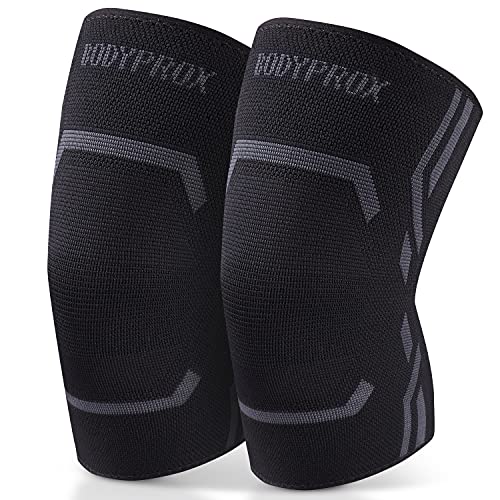
Description: Take action and prevent knee pain before it occurs! Optimize joint and muscle performance while preventing injuries. The Bodyprox Knee Compression Sleeves are a great addition to your gym bag, providing extra support. Decreased pain & swelling: Bodyprox Knee Compression Sleeves help minimize pain and inflammation when fluid builds up in joints. They’re extremely beneficial when working out, as heavy lifting adds a significant amount of weight to your already stressed joints and muscles! |
Description: Tailored for Comfort: Designed with a focus on comfort and effectiveness, this knee sleeve is perfect for women, men, and plus size users, offering reliable support for various activities Targeted Pain Relief: Whether you're dealing with arthritis, meniscus tear, or general knee discomfort, our knee sleeve provides the pain relief and support you need. |
Description: OUTSTANDING PROTECTION: Copper knee braces are ergonomically designed to protect your knees during sports such as running, basketball, soccer, golf, tennis, and skiing. They can also be worn during daily work and walks to minimize pressure on your knees. ANTI-SLIP DESIGN: Special knitting technology with two straps keeps the knee pads in place and prevents them from slipping or rolling up during daily wear and sports. |
|
Our Rating:
4.6
|
Our Rating:
4.2
|
Our Rating:
4.8
|
|
$12.99
|
$18.01
|
$19.99
|
Take action and prevent knee pain before it occurs! Optimize joint and muscle performance while preventing injuries. The Bodyprox Knee Compression Sleeves are a great addition to your gym bag, providing extra support.
Decreased pain & swelling: Bodyprox Knee Compression Sleeves help minimize pain and inflammation when fluid builds up in joints. They’re extremely beneficial when working out, as heavy lifting adds a significant amount of weight to your already stressed joints and muscles!
Tailored for Comfort: Designed with a focus on comfort and effectiveness, this knee sleeve is perfect for women, men, and plus size users, offering reliable support for various activities
Targeted Pain Relief: Whether you're dealing with arthritis, meniscus tear, or general knee discomfort, our knee sleeve provides the pain relief and support you need.
OUTSTANDING PROTECTION: Copper knee braces are ergonomically designed to protect your knees during sports such as running, basketball, soccer, golf, tennis, and skiing. They can also be worn during daily work and walks to minimize pressure on your knees.
ANTI-SLIP DESIGN: Special knitting technology with two straps keeps the knee pads in place and prevents them from slipping or rolling up during daily wear and sports.
Post-Injury Maintenance Phase 🔄
After completing initial injury treatment, knee sleeves help with:
- Transition back to normal activities
- Confidence building during movement
- Ongoing compression for residual swelling
- Long-term joint health maintenance
If you’re wondering does knee compression sleeve work for your specific situation, the answer often depends on having realistic expectations about what compression can and cannot accomplish.
When to Choose a Knee Brace: Situations Requiring Structural Support
There are specific circumstances where asking which is better, a knee sleeve or a knee brace has a clear answer: you need a brace. Here’s when structural support becomes essential:
Acute Injuries and Ligament Damage 🚨
Knee braces are crucial for:
- ACL, MCL, LCL, or PCL injuries that compromise knee stability
- Meniscus tears requiring movement limitation
- Acute sprains needing immediate support
- Post-traumatic instability following injury
For these conditions, a knee sleeve simply cannot provide adequate protection. The structural components of a brace are necessary to prevent further damage and promote proper healing. Learn more about what injuries require a knee brace in our comprehensive injury guide.
Post-Surgical Recovery 🏥
After knee surgery, braces serve critical functions:
- Controlled range of motion during healing phases
- Protection against harmful movements that could disrupt repair
- Graduated support as recovery progresses
- Medical compliance with surgeon recommendations
Surgical recovery protocols almost always specify brace requirements rather than sleeve alternatives. The adjustability and control offered by braces are essential for proper healing.

|

|

|
|
Description: EXOUS BODYGEAR is a dedicated sports accessory brand. We are primarily focused on the EX-701 knee support, which is our patented, unique, original design knee brace offering generic 2- and 3-strap knee braces. Patented 4 Strap Attachment: 4 anchor points allow you to adjust the fit and compression to your desired comfort. The knee compression will feel like it is around the whole knee joint |
Description: NEENCA KNEE SUPPORT TECHNOLOGY— An anatomically contoured patella gel pad surrounds your kneecap, and removable dual-side copper stabilizers fit tightly with your joint. It helps control your movement, effectively supports knee recovery treatment, and accelerates recovery. BEST CHOICE for sports protection and knee pain relief. |
Description: Our anti-inflammatory treatment knee brace for men & women provides superior support, stability, and relief for people with meniscus tears, ACL injuries, arthritis, and joint aches. Stay Active: Our knee sleeves for women & men are designed to be flexible and fit comfortably on your knee, providing stable pressure, knee support, and stabilizing your knee joint. |
|
Our Rating:
4.8
|
Our Rating:
4.9
|
Our Rating:
4.4
|
|
$34.98
|
$59.89
|
$27.95
|
EXOUS BODYGEAR is a dedicated sports accessory brand. We are primarily focused on the EX-701 knee support, which is our patented, unique, original design knee brace offering generic 2- and 3-strap knee braces.
Patented 4 Strap Attachment: 4 anchor points allow you to adjust the fit and compression to your desired comfort. The knee compression will feel like it is around the whole knee joint
NEENCA KNEE SUPPORT TECHNOLOGY— An anatomically contoured patella gel pad surrounds your kneecap, and removable dual-side copper stabilizers fit tightly with your joint.
It helps control your movement, effectively supports knee recovery treatment, and accelerates recovery. BEST CHOICE for sports protection and knee pain relief.
Our anti-inflammatory treatment knee brace for men & women provides superior support, stability, and relief for people with meniscus tears, ACL injuries, arthritis, and joint aches.
Stay Active: Our knee sleeves for women & men are designed to be flexible and fit comfortably on your knee, providing stable pressure, knee support, and stabilizing your knee joint.
Severe Instability and “Giving Way” Episodes 🔒
When your knee frequently buckles or gives way, you need more than compression:
- Mechanical support to prevent collapse
- Confidence restoration for normal walking
- Fall prevention during daily activities
- Progressive strengthening support
Knee braces designed to prevent buckling offer the structural integrity that sleeves cannot match. This is particularly important for older adults or those with significant muscle weakness.
Chronic Conditions Requiring Offloading 📊
Certain conditions benefit from braces that redistribute forces:
- Severe osteoarthritis with bone-on-bone contact
- Patellofemoral pain syndrome requiring tracking correction
- Chronic pain conditions needing mechanical assistance
- Degenerative joint disease requiring load reduction
For these situations, specialized braces like unloader knee braces provide mechanical advantages that compression alone cannot achieve.
Comparing Key Features: Making the Right Choice for Your Needs
| Feature | Knee Sleeve | Knee Brace |
|---|---|---|
| Primary Function | Compression & warmth | Structural support & stability |
| Injury Severity | Mild to moderate | Moderate to severe |
| Adjustability | Minimal (size-based) | High (straps, hinges, settings) |
| Comfort Level | High for extended wear | Variable, may require adjustment period |
| Discretion | Very discreet under clothing | More visible, medical appearance |
| Activity Restriction | Minimal | Can limit certain movements |
| Cost Range | $15-$80 | $50-$500+ |
| Durability | 6-12 months typical | 1-3 years with proper care |
Comfort and Wearability Factors 😌
Knee sleeves excel in day-to-day comfort:
- Seamless construction prevents chafing
- Lightweight materials don’t add bulk
- Easy to wear under any clothing
- No adjustment needed once properly sized
Knee braces require more consideration:
- Initial break-in period may be necessary
- Proper fitting is crucial for comfort
- May require clothing adjustments
- Regular maintenance and cleaning needed
Activity-Specific Considerations 🎯
For low-impact activities (walking, light exercise, daily tasks):
- Knee sleeves provide adequate support
- Compression enhances comfort
- No movement restrictions
- All-day wearability
For high-impact activities (sports, heavy lifting, unstable surfaces):
- Knee braces offer necessary protection
- Structural support prevents injury
- May limit some movement patterns
- Typically worn during activity only
Cost Analysis: Value Comparison Between Sleeves and Braces
When determining which is better, a knee sleeve or a knee brace, cost considerations often play a significant role in the decision-making process.
Knee Sleeve Investment 💰
Initial costs for quality knee sleeves range from:
- Basic compression sleeves: $15-$30
- Premium materials (copper-infused, medical-grade): $40-$60
- Professional-grade athletic sleeves: $60-$80
Long-term considerations:
- Replacement needed every 6-12 months
- Lower maintenance costs
- No professional fitting required
- Insurance rarely covers sleeves
Knee Brace Investment 💳
Initial costs vary significantly by type:
- Basic wraparound braces: $50-$100
- Hinged stability braces: $150-$300
- Custom or post-surgical braces: $300-$800+
Long-term considerations:
- Longer lifespan (1-3 years)
- May require professional fitting
- Insurance often covers prescribed braces
- Replacement parts sometimes available
Value Calculation 📈
To determine the best value, consider:
Cost per year of use:
- Knee sleeve: $30-$80 annually
- Knee brace: $50-$200 annually (depending on type)
Effectiveness for your condition:
- Using the wrong type can waste money entirely
- Proper treatment may prevent costlier interventions later
- Consider potential medical expenses if condition worsens
For guidance on finding the right fit and avoiding costly mistakes, check our guide on how to know what size knee brace you need.
Expert Recommendations: Professional Guidelines for Selection
Healthcare professionals use specific criteria when recommending knee support options. Understanding these guidelines can help you make informed decisions and know when to seek professional advice.
Medical Professional Decision Tree 🏥
Physical therapists typically recommend sleeves for:
- Mild osteoarthritis symptoms
- General knee stiffness and minor pain
- Proprioceptive training and awareness
- Return-to-activity phases of rehabilitation
Orthopedic specialists typically prescribe braces for:
- Diagnosed ligament injuries
- Post-surgical protection requirements
- Significant instability or mechanical problems
- Conditions requiring specific movement control
Red Flags: When Professional Evaluation is Essential ⚠️
Seek immediate medical attention if you experience:
- Sudden onset of severe pain following injury
- Visible deformity or significant swelling
- Complete inability to bear weight on the affected leg
- Locking or catching sensations that prevent normal movement
- Numbness or tingling in the leg or foot
For these symptoms, neither a sleeve nor an over-the-counter brace is appropriate as a first-line treatment.
Professional Fitting Considerations 📏
When professional fitting is recommended:
- Post-surgical brace requirements
- Custom braces for unique anatomy
- Complex multi-ligament injuries
- Chronic conditions requiring precise support
When self-selection is appropriate:
- General compression needs
- Mild support requirements
- Preventive use during activities
- Temporary relief while seeking treatment
Understanding what are the signs you need a knee brace can help you determine whether professional evaluation is necessary.
Real-World Scenarios: Which is Better in Common Situations
Let’s explore practical examples of which is better, a knee sleeve or a knee brace in real-world situations that many people face:
Scenario 1: Weekend Warrior with Occasional Knee Pain 🏃♂️
Background: 45-year-old recreational runner experiencing mild knee discomfort after longer runs, no specific injury history.
Best choice: Knee sleeve
- Provides compression during and after runs
- Offers proprioceptive feedback for better form
- Comfortable for extended wear
- Helps with post-exercise recovery
Why not a brace: No structural damage requiring mechanical support; brace would be overkill and potentially restrictive.
Scenario 2: Office Worker with Arthritis 👩💼
Background: 58-year-old with diagnosed knee osteoarthritis, experiences morning stiffness and pain during weather changes.
Best choice: Knee sleeve
- Provides consistent warmth throughout the day
- Gentle compression reduces swelling
- Discreet under work clothing
- Supports daily mobility without restriction
Why not a brace: Arthritis pain responds well to compression and warmth; structural support isn’t needed for daily activities.
Scenario 3: High School Athlete Post-ACL Injury 🏈
Background: 17-year-old football player returning to sport after ACL reconstruction surgery.
Best choice: Knee brace (specifically designed for ACL support)
- Provides mechanical stability during cutting movements
- Protects the healing graft
- Offers psychological confidence for aggressive play
- Meets sports medicine return-to-play protocols
Why not a sleeve: ACL injuries require structural support that compression alone cannot provide; sleeve would be inadequate protection.
Scenario 4: Senior with Balance Concerns 👵
Background: 72-year-old experiencing knee instability and occasional “giving way” episodes.
Best choice: Knee brace with side stabilizers
- Prevents dangerous buckling episodes
- Provides confidence for safe walking
- Offers adjustable support levels
- Reduces fall risk significantly
Why not a sleeve: Instability issues require mechanical support; compression alone won’t prevent dangerous falls.
For more specific guidance on pain relief options, explore our comprehensive guide on knee braces for pain relief.
Making Your Decision: Step-by-Step Selection Guide
Now that we’ve explored which is better, a knee sleeve or a knee brace in various contexts, here’s a practical decision-making framework:
Step 1: Assess Your Condition Severity 🔍
Choose a knee sleeve if:
- ✅ Pain level is mild to moderate (1-5 on 10-point scale)
- ✅ No history of significant knee injury
- ✅ Knee feels stable during normal activities
- ✅ Main concerns are stiffness, minor pain, or swelling
- ✅ Symptoms improve with rest and basic care
Choose a knee brace if:
- ✅ Pain level is moderate to severe (6-10 on 10-point scale)
- ✅ History of knee injury or surgery
- ✅ Knee feels unstable or “gives way”
- ✅ Specific movement patterns cause sharp pain
- ✅ Medical professional has recommended structural support
Step 2: Consider Your Activity Goals 🎯
Sleeve advantages for:
- Daily wear and general activities
- Low to moderate impact exercise
- Workplace comfort
- Travel and extended wear situations
Brace advantages for:
- High-impact sports and activities
- Specific injury protection needs
- Post-surgical recovery phases
- Situations requiring movement control
Step 3: Evaluate Practical Factors 📋
Consider these additional factors:
Lifestyle compatibility:
- How often will you wear the support?
- Do you need discretion under clothing?
- Are you comfortable with adjustment and maintenance?
- What’s your budget for initial purchase and replacements?
Trial and adjustment period:
- Sleeves typically require minimal adjustment time
- Braces may need a break-in period and professional fitting
- Consider return policies when making your selection
For additional guidance on proper fit and selection, review our detailed guide on how to choose the right knee brace.
Common Mistakes to Avoid When Choosing Knee Support
Understanding what NOT to do is just as important as knowing the right steps when deciding which is better, a knee sleeve or a knee brace.
Mistake #1: Ignoring the Root Cause 🚫
Many people focus on symptom relief without addressing underlying issues:
- Wrong approach: Buying any knee support for general pain
- Right approach: Understanding why your knee hurts first
- Solution: Get proper diagnosis before selecting support type
Mistake #2: Assuming More Support is Always Better 🚫
This leads to over-bracing when a sleeve would suffice:
- Wrong approach: Choosing the most rigid brace available
- Right approach: Matching support level to actual needs
- Solution: Start with appropriate level; upgrade only if necessary
Mistake #3: Neglecting Proper Sizing 🚫
Ill-fitting supports can cause more problems than they solve:
- Wrong approach: Guessing size or buying “one-size-fits-all”
- Right approach: Careful measurement and size selection
- Solution: Follow manufacturer sizing guides precisely
Mistake #4: Using Support as a Substitute for Treatment 🚫
Knee supports should complement, not replace, proper medical care:
- Wrong approach: Relying solely on external support
- Right approach: Combining support with appropriate treatment
- Solution: Address underlying issues while using support
Mistake #5: Wearing the Wrong Type for Your Activity 🚫
Activity-specific needs require appropriate support choices:
- Wrong approach: Wearing a rigid brace for low-impact activities
- Right approach: Matching support type to activity demands
- Solution: Consider having different supports for different activities
Long-Term Considerations: Planning for Your Knee Health Future
When choosing between a knee sleeve and knee brace, it’s important to think beyond immediate relief and consider long-term knee health implications.
Progressive Condition Management 📈
Many knee conditions evolve over time, affecting your support needs:
Early-stage arthritis:
- May start with sleeve for comfort and compression
- Could progress to requiring brace for stability
- Plan for changing needs over time
Post-injury recovery:
- Often begins with rigid brace for protection
- Transitions to lighter brace for ongoing activities
- May end with sleeve for maintenance support
Building a Comprehensive Support Strategy 🎯
Consider developing a tiered approach:
- Primary support: Main device for daily use
- Activity-specific support: Different option for exercise or sports
- Emergency backup: Spare support for travel or replacement needs
Maintenance and Replacement Planning 🔄
Knee sleeve maintenance:
- Regular washing to maintain elasticity
- Monitor for wear signs (loss of compression)
- Replace every 6-12 months for optimal effectiveness
Knee brace maintenance:
- Clean according to manufacturer instructions
- Check hinges and straps regularly
- Professional inspection annually for complex braces
For more information about daily wear considerations, see our guide on how many hours a day should you wear a knee brace.
Conclusion: Making the Right Choice for Your Knee Health
The question of which is better, a knee sleeve or a knee brace doesn’t have a universal answer – it depends entirely on your specific situation, condition severity, activity level, and individual needs. However, by understanding the fundamental differences between these two types of support, you can make an informed decision that provides the relief and protection you need.
Remember these key principles:
- Knee sleeves excel at providing compression, warmth, and mild support for everyday comfort and minor conditions
- Knee braces are essential when you need structural support, stability, or protection from further injury
- Your condition severity should be the primary factor guiding your choice
- Professional medical advice is invaluable, especially for serious injuries or chronic conditions
- The right choice today may change as your condition evolves or your activity level changes
Your Next Steps 🚀
- Assess your current situation using the guidelines provided in this article
- Consult with a healthcare professional if you have any doubts about your condition severity
- Start with the appropriate support level – you can always adjust later if needed
- Monitor your response and be prepared to reassess your needs over time
- Invest in proper fitting and quality rather than choosing based on price alone
Whether you choose a knee sleeve for gentle daily support or a knee brace for structural protection, the most important thing is taking action to address your knee pain and prevent further injury. Your knees carry you through life – they deserve the right support to keep you moving comfortably and confidently.
Remember, the best knee support is the one that matches your specific needs, fits properly, and helps you maintain an active, pain-free lifestyle. Take the time to make an informed choice, and your knees will thank you for years to come.