

Research shows that 73% of workers who use arm braces experience slipping issues during their shifts, leading to reduced support effectiveness and workplace frustration. Whether you’re typing at a desk, operating machinery, or performing manual labor, finding an arm brace that doesn’t slip during work can make the difference between productive comfort and constant readjustment. This comprehensive guide explores why arm braces slip, what features prevent movement, and how to choose the right support for your specific work environment.
Key Takeaways
• Proper fit and anti-slip materials are the most critical factors in preventing arm brace movement during work activities
• Different work environments require different brace types – office workers need different features than manual laborers
• Regular adjustment and maintenance can significantly improve brace stability throughout the workday
• Quality materials with grip-enhancing properties outperform basic compression sleeves for active use
• Correct positioning and wearing technique can eliminate most slipping issues regardless of brace type
Why Arm Braces Slip During Work
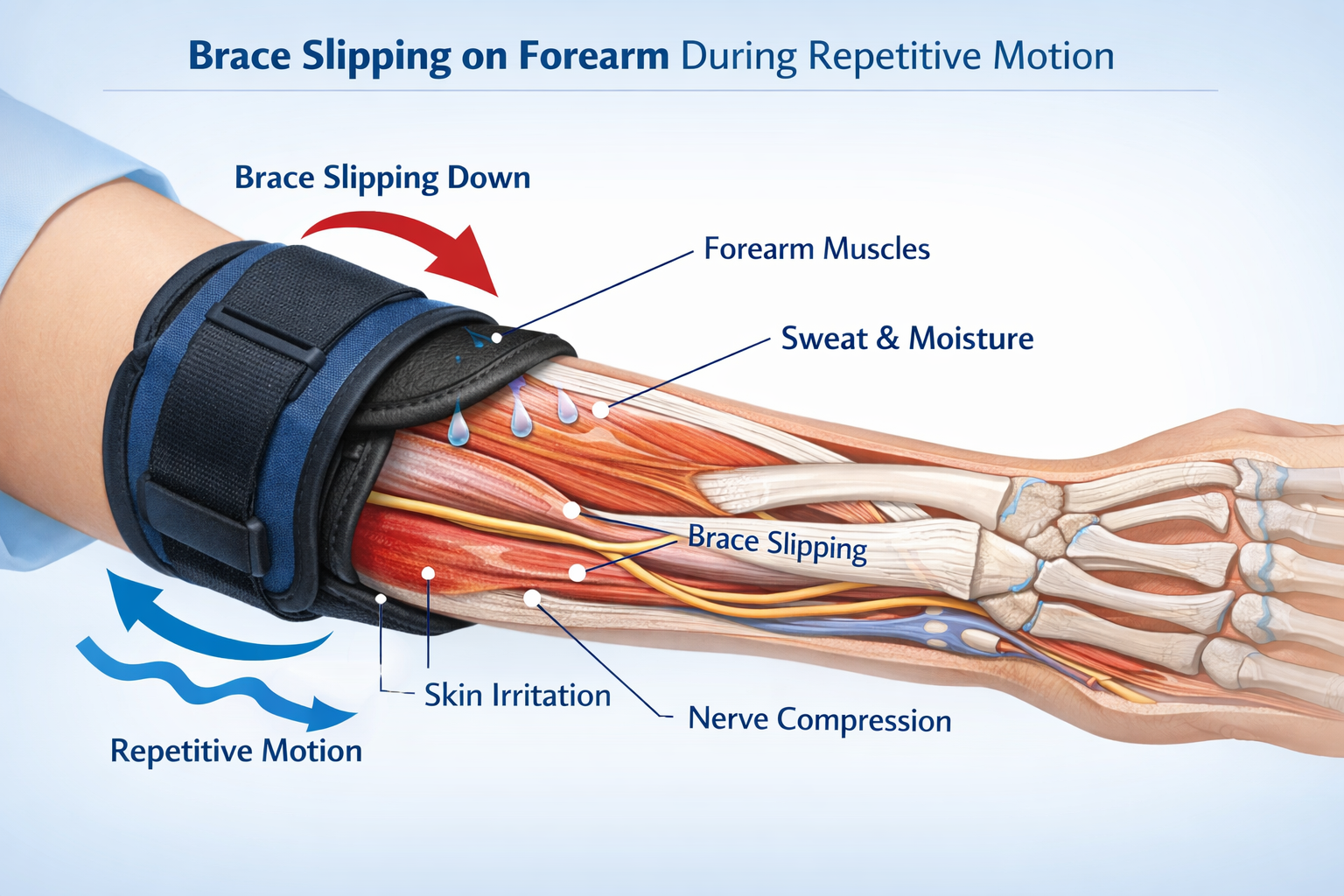
Understanding why arm braces slip is the first step toward finding an arm brace that doesn’t slip during work. Several factors contribute to this common problem, and identifying the root cause helps determine the best solution.
Sweat and Moisture Buildup
Perspiration creates a slippery surface between your skin and the brace material. During physical work or in warm environments, sweat accumulates under the brace, reducing friction and causing gradual sliding. This is particularly problematic for workers in:
- Manufacturing facilities
- Outdoor construction sites
- Kitchen environments
- Warehouses without climate control
Poor Fit or Incorrect Sizing
An improperly sized brace will never stay in place, regardless of its design features. Common sizing mistakes include:
- Choosing a size too large for perceived comfort
- Selecting based on clothing size rather than actual measurements
- Ignoring manufacturer-specific sizing charts
- Not accounting for arm swelling during long work periods
Repetitive Arm Movement
Constant motion gradually works against even well-fitted braces. Jobs requiring repetitive arm movements create continuous stress on the brace’s grip:
- Assembly line work with reaching motions
- Computer use with mouse and keyboard activity
- Painting or cleaning with extended arm movements
- Tool operation requiring grip changes
Smooth or Low-Grip Materials
Basic neoprene and smooth fabrics lack the grip needed for active use. Many standard compression sleeves use materials optimized for comfort rather than stability, making them unsuitable for work environments where an arm brace that doesn’t slip during work is essential.
Incorrect Positioning on the Arm
Placement affects stability more than most people realize. Positioning the brace too high or low on the forearm, or failing to center it properly over the affected area, creates uneven pressure distribution that encourages slipping.
Why a Secure Fit Matters
A stable, non-slip arm brace provides benefits that extend far beyond simple convenience. When your brace stays properly positioned, it delivers consistent therapeutic value throughout your entire work shift.
Maintains Proper Support and Stability
Consistent positioning ensures continuous support where you need it most. A brace that shifts during use provides intermittent relief at best, potentially leaving vulnerable areas unprotected during critical moments. This is especially important for workers recovering from injuries or managing chronic conditions.
Prevents Irritation and Distraction
Constant readjustment breaks concentration and workflow. When you’re focused on completing tasks efficiently, stopping to fix a slipping brace disrupts productivity and mental focus. Secure braces eliminate this distraction, allowing complete attention to work responsibilities.
Ensures Consistent Compression
Therapeutic compression requires steady contact with the affected area. Slipping braces create uneven pressure distribution, reducing the effectiveness of compression therapy and potentially causing discomfort in areas where the brace bunches up.
Improves Overall Comfort and Effectiveness
A well-positioned brace feels like a natural extension of your arm rather than a foreign object requiring constant management. This comfort level directly impacts compliance – workers are more likely to wear their brace consistently when it doesn’t cause ongoing frustration.
Similar to how knee braces require proper positioning to prevent sliding, arm braces need specific design features and fitting techniques to maintain their therapeutic position during active use.
Types of Arm Braces and Their Stability
Different arm brace designs offer varying levels of stability during work activities. Understanding these differences helps you select an arm brace that doesn’t slip during work based on your specific needs and work environment.
Compression Sleeves
Compression sleeves rely entirely on elastic tension to maintain position. While comfortable for light activities, they face significant challenges in work environments:
Advantages:
- Easy to put on and remove
- Provide even compression distribution
- Comfortable for extended wear
- Machine washable
Stability Concerns:
- Can roll or bunch with repetitive motion
- Lose effectiveness when stretched out
- Offer limited adjustability
- May slip on sweaty skin
Best for: Office workers, light assembly tasks, jobs with minimal arm movement
Elbow Straps
Targeted elbow straps focus support on specific pressure points and typically offer better stability than full sleeves:
Advantages:
- Adjustable tension control
- Less surface area to slip
- Targeted pressure relief
- Suitable for tennis elbow and golfer’s elbow
Stability Features:
- Buckle or velcro adjustment systems
- Focused pressure distribution
- Minimal fabric to shift during movement
Best for: Computer users, mechanics, workers with specific elbow pain points
Wraparound Arm Braces
Wraparound designs with multiple adjustment points provide superior stability for active work environments:
Key Features:
- Multiple velcro or strap adjustment points
- Customizable compression levels
- Anti-slip interior materials
- Reinforced construction
Stability Benefits:
- Even pressure distribution across multiple contact points
- Ability to fine-tune fit throughout the day
- Resistance to rolling or bunching
- Accommodation for arm swelling
Best for: Manual laborers, warehouse workers, construction professionals
Hybrid Braces
Combination designs merge compression sleeves with adjustable straps, offering the benefits of both systems:
Design Elements:
- Compression sleeve base with overlay straps
- Targeted padding at pressure points
- Multi-material construction
- Enhanced breathability features
Stability Advantages:
- Dual retention systems prevent slipping
- Customizable support levels
- Comfortable for all-day wear
- Suitable for varying activity levels
For workers dealing with repetitive motion injuries, exploring options like arm braces designed for repetitive motion pain can provide both stability and therapeutic benefits.
|

|

|
|
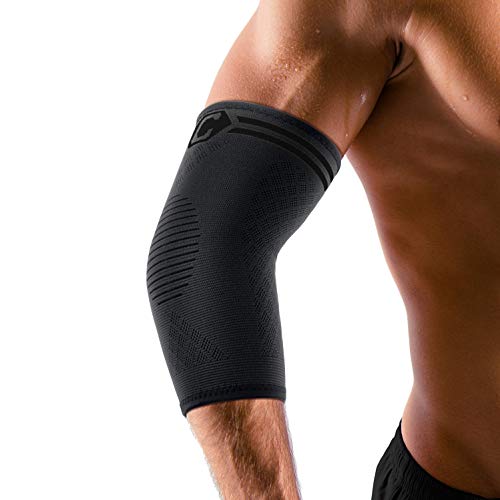
Description: TARGETED PAIN RELIEF & BOOSTED RECOVERY - Engineered with graduated compression, our elbow sleeves apply targeted support to key joint areas to help relieve discomfort associated with tennis elbow, tendonitis, and arthritis. |
Description: GOOD PERFORMANCE - The elbow brace applies even pressure to the elbow joint and elbow muscles, which can relieve tennis elbow, tendonitis, joint inflammation, golfer's elbow and other elbow pains, etc. |
Description: Our elbow brace is great for treating tendonitis, arthritis, sprained bones, strained ligaments, cubital Tunnel,ulnar nerve. Provides optimal support and compression to the elbow joint, reducing pain and preventing further injury during activities |
|
Our Rating:
4.8
|
Our Rating:
4.5
|
Our Rating:
4.4
|
|
$8.49
|
$11.99
|
$7.97
|
TARGETED PAIN RELIEF & BOOSTED RECOVERY - Engineered with graduated compression, our elbow sleeves apply targeted support to key joint areas to help relieve discomfort associated with tennis elbow, tendonitis, and arthritis.
GOOD PERFORMANCE - The elbow brace applies even pressure to the elbow joint and elbow muscles, which can relieve tennis elbow, tendonitis, joint inflammation, golfer's elbow and other elbow pains, etc.
Our elbow brace is great for treating tendonitis, arthritis, sprained bones, strained ligaments, cubital Tunnel,ulnar nerve. Provides optimal support and compression to the elbow joint, reducing pain and preventing further injury during activities
What to Look for in a Non-Slip Arm Brace
Selecting an arm brace that doesn’t slip during work requires attention to specific design features and material properties. These characteristics determine whether a brace will maintain its position during your daily activities.
Snug, Secure Fit Without Being Too Tight
The ideal fit provides compression without restricting circulation. Look for braces that feel secure immediately upon application but don’t cause numbness, tingling, or color changes in your fingers. A properly fitted brace should:
- Allow normal finger movement and sensation
- Maintain consistent pressure without gaps
- Feel secure during arm rotation and flexion
- Accommodate slight swelling throughout the day
Anti-Slip or Textured Inner Lining
Interior grip features make the biggest difference in preventing movement during work activities. Effective anti-slip technologies include:
- Silicone grip strips along the inner edges
- Textured fabric patterns that increase friction
- Gel-lined borders that conform to arm contours
- Honeycomb or waffle-weave interior surfaces
Adjustable Straps for Custom Fit
Multiple adjustment points allow fine-tuning throughout the workday as conditions change. Quality adjustable features include:
- Dual-strap systems for independent tension control
- Micro-adjustment buckles for precise fitting
- Elastic panels combined with non-stretch straps
- Quick-release mechanisms for easy removal
Breathable Materials to Reduce Sweat Buildup
Moisture management prevents the slippery conditions that cause most brace movement. Effective breathable materials feature:
- Moisture-wicking synthetic fabrics
- Perforated neoprene with ventilation holes
- Bamboo fiber blends with natural antimicrobial properties
- Mesh panels in high-heat areas
Durable Design for Active Use
Work environments demand robust construction that maintains effectiveness over time. Durability indicators include:
- Reinforced stitching at stress points
- Industrial-grade velcro that maintains grip after repeated use
- Colorfast materials that won’t fade or deteriorate
- Machine-washable construction for easy maintenance
Understanding these features helps you make an informed decision, similar to how choosing the right knee brace requires evaluating specific design elements for your intended use.
How to Choose the Right Arm Brace for Work
Matching your brace selection to your specific work environment and activities ensures you get an arm brace that doesn’t slip during work while providing appropriate support levels.
Match Brace Type to Your Job
Different occupations create unique challenges for arm brace stability and effectiveness:
Office Workers:
- Prioritize comfort for extended wear
- Focus on wrist and forearm support
- Choose low-profile designs that fit under clothing
- Consider compression sleeves with grip strips
Manual Laborers:
- Select heavy-duty wraparound designs
- Prioritize durability and washability
- Choose braces with reinforced construction
- Ensure compatibility with work gloves
Healthcare Professionals:
- Look for antimicrobial materials
- Choose easy-clean surfaces
- Prioritize flexibility for patient care tasks
- Consider quick-removal features for handwashing
Food Service Workers:
- Select waterproof or water-resistant materials
- Choose designs that dry quickly
- Ensure easy sanitization capabilities
- Avoid fabric that retains odors
Consider Level of Movement and Activity
Activity intensity directly impacts brace requirements:
Low Activity (Desk Work):
- Compression sleeves often sufficient
- Focus on comfort over maximum grip
- Prioritize breathability for all-day wear
Moderate Activity (Light Assembly):
- Hybrid designs provide good balance
- Adjustable compression helpful
- Anti-slip features become important
High Activity (Construction, Manufacturing):
- Maximum grip and stability essential
- Multiple adjustment points required
- Heavy-duty materials necessary
Prioritize Stability and Comfort
The best brace balances security with wearability. Consider these factors:
- Adjustment flexibility for changing conditions
- Material softness against skin
- Edge design that won’t dig or chafe
- Weight distribution for natural feel
Ensure Correct Sizing
Accurate measurements prevent most fitting problems. Follow these steps:
- Measure forearm circumference at the widest point
- Measure arm length from wrist to elbow
- Check manufacturer sizing charts for each specific model
- Consider time-of-day swelling when measuring
- Account for clothing thickness if wearing over sleeves
For workers in specific industries, specialized options like arm braces for mechanics or arm braces for hairstylists offer targeted features for those work environments.
How to Wear an Arm Brace to Prevent Slipping
Proper application technique is crucial for maintaining an arm brace that doesn’t slip during work. Even the best-designed brace will move if not worn correctly.
Position Correctly on the Forearm or Elbow
Optimal placement varies by brace type and intended purpose:
For Forearm Braces:
- Center over the muscle belly, typically 2-3 inches below the elbow
- Ensure even coverage of the affected area
- Avoid placement directly over bony prominences
- Allow full wrist range of motion
For Elbow Braces:
- Position the main support pad over the lateral epicondyle (outer elbow bump)
- Ensure the brace doesn’t interfere with elbow flexion
- Center any pressure pads over tender areas
- Maintain clearance from the ulnar nerve groove
Tighten Evenly Without Restricting Circulation
Proper tension provides support without compromising blood flow:
Application Steps:
- Start with loose application and gradually tighten
- Check finger color and sensation after initial fitting
- Ensure two-finger space under the brace edge
- Test full range of motion before beginning work
- Monitor comfort levels during the first hour of wear
Warning Signs of Over-Tightening:
- Numbness or tingling in fingers
- Color changes in hand or fingers
- Increased pain or throbbing
- Swelling below the brace
Adjust During the Day if Needed
Arm circumference changes throughout the day due to activity, temperature, and fluid shifts:
Morning Application:
- May need slightly looser fit to accommodate daily swelling
- Check adjustment after first hour of activity
- Retighten if brace feels loose during initial tasks
Midday Adjustment:
- Arms typically at maximum circumference
- May need to loosen slightly if feeling tight
- Ensure brace hasn’t shifted position during activities
End-of-Day Considerations:
- Fatigue may make brace feel tighter
- Check for pressure marks or irritation
- Loosen if planning to wear after work
Wear Directly on Skin for Better Grip
Direct skin contact maximizes friction and prevents slipping:
Benefits of Skin Contact:
- Maximum grip from anti-slip materials
- Better compression effectiveness
- Improved moisture wicking
- More accurate fit assessment
When to Wear Over Clothing:
- Sensitive skin conditions
- Workplace hygiene requirements
- Shared or borrowed braces
- Cold weather outdoor work
If wearing over clothing, choose thin, smooth materials that won’t bunch or create pressure points.
Tips to Keep Your Arm Brace From Slipping
Beyond proper selection and application, specific maintenance and wearing strategies help ensure your arm brace that doesn’t slip during work maintains its effectiveness throughout your shift.
Keep Skin Clean and Dry Before Wearing
Skin preparation significantly impacts brace grip:
Pre-Application Routine:
- Wash with soap and water to remove oils and lotions
- Dry completely before brace application
- Avoid moisturizers on the area where the brace will sit
- Use antiperspirant on forearms if excessive sweating is an issue
During Work Maintenance:
- Keep towels available for quick skin drying
- Consider moisture-absorbing powder for high-sweat environments
- Remove and reapply if excessive moisture accumulates
Re-adjust Straps Periodically
Regular minor adjustments prevent major slipping:
Adjustment Schedule:
- Check fit every 2-3 hours during active work
- Retighten after breaks when arms have rested
- Adjust for temperature changes in work environment
- Fine-tune before physically demanding tasks
Quick Adjustment Techniques:
- Loosen completely and reapply if significant slipping occurs
- Focus on the primary support area first
- Ensure even tension across all adjustment points
- Test security with gentle arm movements
Avoid Over-Loosening During Use
Loosening for comfort often leads to slipping problems:
Common Mistakes:
- Loosening during breaks and forgetting to retighten
- Gradual loosening throughout the day without readjustment
- Over-compensating for temporary tightness
- Loosening due to pressure marks that indicate poor fit
Better Alternatives:
- Remove completely during extended breaks
- Address fit issues with proper sizing rather than loosening
- Use position changes to relieve pressure
- Consider brace rotation if wearing for extended periods
Choose Appropriate Clothing if Worn Over Sleeves
When direct skin contact isn’t possible, clothing selection matters:
Ideal Under-Brace Clothing:
- Thin, moisture-wicking materials
- Smooth surfaces without texture
- Compression fit that won’t bunch
- Seamless construction in contact areas
Clothing to Avoid:
- Thick cotton that retains moisture
- Loose-fitting sleeves that create wrinkles
- Textured fabrics that reduce grip
- Seams that create pressure points
The principles of preventing slipping are similar across different types of braces, as discussed in guides about keeping knee braces from sliding down.
Common Mistakes to Avoid
Understanding frequent errors helps you maintain an arm brace that doesn’t slip during work and avoid the frustration of constantly shifting support.
Wearing the Wrong Size
Size errors are the most common cause of brace failure:
Sizing Mistakes:
- Guessing size based on clothing measurements
- Choosing larger sizes for perceived comfort
- Ignoring manufacturer-specific charts
- Not accounting for dominant arm size differences
Proper Sizing Approach:
- Measure both arms separately
- Use manufacturer’s specific sizing guide
- Consider exchange policies when ordering online
- Consult healthcare providers for sizing guidance
Choosing a Brace Without Adjustability
Fixed-size braces can’t accommodate daily variations:
Problems with Non-Adjustable Braces:
- Cannot fine-tune for optimal fit
- Don’t accommodate swelling changes
- Offer no customization for different activities
- May become too loose as materials stretch
Adjustability Features to Prioritize:
- Multiple strap systems
- Micro-adjustment capabilities
- Elastic panels combined with fixed straps
- Easy-access adjustment points
Ignoring Material Quality
Cheap materials fail quickly and provide poor grip:
Material Red Flags:
- Thin, flimsy construction
- Smooth interior surfaces
- Poor stitching quality
- Strong chemical odors
- Non-breathable plastics
Quality Indicators:
- Reinforced stress points
- Anti-microbial treatments
- Moisture-wicking properties
- Durable hardware components
Wearing It Too Loosely
Loose application defeats the purpose of support:
Signs of Too-Loose Application:
- Brace moves freely during arm motion
- Gaps appear between brace and skin
- Support feels inconsistent
- Frequent readjustment needed
Correct Tension Indicators:
- Snug feel without discomfort
- No movement during normal activities
- Consistent pressure distribution
- Maintained finger circulation and sensation
For specific workplace applications, resources like best arm braces for work provide detailed guidance on avoiding common selection and usage mistakes.
When to Replace Your Arm Brace
Recognizing when your current brace no longer provides adequate support helps maintain an arm brace that doesn’t slip during work and ensures continued therapeutic benefits.
Loss of Elasticity or Stretch
Elastic materials degrade with use and washing:
Signs of Material Failure:
- Permanent stretching that doesn’t return to original size
- Loose fit even when fully tightened
- Sagging or bagging in previously snug areas
- Reduced compression during application
Typical Lifespan Factors:
- Daily use: 3-6 months
- Frequent washing: Accelerated wear
- High-activity environments: Shorter lifespan
- Quality materials: Extended durability
Reduced Grip or Support
Anti-slip features wear out over time:
Grip Degradation Signs:
- Silicone strips becoming smooth
- Textured surfaces wearing flat
- Interior materials becoming slippery
- Increased slipping despite proper application
Support Reduction Indicators:
- Less pain relief than when new
- Inconsistent compression levels
- Reduced stability during activities
- Need for frequent readjustment
Visible Wear and Tear
Physical damage compromises effectiveness:
Damage to Watch For:
- Frayed edges that may irritate skin
- Broken stitching at stress points
- Velcro failure reducing adjustability
- Holes or tears in main fabric
- Separated layers in multi-material construction
Frequent Slipping Despite Proper Fit
When a previously stable brace begins slipping regularly:
Evaluation Steps:
- Verify sizing hasn’t changed due to weight fluctuations
- Check for material degradation
- Assess workplace condition changes
- Consider activity level increases
- Evaluate overall brace condition
Replacement Timing:
- Replace immediately if safety is compromised
- Plan replacement when effectiveness noticeably decreases
- Keep backup brace for high-demand work periods
- Consider rotating multiple braces to extend lifespan
When to Seek Medical Advice
While finding an arm brace that doesn’t slip during work can significantly improve comfort and function, certain situations require professional medical evaluation.
Persistent Pain Despite Proper Brace Use
Continued discomfort may indicate underlying issues:
Concerning Symptoms:
- Pain that worsens despite consistent brace use
- New pain patterns developing during brace wear
- Increased intensity of original symptoms
- Pain spreading to previously unaffected areas
Professional Evaluation Needed:
- Reassessment of underlying condition
- Evaluation for proper brace type and fit
- Consideration of additional treatment modalities
- Investigation of workplace ergonomic factors
Discomfort Caused by the Brace
Brace-related problems require attention:
Red Flag Symptoms:
- Skin irritation or rashes from brace contact
- Numbness or tingling in fingers or hand
- Swelling above or below the brace
- Color changes in fingers or hand
- New pain in previously comfortable areas
Symptoms Worsening Over Time
Progressive deterioration suggests need for intervention:
Warning Signs:
- Gradual increase in pain levels
- Decreased function despite brace use
- Sleep disruption from arm pain
- Interference with daily activities beyond work
- Reduced effectiveness of previously helpful treatments
Medical Consultation Benefits:
- Professional brace fitting assessment
- Evaluation for underlying condition progression
- Discussion of alternative treatment options
- Workplace accommodation recommendations
- Referral to occupational therapy if needed
Similar to considerations for knee brace effectiveness, arm brace success depends on proper diagnosis, appropriate brace selection, and ongoing medical oversight when needed.
Frequently Asked Questions
Why does my arm brace keep slipping?
The most common causes of arm brace slipping include:
- Incorrect sizing – too large for your arm circumference
- Poor material grip – smooth interior surfaces without anti-slip features
- Moisture buildup – sweat creating slippery conditions
- Inadequate adjustment – not tightened sufficiently for your activity level
- Material degradation – worn-out elastic or grip materials
- Wrong brace type – compression sleeves in high-activity environments
Solutions focus on proper sizing, selecting braces with anti-slip features, maintaining dry skin, and choosing appropriate brace types for your work activities.
How tight should an arm brace be?
Proper arm brace tension should:
- Feel snug and secure without causing discomfort
- Allow normal finger sensation and color
- Permit full range of motion at joints
- Provide consistent compression without gaps
- Pass the two-finger test – you should be able to slide two fingers under the edge
Too tight indicators: numbness, tingling, color changes, increased pain, or throbbing sensations. Too loose indicators: brace movement during activities, inconsistent support, or frequent need for readjustment.
Can you wear an arm brace over clothing?
Yes, but with considerations for effectiveness:
Best practices for over-clothing wear:
- Choose thin, smooth fabrics that won’t bunch
- Select moisture-wicking materials to prevent sweat buildup
- Ensure no seams or textures under the brace
- Use compression-fit sleeves that won’t create wrinkles
Direct skin contact is preferred for maximum grip and effectiveness, but over-clothing wear works when necessary for hygiene, comfort, or workplace requirements.
What type of brace stays in place best?
Wraparound braces with multiple adjustment points typically offer the best stability for work environments. Key features of stable braces include:
- Multiple strap systems for customizable fit
- Anti-slip interior materials like silicone strips or textured fabrics
- Hybrid designs combining compression and adjustable elements
- Quality construction with reinforced stress points
- Appropriate sizing for your specific measurements
For different work types: Office workers may succeed with high-quality compression sleeves, while manual laborers need heavy-duty wraparound designs with maximum adjustability.
Conclusion
Finding an arm brace that doesn’t slip during work requires understanding the factors that cause movement, selecting appropriate features for your work environment, and applying proper wearing techniques. The key elements for success include choosing braces with anti-slip materials, ensuring proper sizing and fit, maintaining dry skin conditions, and selecting designs that match your activity level and work demands.
Quality materials and construction make the difference between a brace that stays securely in place and one that constantly requires readjustment. Look for features like textured interior surfaces, multiple adjustment points, breathable materials, and durable construction designed for active use.
Proper application and maintenance are equally important as brace selection. Position your brace correctly, maintain appropriate tension without restricting circulation, and make minor adjustments throughout the day as conditions change. Keep skin clean and dry, and don’t hesitate to remove and reapply if significant slipping occurs.
Take action today by measuring your arm properly, evaluating your work environment’s specific demands, and selecting a brace designed for your activity level. If you’re currently struggling with a slipping brace, consider whether sizing, material quality, or application technique might be the issue. Remember that persistent pain or brace-related discomfort warrants professional medical evaluation to ensure you’re using the most appropriate support for your condition.
Your comfort and productivity at work depend on having reliable support that stays where you need it. With the right knowledge and proper selection, you can find an arm brace that doesn’t slip during work and provides consistent support throughout your entire shift.